


$ 4975
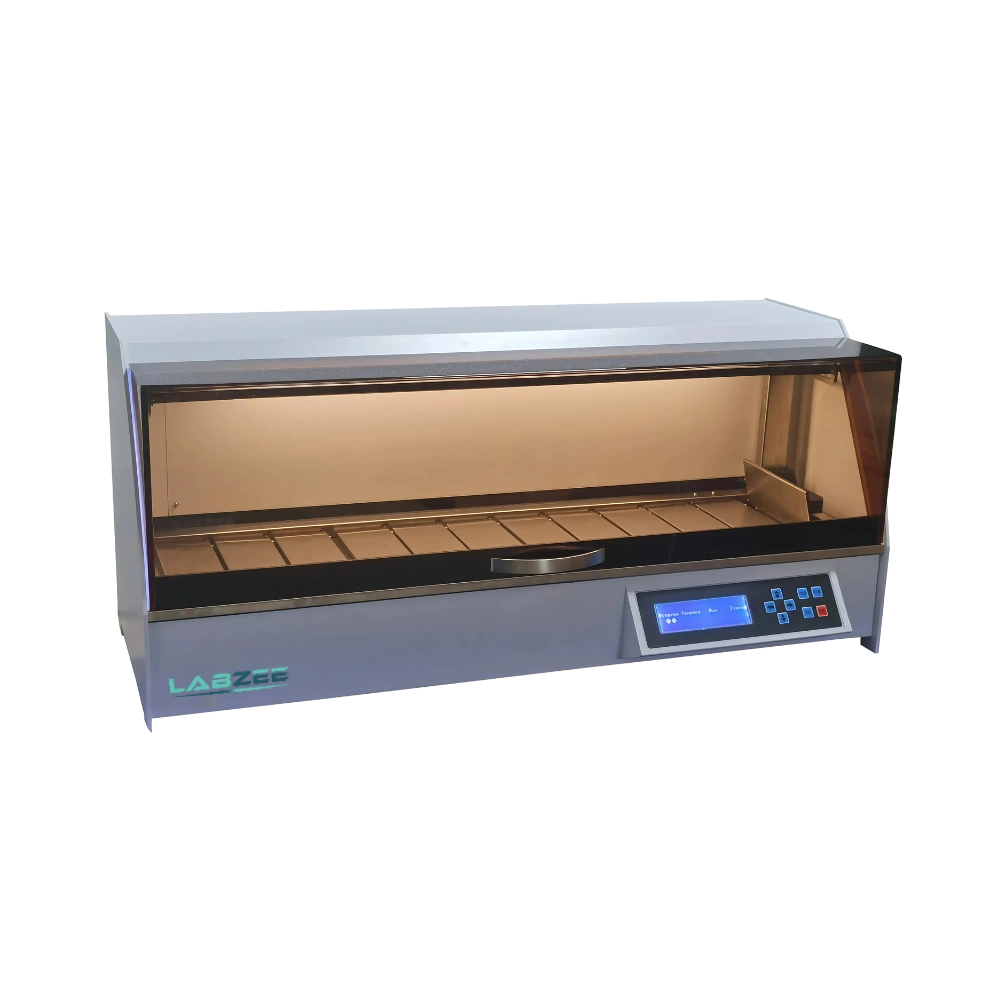
| No. of Tanks | 12 pcs (including 3 wax tanks at the end) |
| Single Tank Capacity | 1500 ml |
| Specimen Capacity per Basket | 75 specimens |
| Processing Time per Tank | 0-99 hours (randomly set) |
| Wax Tank Temperature Setting | Up to 99 °C (randomly set) |
| Cylinder Start Dwell Time | 45-100 seconds |
| Tissue-Protection Cylinder | 7th cylinder |
| Stirring Frequency | 0-5 times/min (arbitrarily set; 3 best) |
| Power Consumption | ≤500 W |
| Product Dimension | 1130 × 400 × 500 mm |
| Package Dimension | 1260 × 570 × 640 mm |
| Net Weight | 67 Kg |
| Gross Weight | 100 Kg |
| Packaging Type | Wooden Case |
1. Extra Tank
2. Tissue Basket
1. Tanks × 12 Pieces
2. Tissue Basket × 1 Piece
3. The Exhaust Pipe × 1 Piece
4. Tissue Cassette × 20 Pieces
5. Fuse(5A) × 2 Pieces
6. Power Line × 1 Line
Multiple Tank Setup: Multiple tanks including wax tanks for complete tissue processing in one run.
Adjustable Time & Temperature: Processing time and wax temperature settings for different tissue protocols.
Tissue Protection Cylinder: Dedicated cylinder safeguards sample integrity during processing.
Stirring Control: Adjustable stirring frequency for even reagent treatment.
Real‑Time Display: Shows program content and operating status throughout sampling.
• Histopathology Labs: Used for automated dehydration, clearing, and wax infiltration of tissue samples for diagnostic microscopy.
• Clinical Pathology: Applied for processing surgical specimens and biopsies in diagnostic workflows.
• Biomedical Research: Designed for reproducible tissue preparation in research and drug development studies.
• Teaching & Training Labs: Suitable for demonstrating standard histology techniques in educational settings.
• Moderate‑Volume Clinical Labs: Intended for labs handling up to moderate sample volumes per day.
Frequently Asked Questions
1: What is the tank capacity and number of tanks in the Automatic Tissue Processor BZUTP-502?
The Automatic Tissue Processor BZUTP-502 comes with 12 tanks, including 3 wax tanks, each having a capacity of 1500 ml. This setup supports a wide variety of tissue processing steps within one machine.
2: How many tissue specimens can be processed per basket in this device?
It can process up to 75 specimens per basket, making it suitable for laboratories handling moderate sample volumes efficiently.
3: Is the processing time adjustable for each tank on the Automatic Tissue Processor BZUTP-502?
Yes, the processing time per tank can be arbitrarily set between 0 to 99 hours, allowing labs to customize protocols according to sample needs.
4: Does the Automatic Tissue Processor BZUTP-502 offer temperature control for wax tanks?
Absolutely, the wax tanks have a temperature setting that can be adjusted up to 99°C, ensuring optimal wax infiltration during tissue processing.
5: What features help protect specimens during processing?
The device includes a dedicated tissue-protection cylinder (7th cylinder) and adjustable stirring frequency, which help maintain sample integrity and uniform reagent exposure during processing.
6: When should an Automatic Tissue Processor be
preferred over manual methods? Automatic processors save time, reduce human error, and deliver consistent results. They are best used in labs with moderate to high sample volumes. They improve efficiency in routine histological workflows.
7: Can the processor be customized for specific tissue protocols?
Yes, Automatic Tissue Processors allow full customization of processing cycles. Parameters like duration, reagent type, and temperature can be adjusted. This flexibility supports various tissue types and lab standards.
8: Can it run unattended during overnight shifts?
Yes, these units are designed for safe, unattended operation with automated monitoring. Built-in alarms and safety shutdowns ensure reliability during long runs. Always verify settings before leaving the unit running.
9: When does the system need maintenance?
Basic cleaning should be done after each run to avoid residue buildup. Full maintenance depends on usage frequency and manufacturer guidelines. Regular upkeep ensures processing accuracy and equipment longevity.
10: Can different sample batches be processed on the same day?
Yes, multiple batches can be processed by programming new cycles after completion. Efficient scheduling helps maximize daily throughput. Ensure reagent levels and temperatures are properly maintained between runs.


Labzee Automatic Tissue Processors are designed to streamline and standardize histology tissue preparation with minimal manual intervention. Our range includes models with single cylinder/tank capacities from 1000ml to 2200ml and specimen capacity per basket from 60 to 125 specimens. They perform sequential dehydration, clearing, and paraffin infiltration through fully programmable cycles, allowing adjustment of duration, reagent type, and temperature for different tissue protocols. Intuitive interfaces, enclosed chambers, and built-in safety controls enhance operational efficiency and laboratory safety – high throughput, consistent outcomes, and safe unattended operation.

Labzee Enclosed Tissue Processors designed for safe, contamination-free tissue processing in histology labs. They perform fully enclosed dehydration, clearing, and paraffin infiltration – minimizing exposure to harmful reagents and protecting specimen integrity. Touch-screen controls and integrated safety protocols enhance user protection. Our range includes models with reagent bottle capacities from 2.3L to 4.8L, retort volumes from 3.8L to 6.8L, and wax cylinder volumes from 2.6L to 5.5L (30–65°C). Customizable programs, large sample capacities, and advanced reagent handling support high-volume workflows.

$ 17618

$ 16560
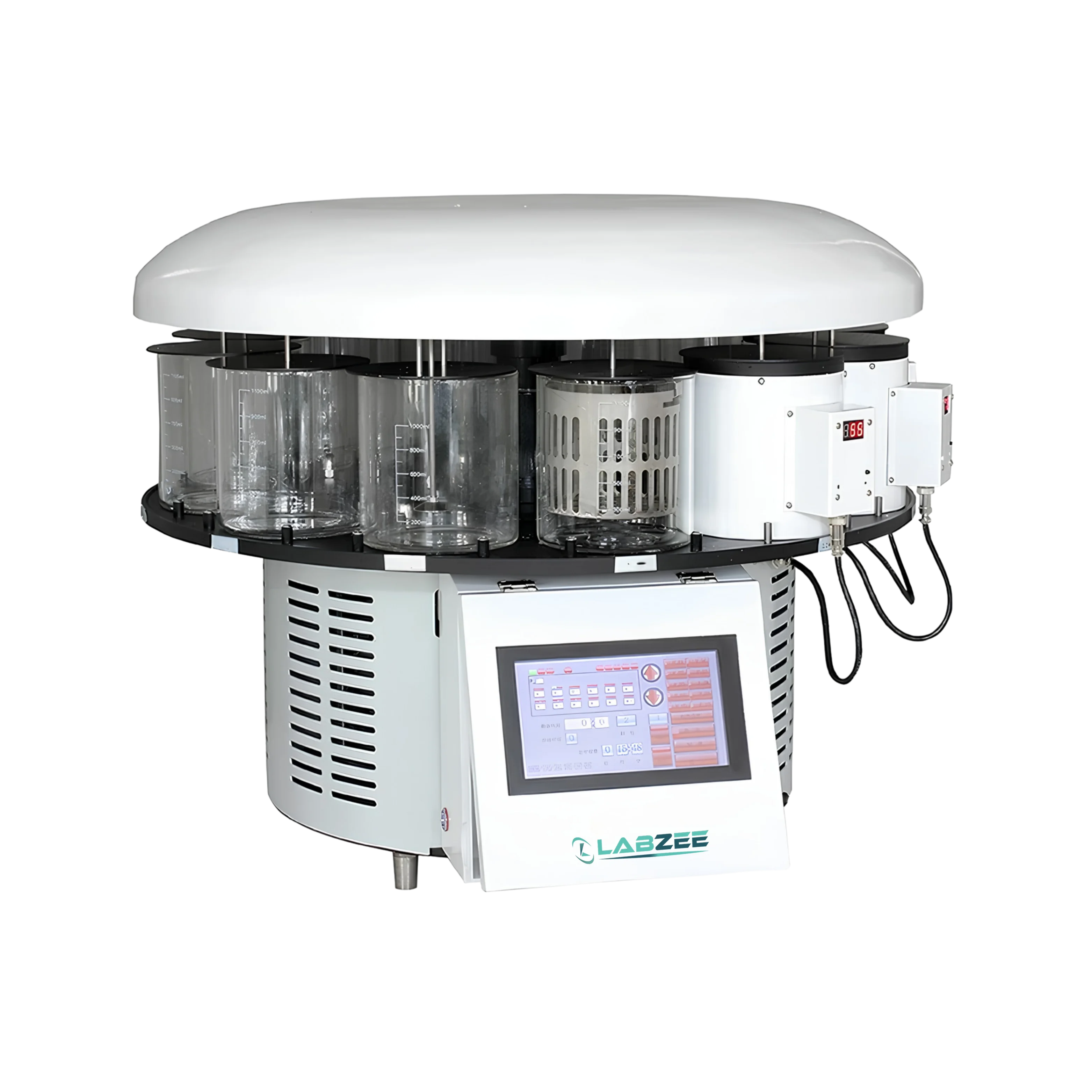
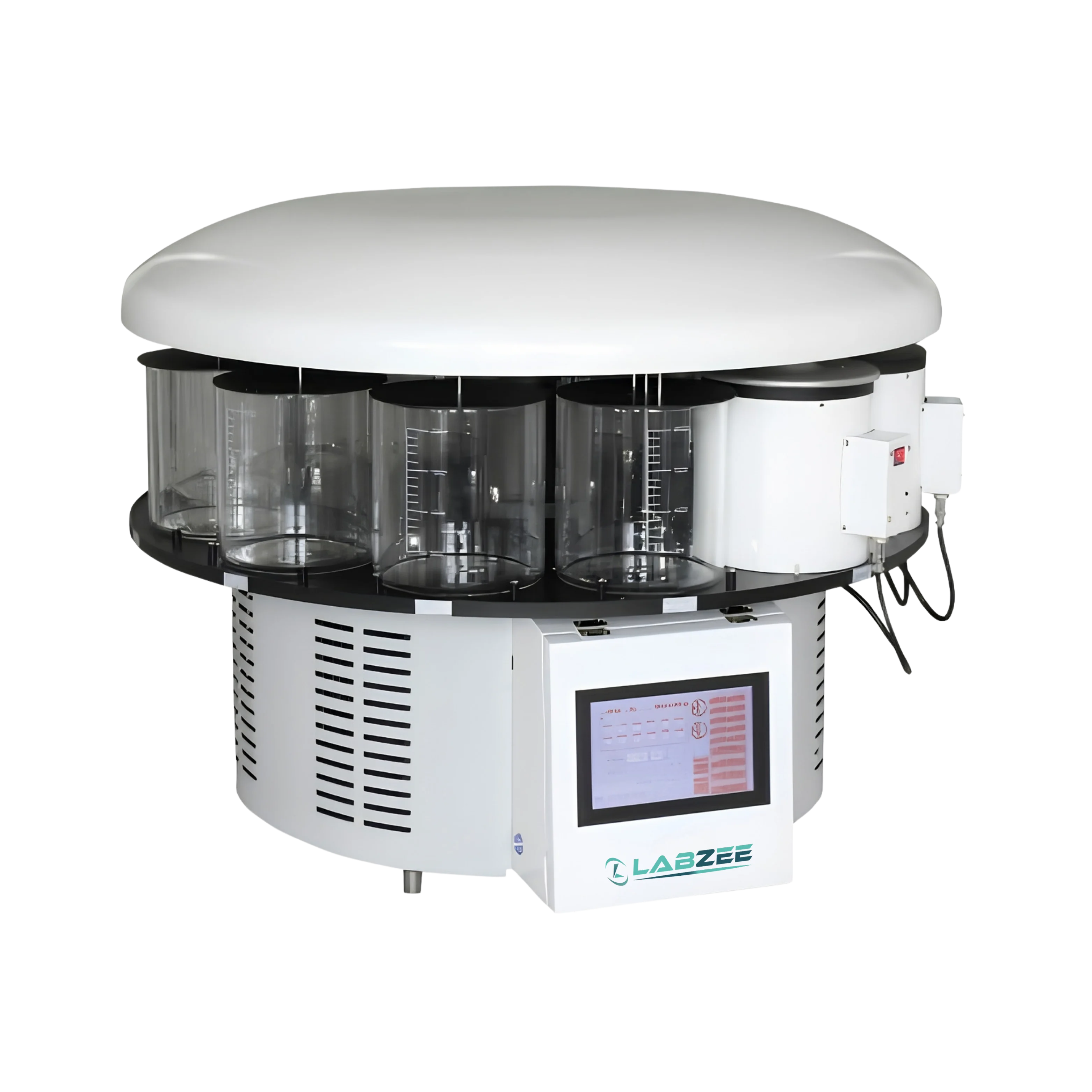
Labzee Spin Tissue Processors designed for rapid and uniform processing of biological tissue samples using centrifugal motion. They combine precise reagent delivery with controlled spinning action to accelerate dehydration, clearing, and paraffin infiltration. Our rotary tissue processors support multiple sample baskets, customizable protocols, and efficient reagent usage to enhance throughput. Their spinning mechanism improves reagent penetration and reduces processing time – faster results without damaging tissue integrity while increasing daily sample volume and reducing operator effort.
$ 6647
$ 7441
Labzee Double Basket Tissue Processors are built for high-throughput tissue preparation, allowing simultaneous processing of two sample batches. They perform efficient automated dehydration, clearing, and paraffin infiltration with precision and speed. Our Tissue Processors accommodate large sample volumes with programmable cycles and independent basket control for workflow flexibility. Their dual-chamber design, touchscreen interface, and safety monitoring support busy laboratory settings and high-demand histology workflows – process more samples per day with less hands-on time.

$ 9212
