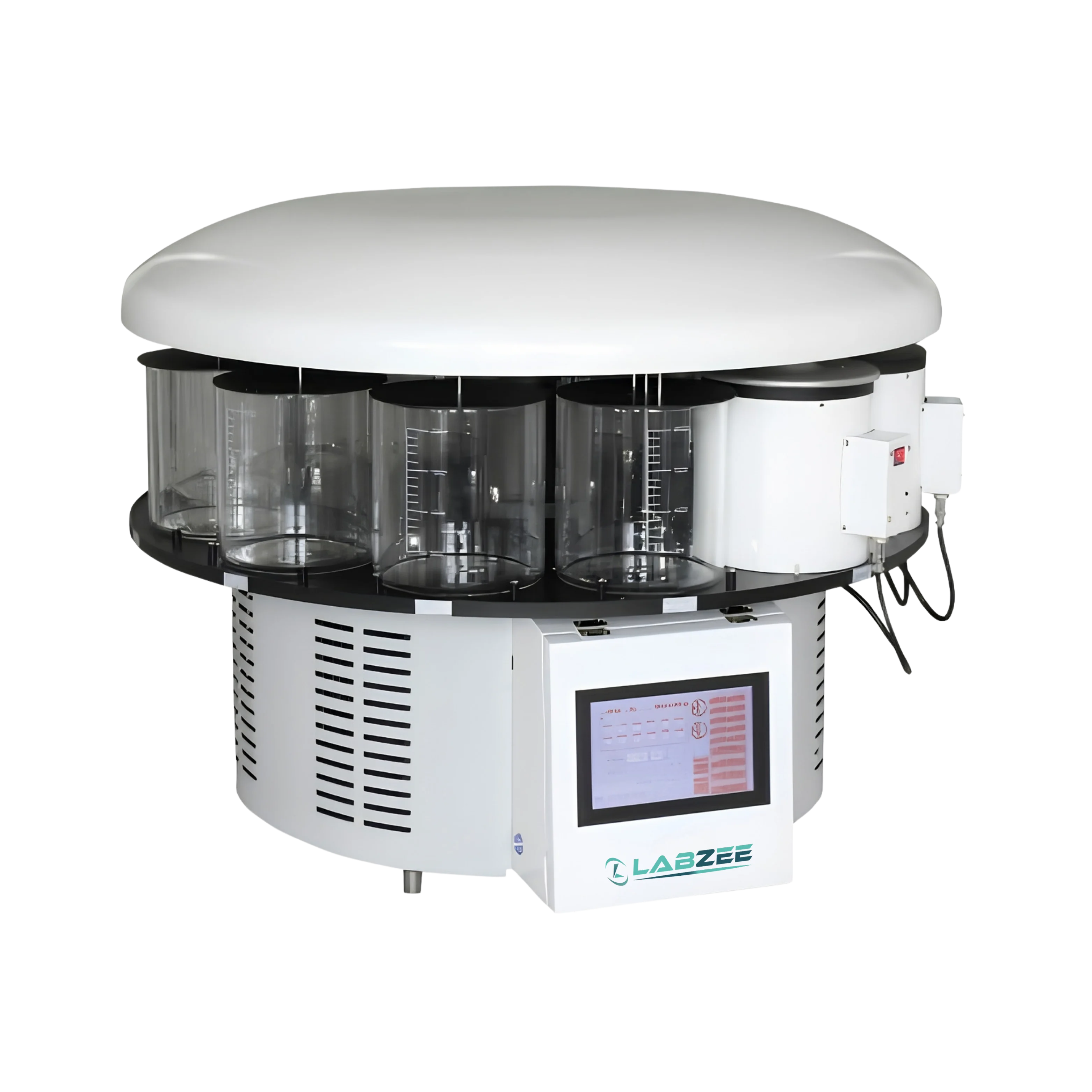
$ 7441
| Station Type | Carousel |
| Number of Stations | 12 |
| Vacuum Pressure | Max 0.05 MPa (~0.5 bar) |
| Programs Number | 10 selectable |
| Reagent Containers | 9 |
| Reagent Container Capacity | 2.3 L each |
| Wax Temp Range | 60 - 99℃ |
| Wax Containers | 3 |
| Wax Container Capacity | 1.8 L each |
| Basket Stirring | 1 min every 5 min |
| Basket Capacity | Up to 90 - 100 cassettes |
| Basket Dimension | Φ130 × 110 mm |
| Infiltration Time | Up to 30 days/station |
| Delay Time | Up to 30 days |
| Power Consumption | 400 - 500 W |
| Machine Dimension | 880 × 880 × 800 mm |
| Tank Dimension | 620 × 410 × 530 mm |
| Product Dimension | 780 × 570 × 690 mm |
| Net Weight | 70 Kg |
| Gross Weight | 150 Kg |
Extra paraffin tank
Extra reagent tank
Reagent bottle × 9 Pieces
Paraffin wax tank × 3 Pieces
Parafin wax tank connection line × 3 Pieces
Tissue basket × 1 Piece
Tissue cassette × 20 Pieces
Hexagonal Wrench × 1 Piece
Screwdriver ×1 Piece
Fuse(5A) × 2 Pieces
Power line × 1 line
• PLC Control: Manages the whole processing cycle through a programmable logic controller.
• Vacuum Agitation: Applies vacuum with agitation during dehydration.
• Custom Start Position: Lets the starting cylinder be set to a chosen position.
• Delay Timing: Schedules runs on any chosen day or daily through a configurable delay time.
• Large LCD Display: Displays each processing step on a large screen for easy monitoring.
• Wax Temperature Control: Holds paraffin jar temperature steady with a constant temperature control system.
• Basket Collision Stop: Prevents hanging basket collisions through an anti-collision stopping device.
• Clinical Diagnostics: Used for processing biopsies and surgical specimens in pathology laboratories.
• High-Throughput Histology: Applied in histology workflows that process many cassettes per run.
• Pharmaceutical Research: Designed for tissue sample processing in pharmaceutical research.
• Academic Research: Supports tissue processing for academic research studies.
• Histopathology: Suited to histopathology work requiring long infiltration times.
Frequently Asked Questions
1: Can you describe what makes the Spin Vacuum Tissue Processor BZSTP-501 suitable for high-throughput histology labs?
The Spin Vacuum Tissue Processor BZSTP-501 is built for high-throughput environments with its 12-station carousel system, accommodating up to 100 tissue cassettes per run. With 9 reagent and 3 wax stations, it ensures efficient chemical transitions and extended tissue infiltration, making it ideal for routine and research labs handling large sample volumes.
2: How does vacuum pressure improve the tissue processing performance of this system?
The programmable vacuum control reaching up to 0.05 MPa enhances reagent penetration during processing, ensuring deeper and more uniform infiltration. This feature is especially useful for dense or complex tissue samples, improving processing quality and consistency throughout the run.
3: Can you adjust processing programs on the BZSTP-501 to meet specific lab needs?
Yes, the processor supports up to 10 user-defined programs, allowing technicians to customize each stage-time, vacuum level, and temperature-based on different tissue types or workflow requirements. This level of control improves flexibility and repeatability across varied histological applications.
4: What features help maintain tissue quality during prolonged processing?
The BZSTP-501 supports infiltration times of up to 30 days per station, making it ideal for long-duration tissue processing. Combined with smart basket stirring every five minutes and a large reagent/wax volume capacity, the system ensures tissues remain uniformly processed without degradation or uneven exposure.
5: Can you explain how the dual voltage compatibility benefits lab operations?
The processor is designed to operate on both AC 220V and 110V power supplies, making it adaptable to different regional electrical standards. This dual voltage compatibility allows the unit to be used globally without needing additional power converters, enhancing its usability in diverse lab environments.
6: Can you describe what a Spin Tissue Processor is used for?
A Spin Tissue Processor is a laboratory device used to prepare biological tissue samples for histological examination. It automates the process of dehydrating, clearing, and infiltrating tissues with paraffin, ensuring consistent and high-quality results for microscopic analysis.
7: How does the spinning mechanism improve tissue processing?
The spinning action enhances the movement of reagents through the tissue samples, allowing for faster and more uniform processing. It reduces the time needed for each step and improves reagent penetration, which helps maintain tissue integrity and morphology.
8: Can you process multiple samples at once in a Spin Tissue Processor?
Yes, most models are designed to handle multiple cassettes or containers at once. This batch-processing capability improves workflow efficiency, especially in high-throughput laboratories where large volumes of tissue need to be processed daily.
9: What types of tissues can be processed in a Spin Tissue Processor?
A wide range of soft tissues, such as biopsies, organ samples, and surgical specimens, can be processed. The system is flexible enough to handle small or large samples, making it suitable for both clinical and research settings.
10: Can you program different processing protocols on the Spin Tissue Processor?
Yes, modern Spin Tissue Processors come with programmable controls that allow users to customize the time, temperature, and reagent sequence for each step. This ensures that different tissue types receive optimal treatment for accurate histological evaluation.
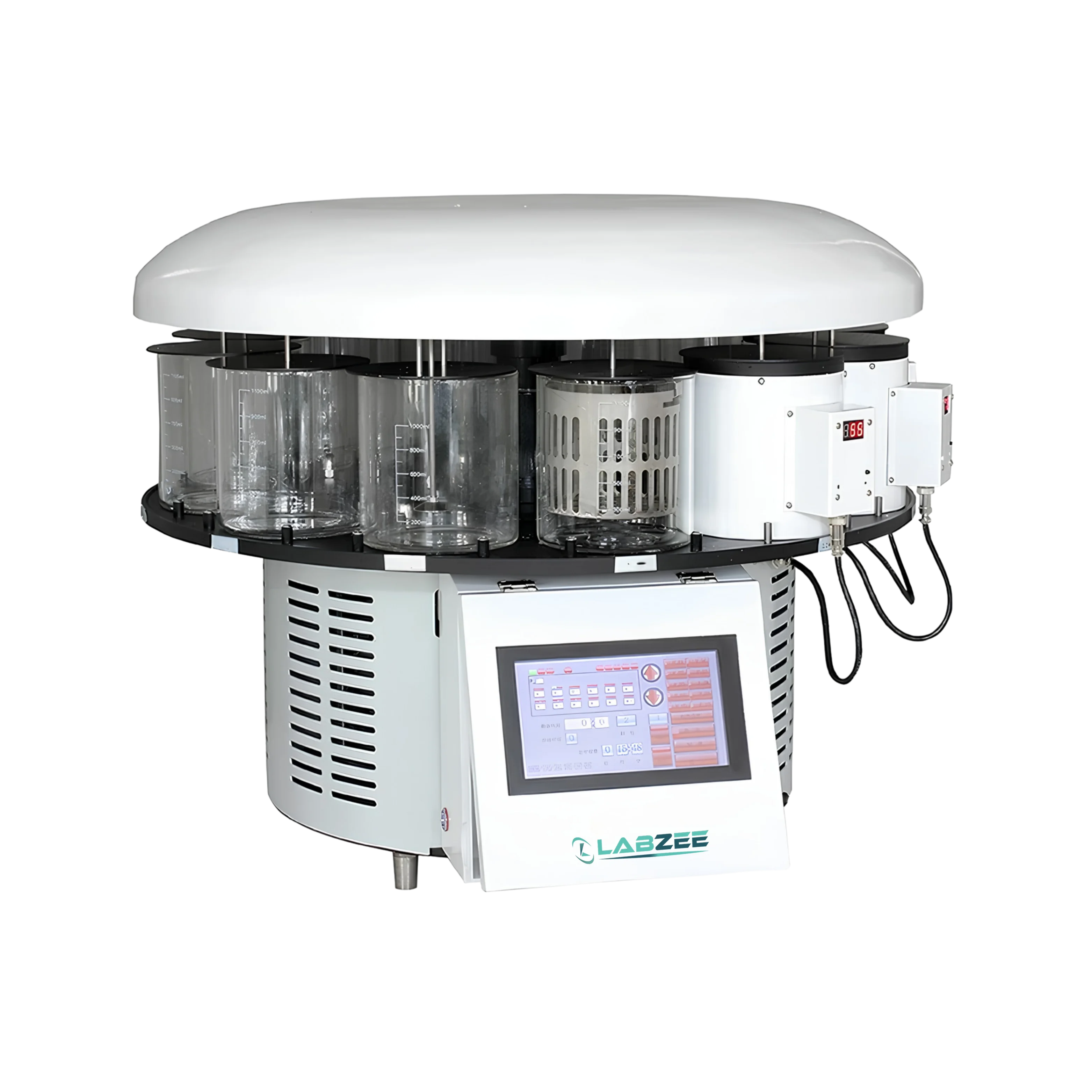
Labzee Spin Tissue Processors designed for rapid and uniform processing of biological tissue samples using centrifugal motion. They combine precise reagent delivery with controlled spinning action to accelerate dehydration, clearing, and paraffin infiltration. Our rotary tissue processors support multiple sample baskets, customizable protocols, and efficient reagent usage to enhance throughput. Their spinning mechanism improves reagent penetration and reduces processing time – faster results without damaging tissue integrity while increasing daily sample volume and reducing operator effort.
Labzee Enclosed Tissue Processors designed for safe, contamination-free tissue processing in histology labs. They perform fully enclosed dehydration, clearing, and paraffin infiltration – minimizing exposure to harmful reagents and protecting specimen integrity. Touch-screen controls and integrated safety protocols enhance user protection. Our range includes models with reagent bottle capacities from 2.3L to 4.8L, retort volumes from 3.8L to 6.8L, and wax cylinder volumes from 2.6L to 5.5L (30–65°C). Customizable programs, large sample capacities, and advanced reagent handling support high-volume workflows.

$ 17618

$ 16560
Labzee Double Basket Tissue Processors are built for high-throughput tissue preparation, allowing simultaneous processing of two sample batches. They perform efficient automated dehydration, clearing, and paraffin infiltration with precision and speed. Our Tissue Processors accommodate large sample volumes with programmable cycles and independent basket control for workflow flexibility. Their dual-chamber design, touchscreen interface, and safety monitoring support busy laboratory settings and high-demand histology workflows – process more samples per day with less hands-on time.

$ 9212
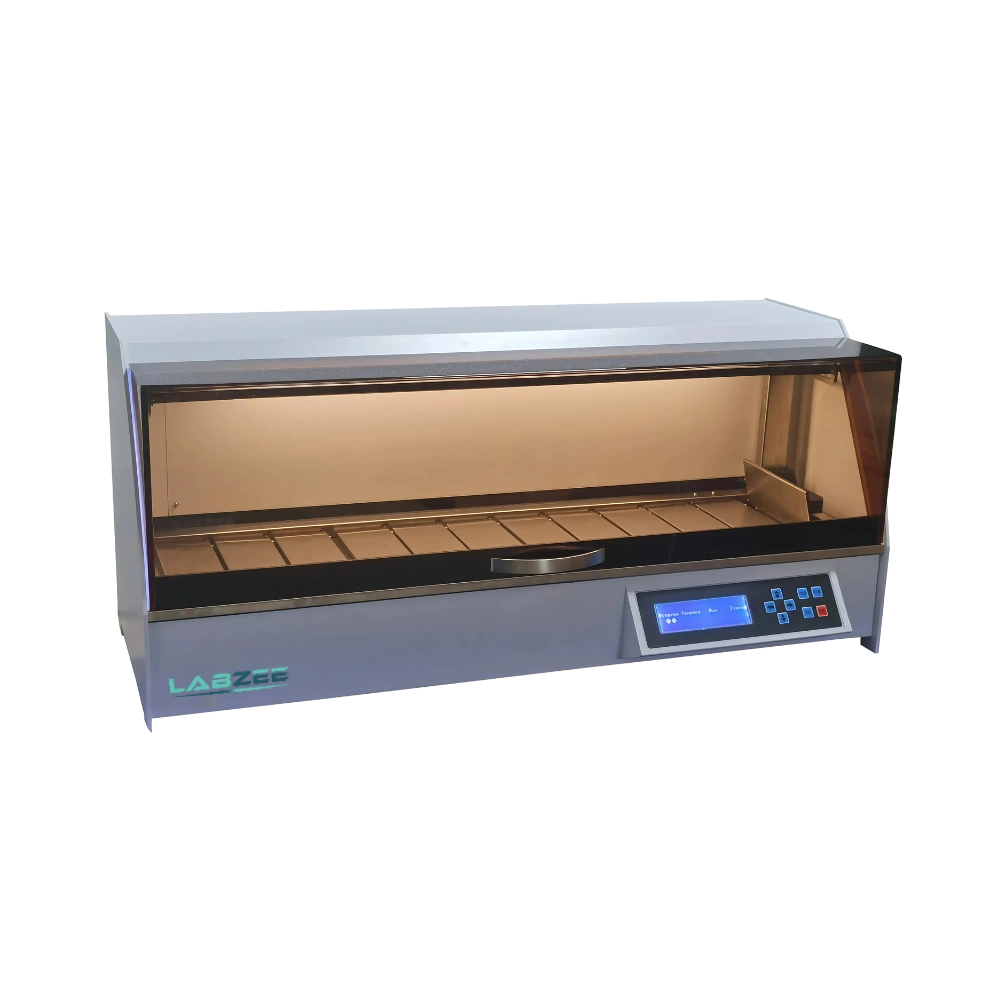
Labzee Automatic Tissue Processors are designed to streamline and standardize histology tissue preparation with minimal manual intervention. Our range includes models with single cylinder/tank capacities from 1000ml to 2200ml and specimen capacity per basket from 60 to 125 specimens. They perform sequential dehydration, clearing, and paraffin infiltration through fully programmable cycles, allowing adjustment of duration, reagent type, and temperature for different tissue protocols. Intuitive interfaces, enclosed chambers, and built-in safety controls enhance operational efficiency and laboratory safety – high throughput, consistent outcomes, and safe unattended operation.
$ 5550

$ 4975
