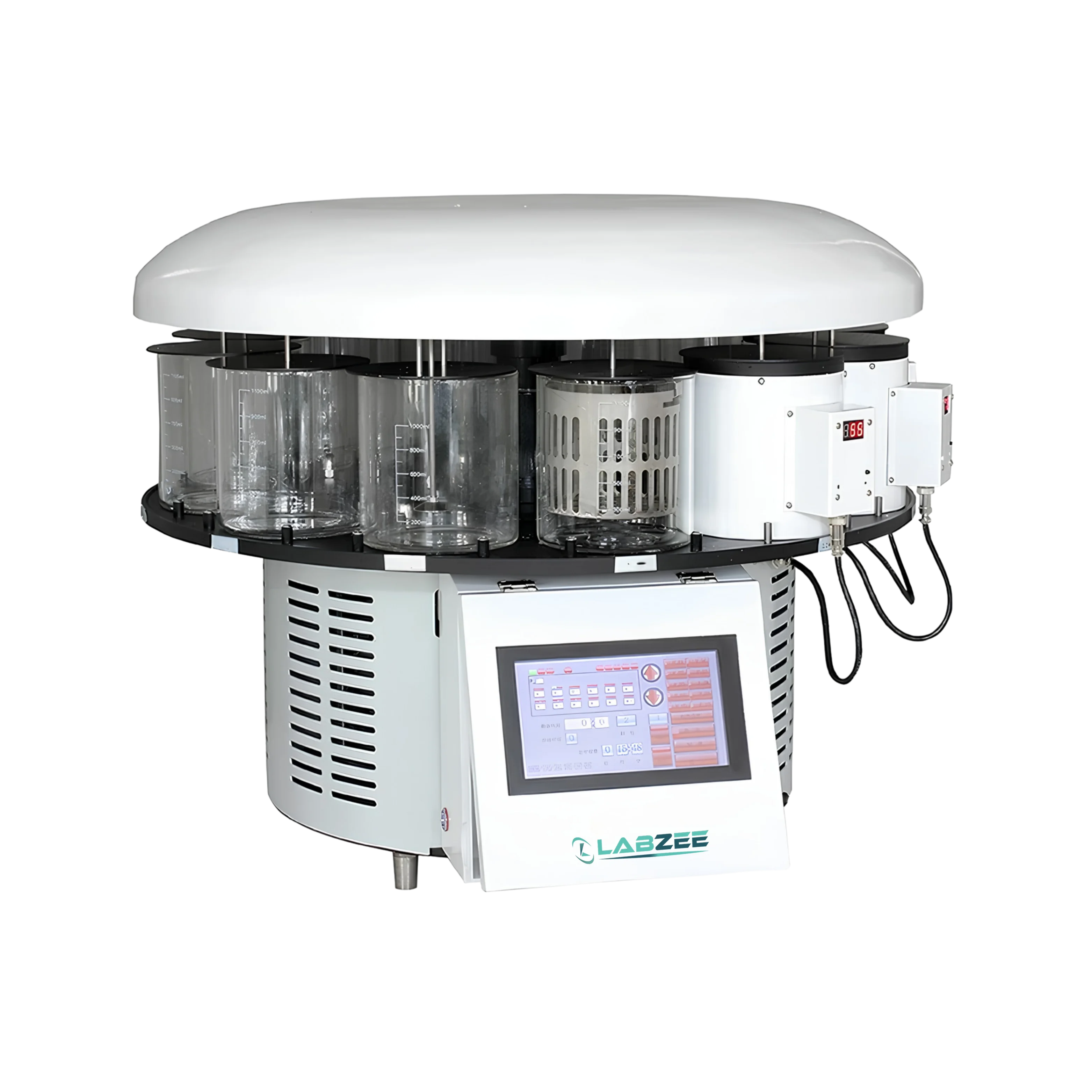
$ 6647
| Number of Processing Steps | 12 Steps |
| Temperature Range | 60 - 99℃ |
| Ambient Temperature | +5℃ - 40℃ |
| Ambient Humidity | <85% (at 20±5℃) |
| Working Time per Cup | 0 - 59 hr 59 min |
| Reagent Container Capacity | 1.2 L |
| Number of Reagent Containers | 9 |
| Basket Motion Vertical Reciprocation | 3 times/min |
| Wax Cup Capacity | 1 L |
| Number of Wax Cups | 3 |
| Tissue Basket Dimension | Φ95 × 100 mm |
| Layer Nacelle | Φ95 × 80 mm, 5 layers |
| Power Consumption | 400 - 500 W |
| Product Dimension | 670 × 550 × 680 mm |
| Machine Packing Dimension | 750 × 760 × 700 mm |
| Tank Packing Dimension | 600 × 400 × 550 mm |
| Net Weight | 53 Kg |
| Gross Weight | 100 Kg |
Extra paraffin tank
Extra reagent tank
Reagent Bottle × 9 Pieces
Paraffin Wax Tank × 3 Pieces
Parafin Wax Tank Connection Line × 3 Pieces
Tissue Basket × 1 Piece
Tissue Cassette × 20 Pieces
Hexagonal Wrench × 1 Piece
Screwdriver ×1 Piece
Fuse(5A) × 2 Pieces
Power Line × 1 Line
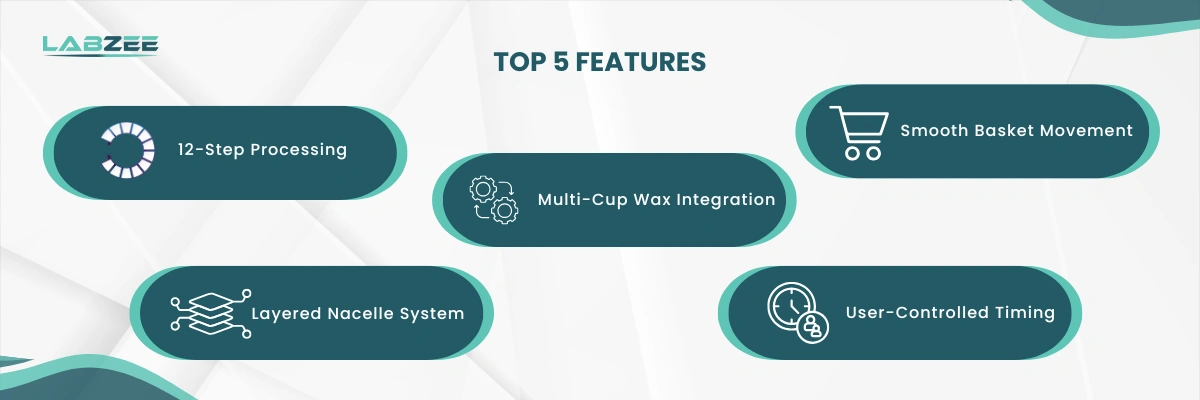
Complete Processing Cycle: Full dehydration, clearing, and wax infiltration in one unit.
Reagent & Wax Capacity: Multiple reagent containers and wax cups for efficient transitions.
Vertical Reciprocation: Regular up‑and‑down basket motion for even reagent contact.
Programmable Working Time: Adjustable timing per cup for flexible protocols.
Stable Temperature Control: Consistent temperature for uniform paraffin infiltration.
• Clinical Diagnostics: Used for routine tissue processing of biopsies and surgical specimens.
• Academic Research: Applied for customizable protocols in university and research labs.
• Pathology Labs: Designed for consistent dehydration, clearing, and wax infiltration.
• Life Sciences Research: Suitable for high‑volume workflows with vertical reciprocation and multi‑layer nacelle.
• High‑Throughput Labs: Intended for demanding environments requiring consistent, repeatable results.
Frequently Asked Questions
1: How many steps are included in the Spin Tissue Processor BZSTP-502 workflow?
The Spin Tissue Processor BZSTP-502 features a complete 12-step processing cycle, allowing seamless tissue dehydration, clearing, and paraffin embedding in one compact unit.
2: What reagent and wax container capacities does the device support?
It includes 9 reagent containers with 1.2 L capacity each and 3 wax cups holding 1 L each, which ensures efficient reagent transitions and stable paraffin infiltration.
3: How does the tissue movement mechanism work in the Spin Tissue Processor BZSTP-502?
This unit operates with vertical reciprocation at 3 times per minute, enhancing reagent penetration and uniform tissue exposure throughout the processing cycle.
4: What is the temperature control range and operating environment for this processor?
The temperature range is 60-99°C, and it operates effectively in ambient conditions between +5°C to 40°C with humidity under 85%, maintaining optimal processing stability.
5: Is the Spin Tissue Processor BZSTP-502 suited for high-volume tissue workflows?
Yes, with a spacious 5-layer nacelle system, vertical tissue basket movement, and programmable working time, it is highly suited for demanding lab environments handling large sample volumes.
6: Can you describe what a Spin Tissue Processor is used for?
A Spin Tissue Processor is a laboratory device used to prepare biological tissue samples for histological examination. It automates the process of dehydrating, clearing, and infiltrating tissues with paraffin, ensuring consistent and high-quality results for microscopic analysis.
7: How does the spinning mechanism improve tissue processing?
The spinning action enhances the movement of reagents through the tissue samples, allowing for faster and more uniform processing. It reduces the time needed for each step and improves reagent penetration, which helps maintain tissue integrity and morphology.
8: Can you process multiple samples at once in a Spin Tissue Processor?
Yes, most models are designed to handle multiple cassettes or containers at once. This batch-processing capability improves workflow efficiency, especially in high-throughput laboratories where large volumes of tissue need to be processed daily.
9: What types of tissues can be processed in a Spin Tissue Processor?
A wide range of soft tissues, such as biopsies, organ samples, and surgical specimens, can be processed. The system is flexible enough to handle small or large samples, making it suitable for both clinical and research settings.
10: Can you program different processing protocols on the Spin Tissue Processor?
Yes, modern Spin Tissue Processors come with programmable controls that allow users to customize the time, temperature, and reagent sequence for each step. This ensures that different tissue types receive optimal treatment for accurate histological evaluation.
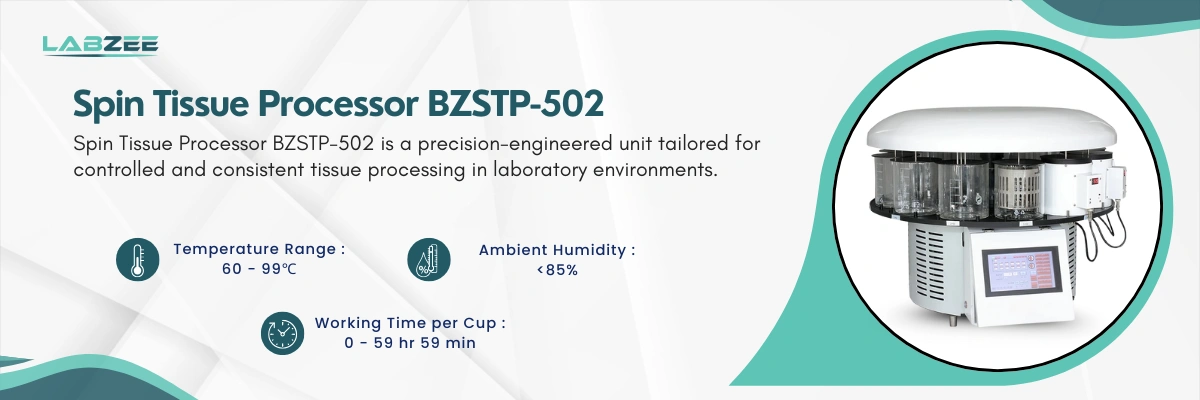
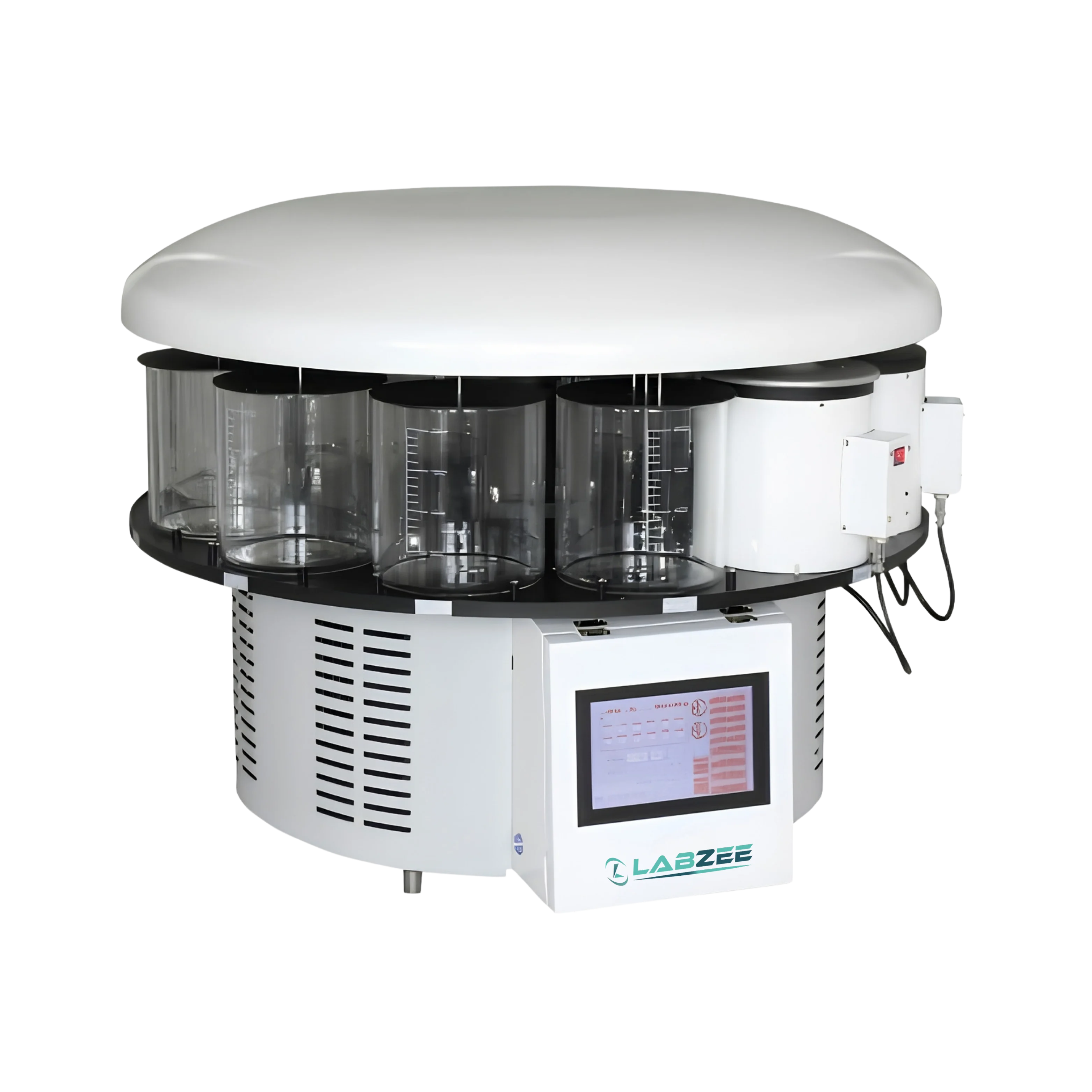
Labzee Spin Tissue Processors designed for rapid and uniform processing of biological tissue samples using centrifugal motion. They combine precise reagent delivery with controlled spinning action to accelerate dehydration, clearing, and paraffin infiltration. Our rotary tissue processors support multiple sample baskets, customizable protocols, and efficient reagent usage to enhance throughput. Their spinning mechanism improves reagent penetration and reduces processing time – faster results without damaging tissue integrity while increasing daily sample volume and reducing operator effort.
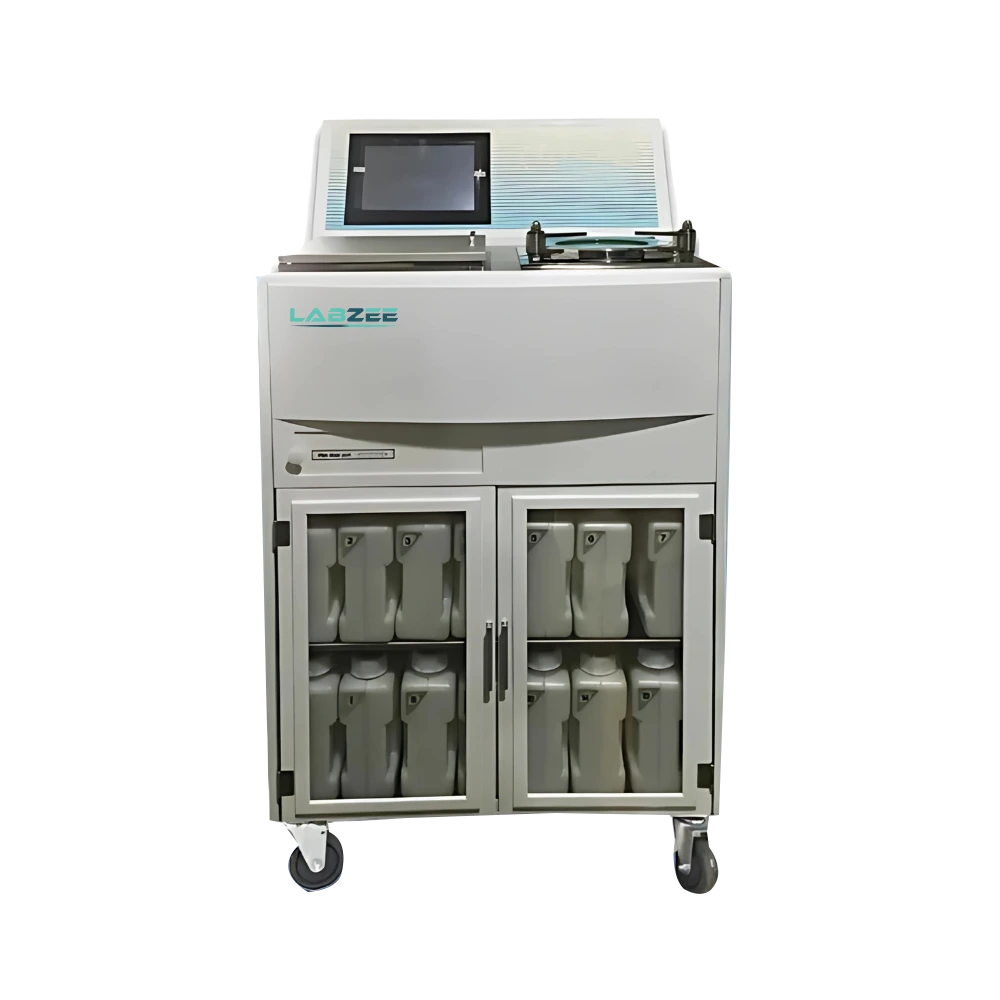
Labzee Enclosed Tissue Processors designed for safe, contamination-free tissue processing in histology labs. They perform fully enclosed dehydration, clearing, and paraffin infiltration – minimizing exposure to harmful reagents and protecting specimen integrity. Touch-screen controls and integrated safety protocols enhance user protection. Our range includes models with reagent bottle capacities from 2.3L to 4.8L, retort volumes from 3.8L to 6.8L, and wax cylinder volumes from 2.6L to 5.5L (30–65°C). Customizable programs, large sample capacities, and advanced reagent handling support high-volume workflows.
$ 17618

$ 16560
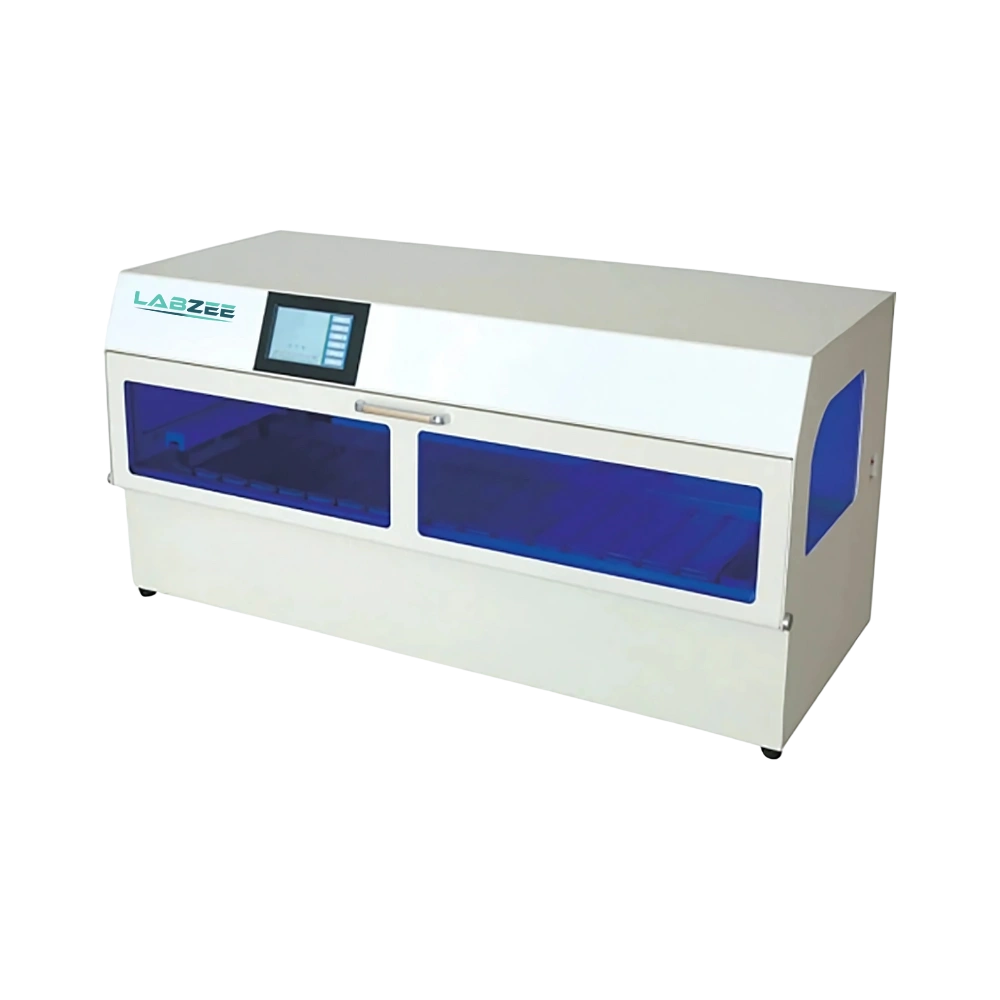
Labzee Double Basket Tissue Processors are built for high-throughput tissue preparation, allowing simultaneous processing of two sample batches. They perform efficient automated dehydration, clearing, and paraffin infiltration with precision and speed. Our Tissue Processors accommodate large sample volumes with programmable cycles and independent basket control for workflow flexibility. Their dual-chamber design, touchscreen interface, and safety monitoring support busy laboratory settings and high-demand histology workflows – process more samples per day with less hands-on time.
$ 9212
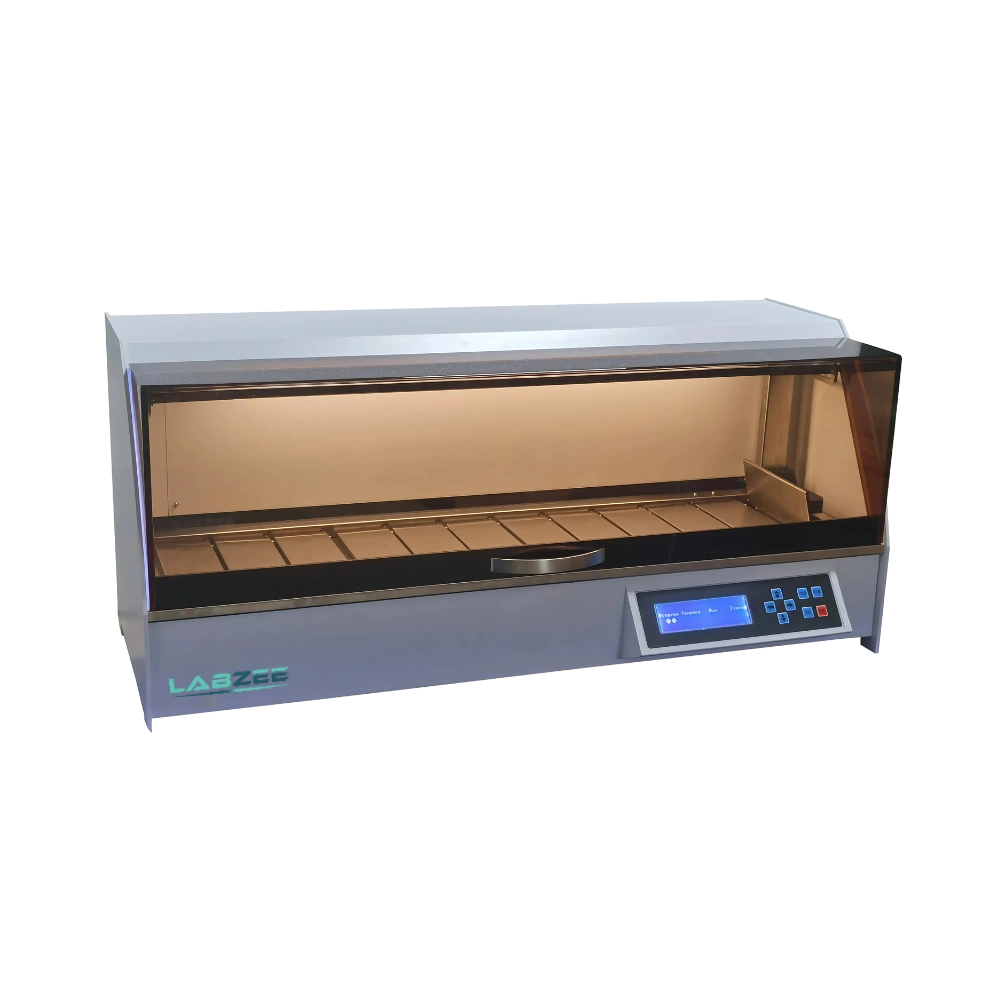
Labzee Automatic Tissue Processors are designed to streamline and standardize histology tissue preparation with minimal manual intervention. Our range includes models with single cylinder/tank capacities from 1000ml to 2200ml and specimen capacity per basket from 60 to 125 specimens. They perform sequential dehydration, clearing, and paraffin infiltration through fully programmable cycles, allowing adjustment of duration, reagent type, and temperature for different tissue protocols. Intuitive interfaces, enclosed chambers, and built-in safety controls enhance operational efficiency and laboratory safety – high throughput, consistent outcomes, and safe unattended operation.
$ 5550

$ 4975
