What Particle Size Screening Is Actually Checking
A material sample rarely consists of particles that are all one size. Screening separates that sample into size fractions by passing it through a stack of mesh sieves, each with a finer opening than the one above it, so material settles into layers by particle diameter. The resulting weight distribution across those layers is what gets recorded as a sieve analysis, and it is used to confirm that a material batch meets a specification, whether that specification comes from a construction standard, an agricultural grading requirement, or an internal quality control limit.
Doing this by hand, shaking a stack of sieves manually introduces enough inconsistency between operators that most labs and processing sites long ago moved to a mechanical sieve shaker machine for repeatable results.
How a Mechanical Sieve Shaker Moves Material Through the Stack
A stack of sieves is clamped together with the coarsest mesh on top and the finest at the bottom, sitting above a solid collection pan. The unit then applies a combination of vertical tapping and horizontal or rotary motion to the stack, which keeps particles moving across the mesh surface rather than settling in one spot. Vertical tapping helps break up clumps and keeps a mesh from blinding a term for openings becoming blocked by particles wedged in place while the horizontal component spreads material evenly across the sieve area.
Over a set run time, particles smaller than a given mesh opening pass through to the layer below, while larger particles stay behind. Weighing what remains on each sieve afterward produces the size distribution that a sieve analysis machine is built to generate.
Diagram placeholder: stacked sieve column with vertical and horizontal motion arrows
Where Material Screening Shows Up Across Industries
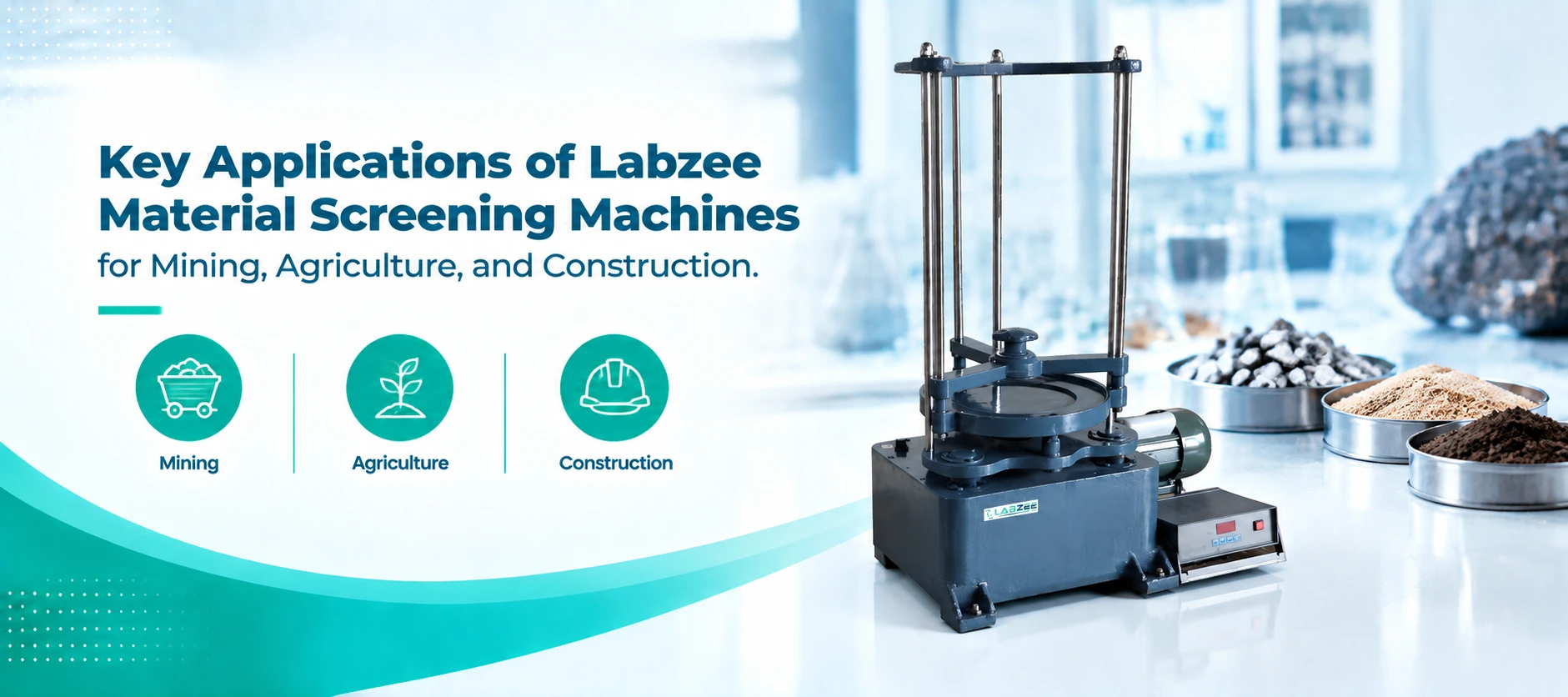
In mining and aggregate processing, screening checks whether crushed rock or ore falls within a target size range before it moves further down a processing line, and out-of-spec material can be flagged before it reaches later, more costly processing stages. In agriculture, grain and seed samples are screened to confirm size uniformity and to separate out foreign material or damaged kernels ahead of grading or storage.
Construction material testing relies on sieve analysis to verify that sand, gravel, and aggregate blends meet the gradation limits set for concrete mixes or road base material, since a distribution outside those limits can affect strength and workability later in the build. In laboratory and research settings, the same equipment is used on a smaller scale to check powder consistency, soil samples, or any material where particle size affects how a process or formulation behaves.
Common Mistakes When Selecting a Sieve Shaker Machine
Choosing sieve diameter without checking sample volume
A sieve set sized for small lab samples will bottleneck if a site regularly runs larger batches, leading to longer run times or repeated partial loads to get a full reading.
Overlooking amplitude and timer control
Fixed-amplitude units limit how finely a run can be tuned to a specific material. Adjustable amplitude and a programmable timer make it easier to match settings to a material's behavior rather than using one setting for everything.
Ignoring clamping and vibration transfer
A weak clamping mechanism can let sieves shift mid-run, skewing results. Checking how firmly a unit locks the sieve stack in place is worth doing before comparing any other spec.
Assuming all manufacturers test the same way
Screening machine manufacturers do not always validate performance against the same reference standards. Reviewing the specifications listed across the sieve shaker category page before deciding helps line up units against a consistent set of criteria.
The Broader Category - Sieve Shakers
The BZMSH-501 belongs to a wider category of sieve shakers that spans mechanical tapping-and-rotary units, electromagnetic sieve shakers built for finer or more delicate powders, and wet-sieving attachments used when a material needs to be screened with water rather than dry. Buyers comparing this category typically weigh sieve diameter compatibility, amplitude range, timer precision, and how the unit handles heavier mineral or aggregate loads compared with lighter agricultural or laboratory samples.
The full sieve shaker range is a useful starting point for comparing those options side by side, and the wider catalogue of testing and laboratory equipment can be reviewed from the Labzee home page for context on how screening equipment fits alongside other material testing instruments.

Mechanical Shaking Compared With Manual Sieving
Manual sieving depends entirely on how consistently a person shakes and taps a sieve stack, which varies from one operator to the next and even from one run to the next for the same operator. A mechanical sieve applies the same amplitude, motion pattern, and run time on each cycle, which is what makes results comparable across different samples, shifts, and operators.
| Consideration | Manual Sieving | Mechanical Shaker |
|---|---|---|
| Consistency | Varies by operator | Fixed amplitude and timing |
| Run time | Operator-dependent | Set and repeatable |
| Suited to | Very small, occasional checks | Routine or higher-volume testing |
For a one-off check on a handful of particles, manual sieving may still be adequate. For routine quality control across mining, agriculture, or construction material testing, a material testing machine drawing consistent, repeatable data from each run is generally the more practical choice.
Mesh Care and Long-Term Accuracy
Sieve mesh wears and stretches gradually with use, and a stretched opening reads material as smaller than it actually is, which quietly skews results if it goes unnoticed. Periodic inspection against a calibrated reference sieve, along with careful cleaning that avoids scraping or puncturing the mesh, keeps a sieve stack producing figures that match what a fresh set would report.
Storage matters too — sieves left stacked with residual material or exposed to moisture can corrode or clog between uses, adding cleaning time before the next run and, over enough cycles, shortening how long a given mesh stays within tolerance.