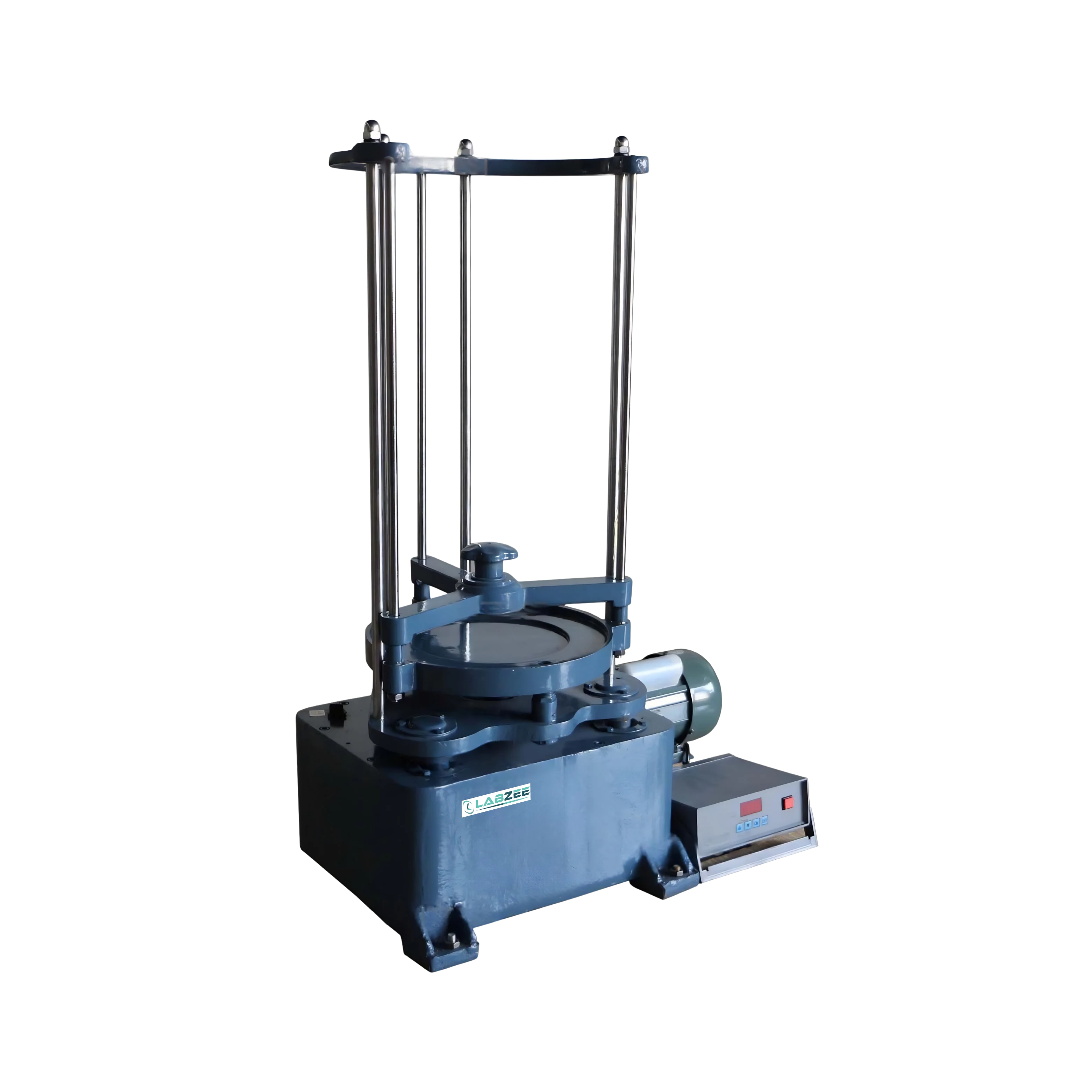
$ 2146
| Diameter of Sieves | 300 mm |
| Total Height of Sieves | 440 mm |
| Measure of Discontinuity of Sieve Base | 8 mm |
| Shaking Times of Sieves | 221 times/min |
| Peak Attack Times | 147 times/min |
| Motor Revolution Times | 1400 times/min |
| Radius of Gyration | 12.5 mm |
| Power | 0.37 KW |
| Dimensions | 600 × 400 × 880 mm |
| Weight | 130 Kg |
• Mechanical Sieve Shaking: Agitates sieve stacks to move particulate materials across the sieve mesh for separation and classification.
• Peak Impact Action: Applies repeated impact during sieve operation to assist particle movement through the sieve stack.
• Motor-Driven Operation: Uses a motor-driven mechanism to generate mechanical movement for sieve shaking.
• Gyratory Movement: Uses a defined radius of gyration to produce sieve movement during particle separation.
• Pharmaceutical Industry: Performs particle size analysis of powders and granules during pharmaceutical material testing.
• Chemical Industry: Determines particle size distribution in powders and granular chemical materials.
• Ceramics Industry: Evaluates the particle size of ceramic powders and granular raw materials.
• Mining and Mineral Industry: Classifies mineral samples and particulate materials by particle size.
Frequently Asked Questions
1: What is the Mechanical Sieve Shaker BZMSH-501 used for?
The BZMSH-501 is used for accurate particle size separation and grading of dry materials in labs and industrial environments.
2: What materials can be tested using this shaker?
The BZMSH-501 is suitable for soil, sand, cement, minerals, powders, and similar granular or dry samples.
3: Can BZMSH-501 accommodate different sieve sizes?
Yes, the shaker BZMSH-501 supports multiple sieve layers and various sieve diameters for flexible usage.
4: Is the BZMSH-501 suitable for continuous operation?
Yes, the BZMSH-501 is designed for durable, consistent performance in continuous laboratory or field testing.
5: In which industries is this sieve shaker commonly used?
The BZMSH-501 is commonly used in construction, mining, pharmaceuticals, agriculture, and geotechnical research.
6: What is a mechanical sieve shaker used for?
A mechanical sieve shaker is used to separate and classify dry materials by particle size using multiple sieve layers.
7: Can they support different sieve diameters?
Yes, they support various sieve sizes and allows stacking of multiple sieves for detailed gradation analysis.
8: In which industries are they commonly used?
They are widely used in construction, mining, pharmaceuticals, agriculture, and materials research.
Labzee Vibratory Sieve Shakers are designed for precise particle size analysis and efficient separation across a wide range of materials. They deliver consistent motion through advanced vibration mechanisms and adjustable amplitude settings for optimal sieving performance. These units accommodate various sieve sizes and stack configurations, making them suitable for both coarse and fine particle testing. Their user-friendly interfaces, durable construction, and low-maintenance design ensure long-term reliability in laboratory workflows. Our Vibratory Sieve Shakers are ideal for applications in pharmaceuticals, construction materials, mining, chemicals, and environmental testing.
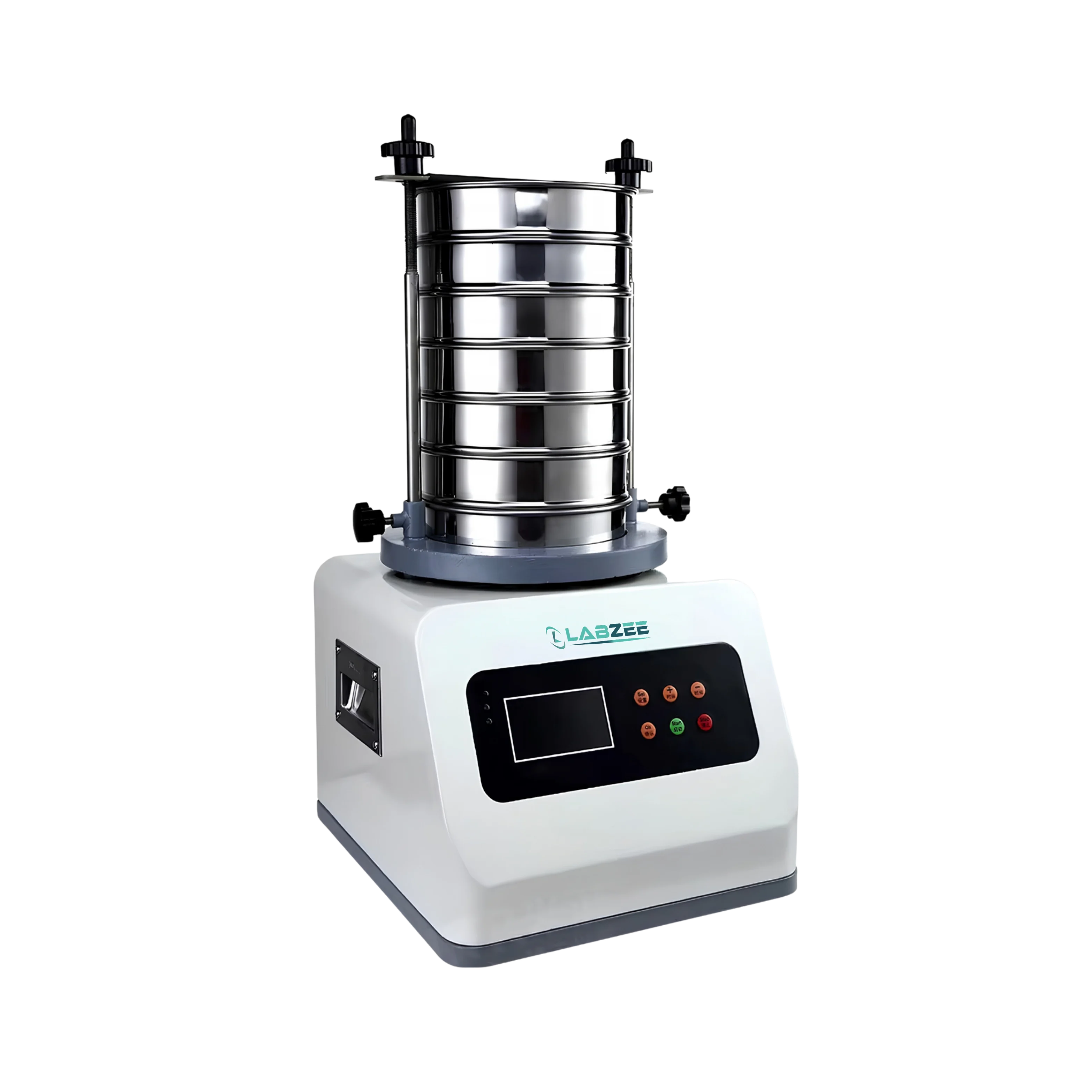
$ 2295
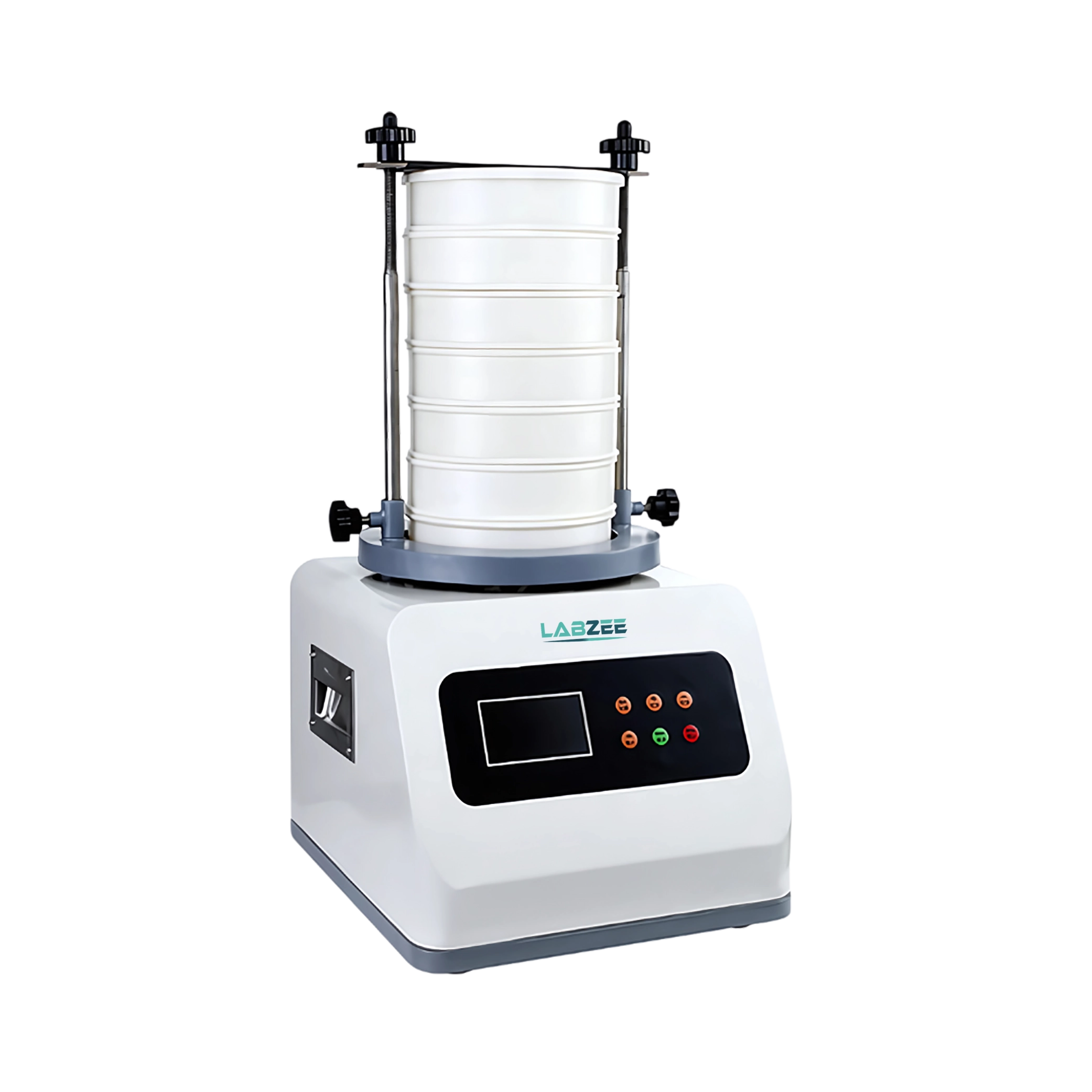
$ 2859
Labzee Test Sieve Shakers are precision instruments for accurate particle size analysis in laboratory environments. They utilize controlled mechanical vibrations to separate materials across different sieve sizes. These shakers include adjustable settings for time and vibration amplitude to ensure consistent performance. Their compact build and user-friendly interface make them easy to operate and fit into limited lab spaces. Our Test Sieve Shakers are ideal for use in pharmaceutical, food, chemical, and academic laboratories.

$ 1824
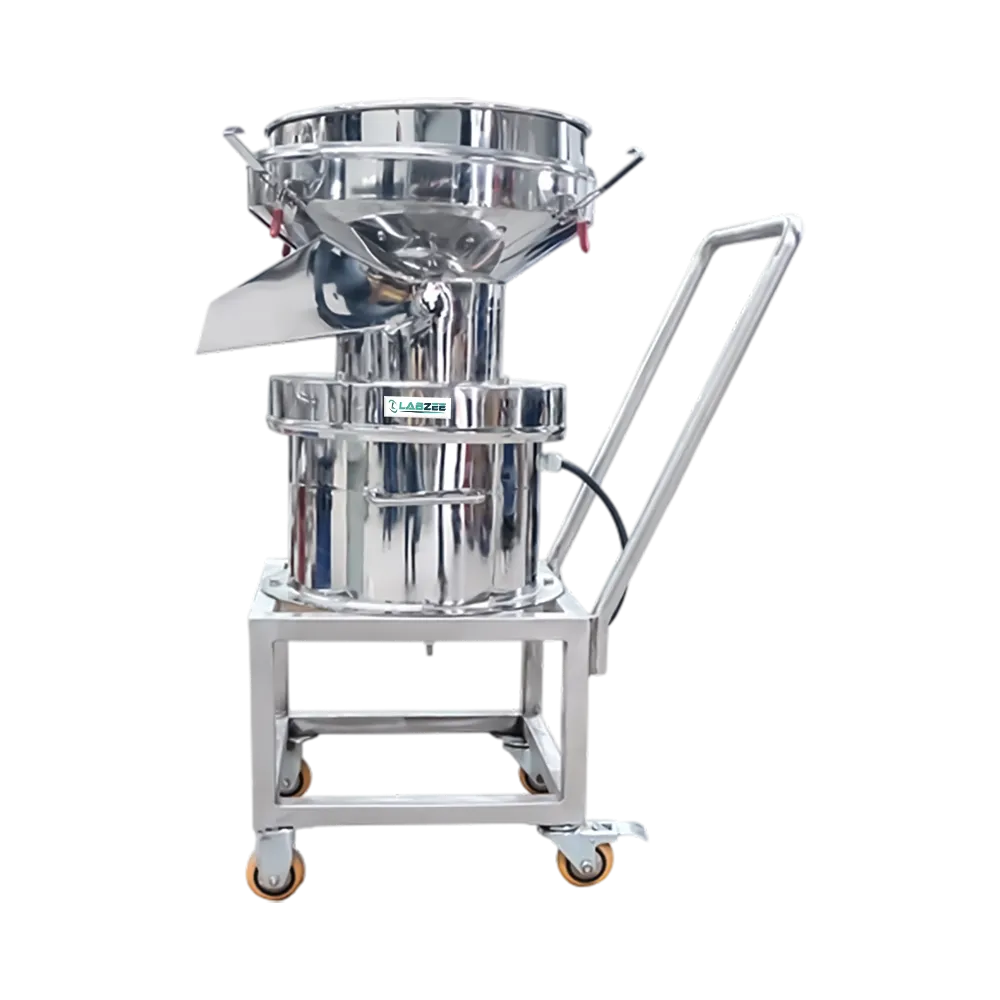
$ 2399
Rotary Sieve Shaker from Labzee provides circular sieve movement for separating and classifying powdered and granular materials by particle size. Our rotary sieve shakers provide particle size distribution through circular rotation and mechanical vibration to efficiently separate granular materials. Models with stainless steel sieves and multiple sieve layers support different sieve testing requirements. Rotary sieve shakers handle soil analysis, powder analysis, granule classification, and aggregate testing, providing organized particle size fractions for laboratory evaluation.

$ 1835
