
$ 1835
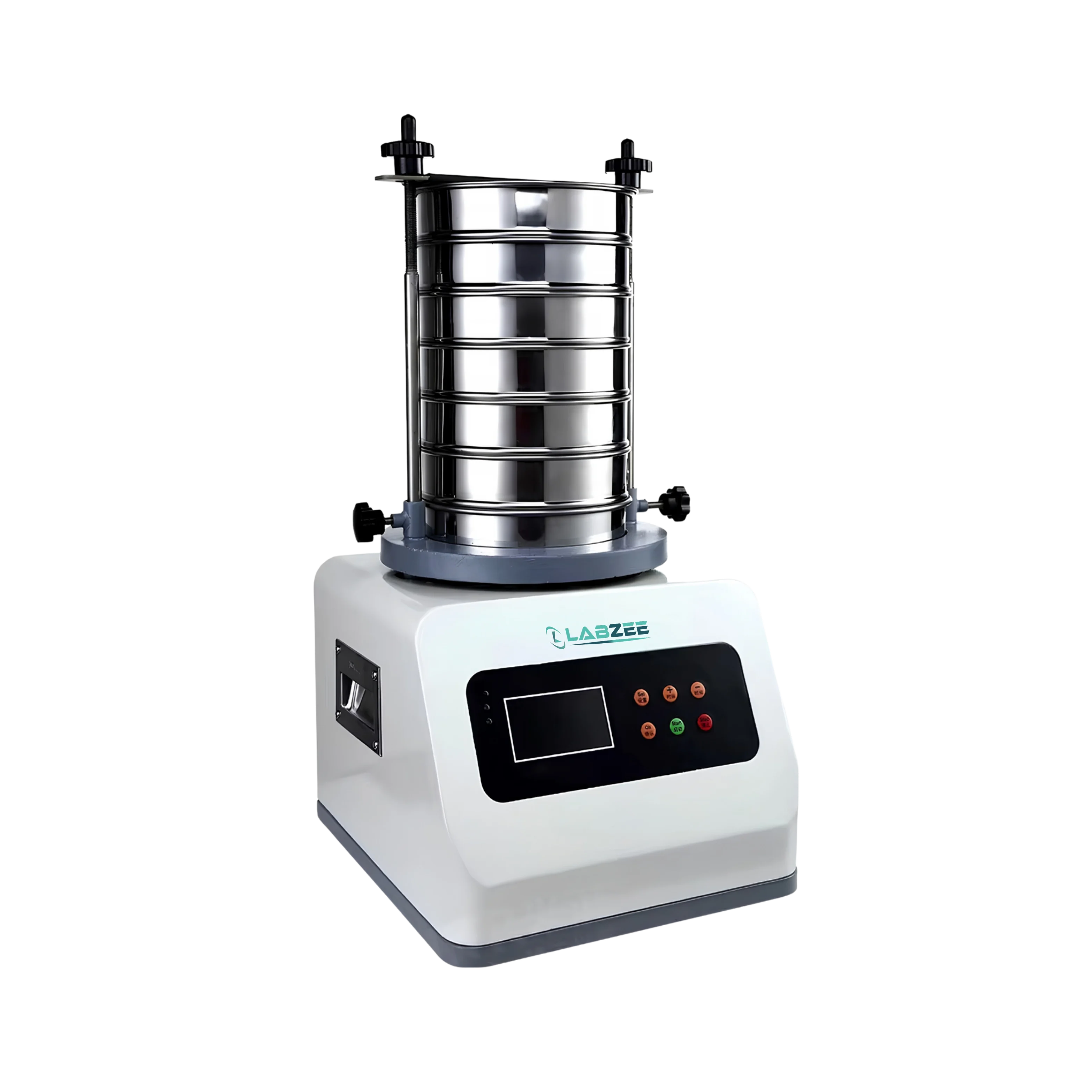
| Diameter of Sieves | 200 mm |
| Rotate Speed | 1450 rpm |
| Material | Stainless Steel |
| Type | Circular |
| Sieve Number | 1 to 8 layers |
| Granularity | 0.025 to 3 mm |
| Amplitude | 0 to 3 mm |
| Motor Power | 125 W, 220 V |
| Weight | 31 Kg |
• Multiple Sieve Layers: Accommodates 1 to 8 sieve layers for multi-level particle size separation.
• High-Speed Rotation: Operates at 1450 rpm for rapid sieve movement during separation.
• Digital Control Panel: Features a digital timer with Start and Stop buttons for cycle control.
• Vibration Tray: Motorized platform agitates the sieve stack through vertical or circular movement.
• Rubber Stoppers: Vibration-absorbing base feet help stabilize the shaker during operation.
• Pharmaceutical Industry: Analyzes powders and granules by particle size for material testing.
• Food Processing Industry: Classifies flour, powders, grains, and particulate ingredients by size.
• Chemical Industry: Separates and analyzes powdered and granular chemical materials.
• Construction Materials: Determines particle size distribution of sand, aggregates, and construction materials.
• Mining and Minerals: Classifies mineral samples and ores according to particle size.
Frequently Asked Questions
1: What motion does the shaker BZRSS-501 use for particle separation?
The BZRSS-501 uses circular rotary vibration for even and efficient particle grading.
2: How many sieve layers can BZRSS-501 hold?
The shaker BZRSS-501 can support up to 8 sieve layers depending on your analysis needs.
3: What is the main function of this shaker BZRSS-501?
The BZRSS-501 performs grading and particle size analysis using circular rotary motion.
4: Is BZRSS-501 easy to clean and maintain?
Yes, its stainless steel construction makes it durable and easy to clean.
5: Can the amplitude be adjusted?
Yes, the amplitude is adjustable for precise testing based on different materials.
6: What is the working principle of the Rotary Sieve Shaker?
They use circular vibration to separate particles by size through layered sieves.
7: What materials can be tested using these device?
They are suitable for soil, cement, food powder, metal granules, and other dry materials.
8: How many sieves can be used at once?
Up to 8 sieve layers can be stacked depending on the sample and requirement.
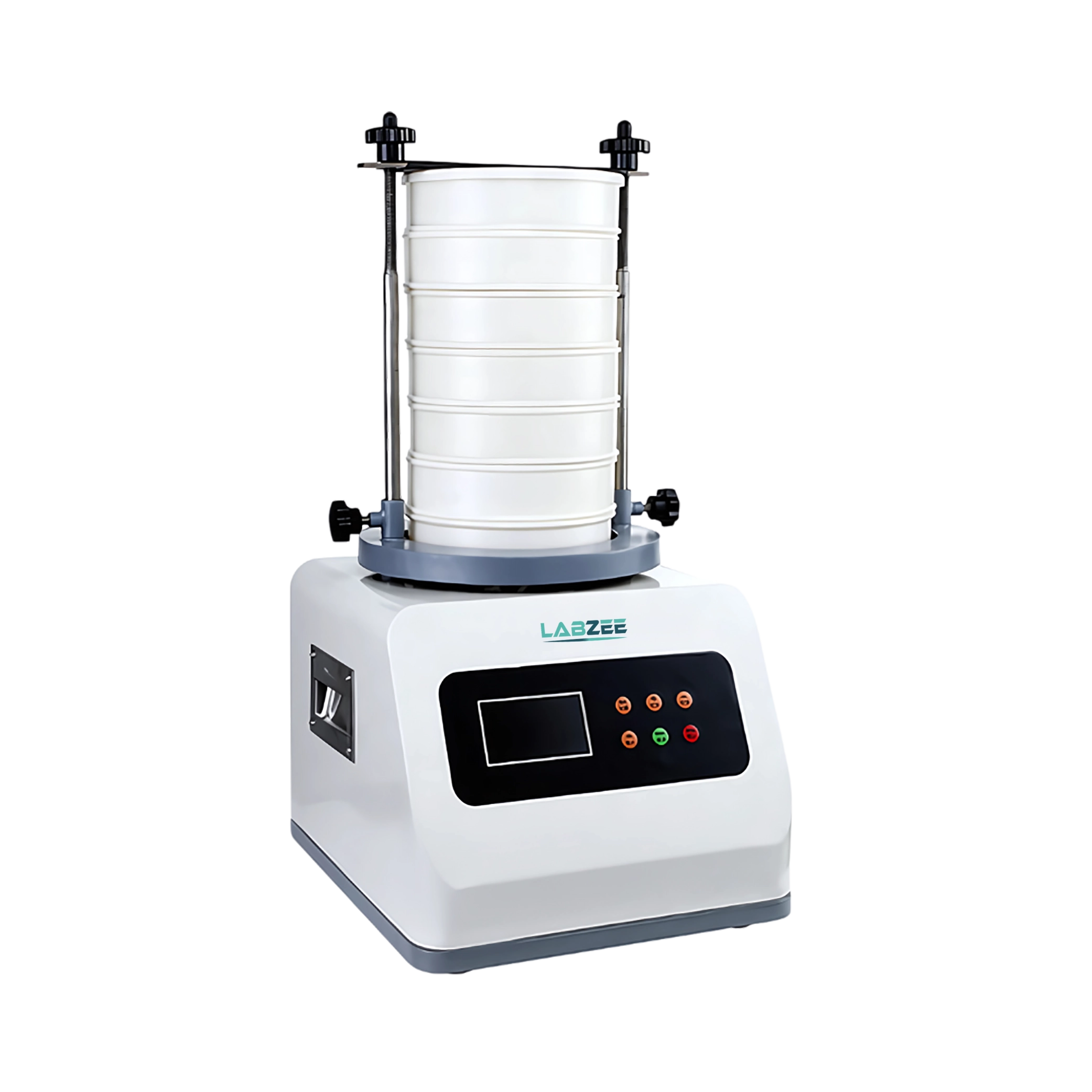
Labzee Vibratory Sieve Shakers are designed for precise particle size analysis and efficient separation across a wide range of materials. They deliver consistent motion through advanced vibration mechanisms and adjustable amplitude settings for optimal sieving performance. These units accommodate various sieve sizes and stack configurations, making them suitable for both coarse and fine particle testing. Their user-friendly interfaces, durable construction, and low-maintenance design ensure long-term reliability in laboratory workflows. Our Vibratory Sieve Shakers are ideal for applications in pharmaceuticals, construction materials, mining, chemicals, and environmental testing.
$ 3089
$ 2859
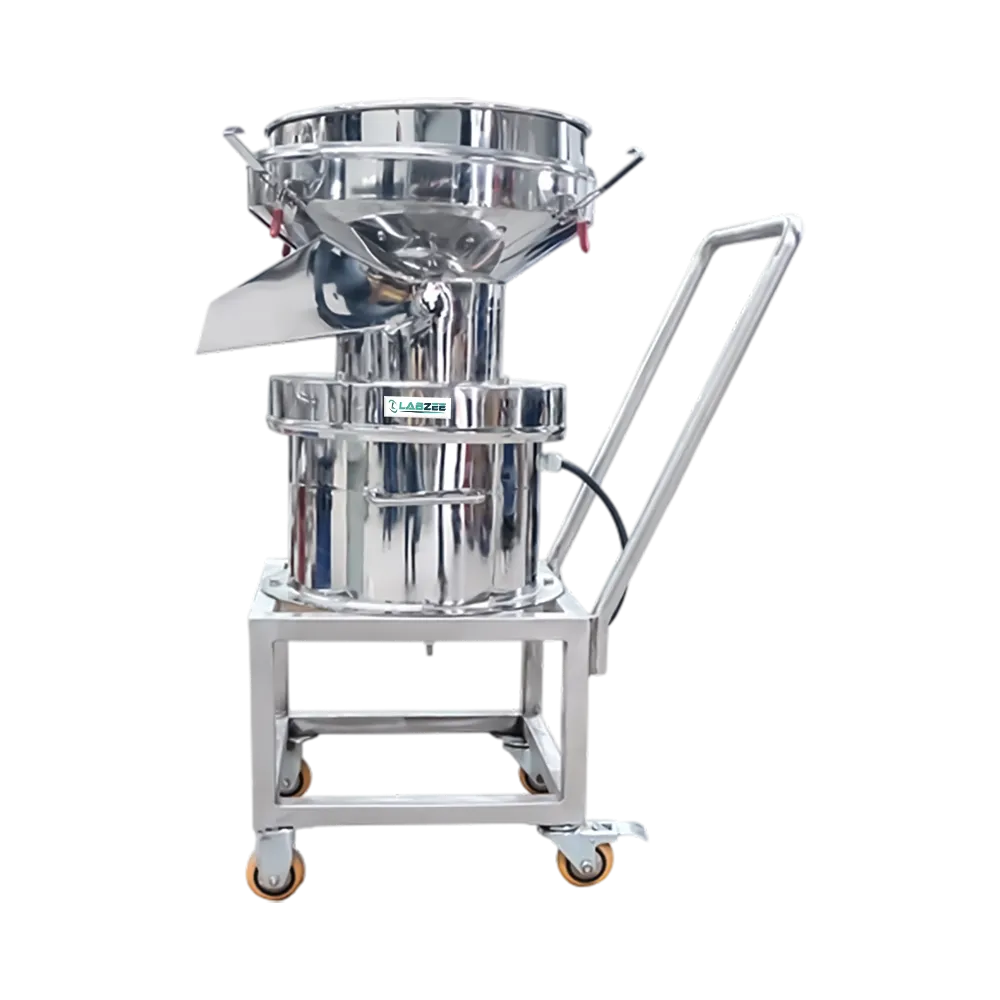
Labzee Test Sieve Shakers are precision instruments for accurate particle size analysis in laboratory environments. They utilize controlled mechanical vibrations to separate materials across different sieve sizes. These shakers include adjustable settings for time and vibration amplitude to ensure consistent performance. Their compact build and user-friendly interface make them easy to operate and fit into limited lab spaces. Our Test Sieve Shakers are ideal for use in pharmaceutical, food, chemical, and academic laboratories.

$ 1824
$ 2399
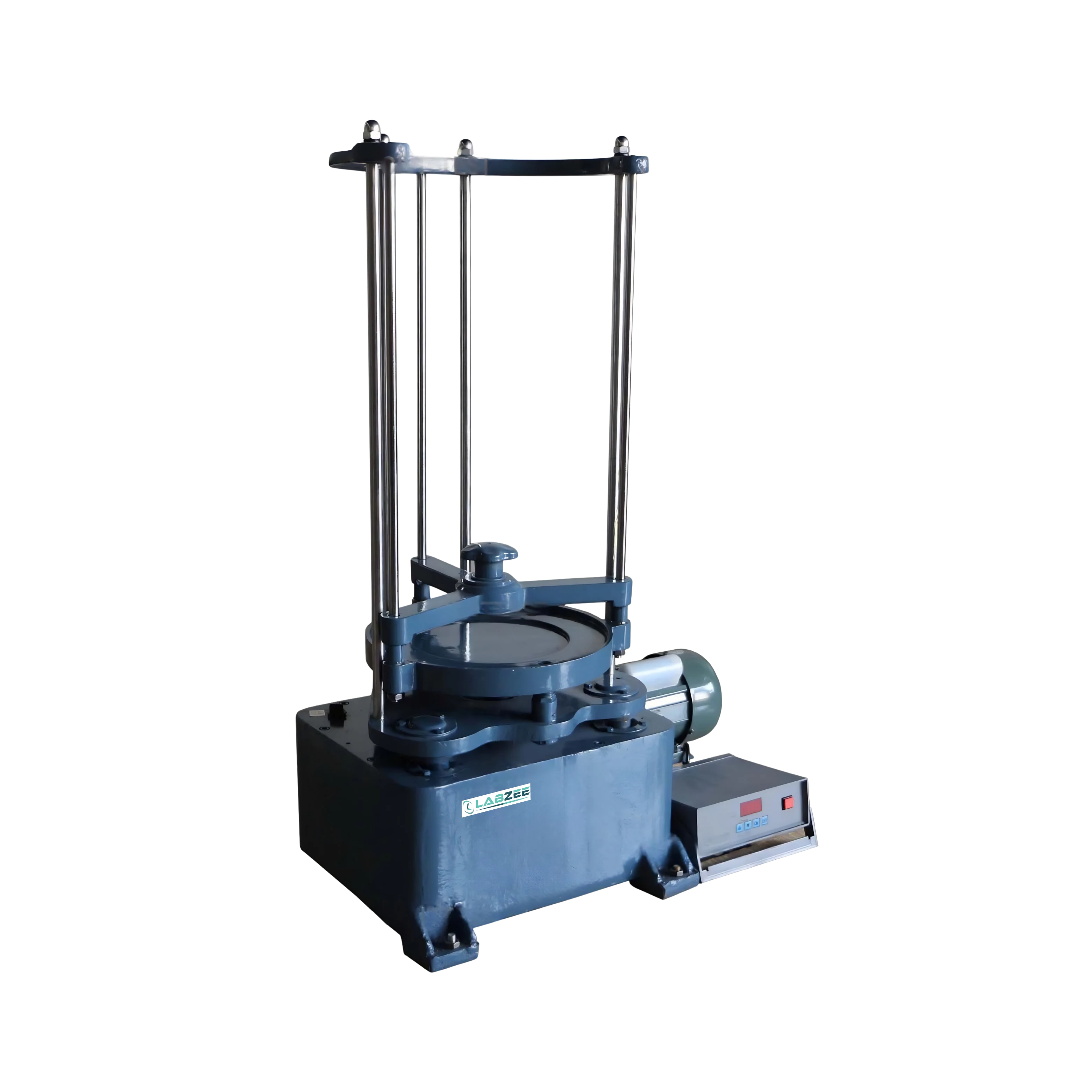
Mechanical Sieve Shaker from Labzee separates and classifies dry particulate materials according to particle size through mechanical shaking of stacked sieves. Our sieve shaker uses mechanical oscillation and impact action to move particles across the sieve mesh for particle size analysis and material classification, supporting repeatable sieving results. Multiple sieve layers allow different particle sizes to be separated during a single sieving process. Labzee Mechanical Sieve Shakers support laboratory testing and material analysis of powders, soil, and other dry particulate samples.
$ 2146
