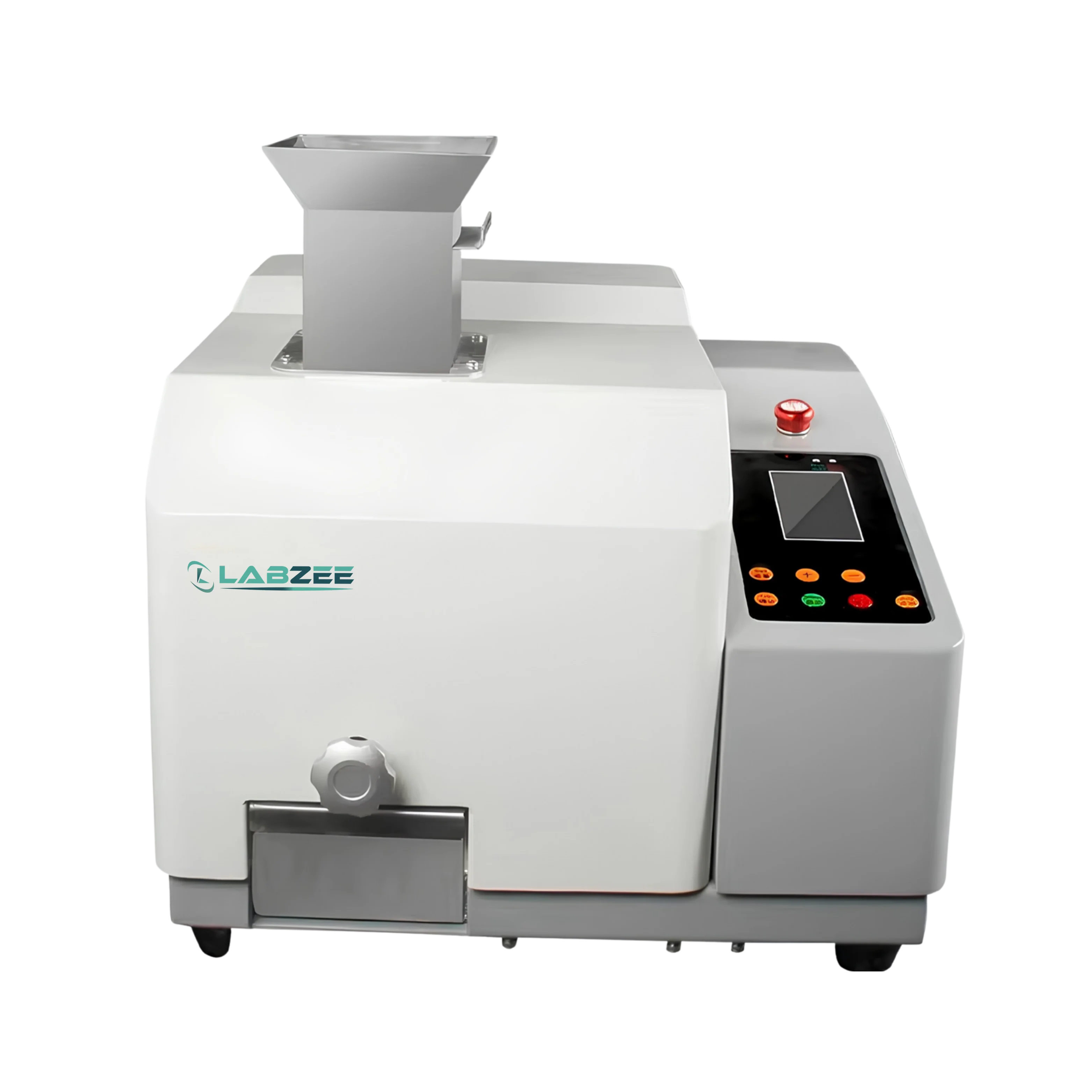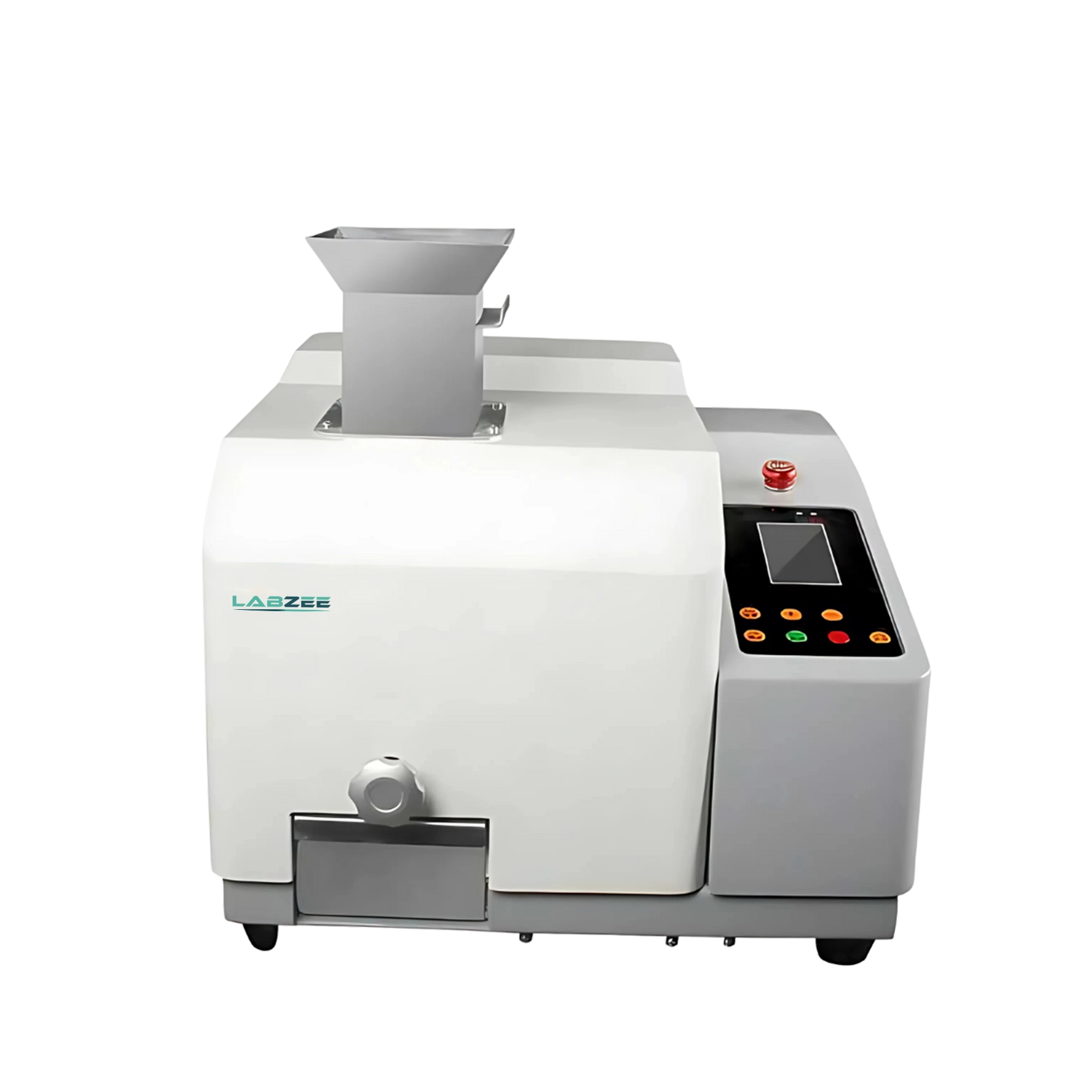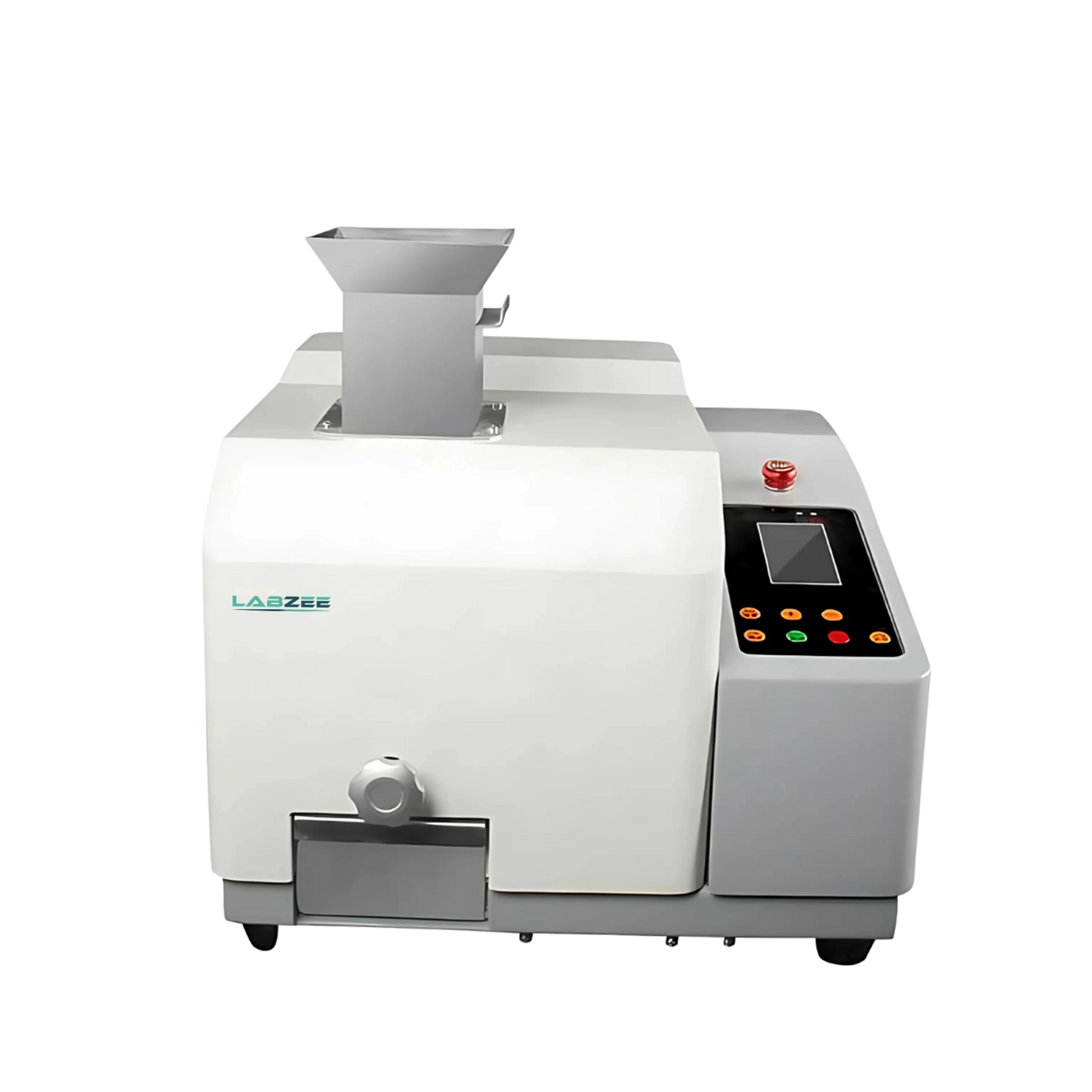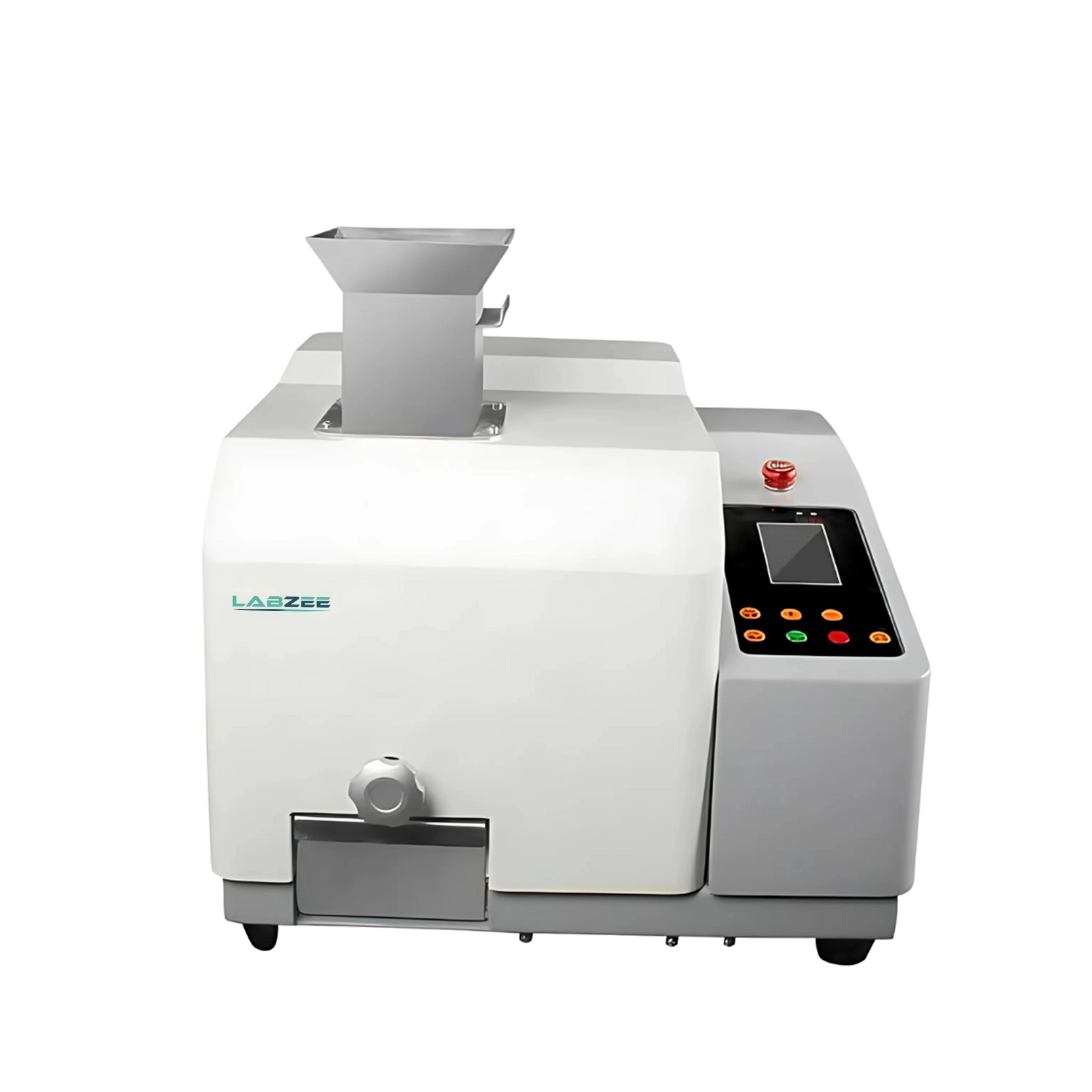
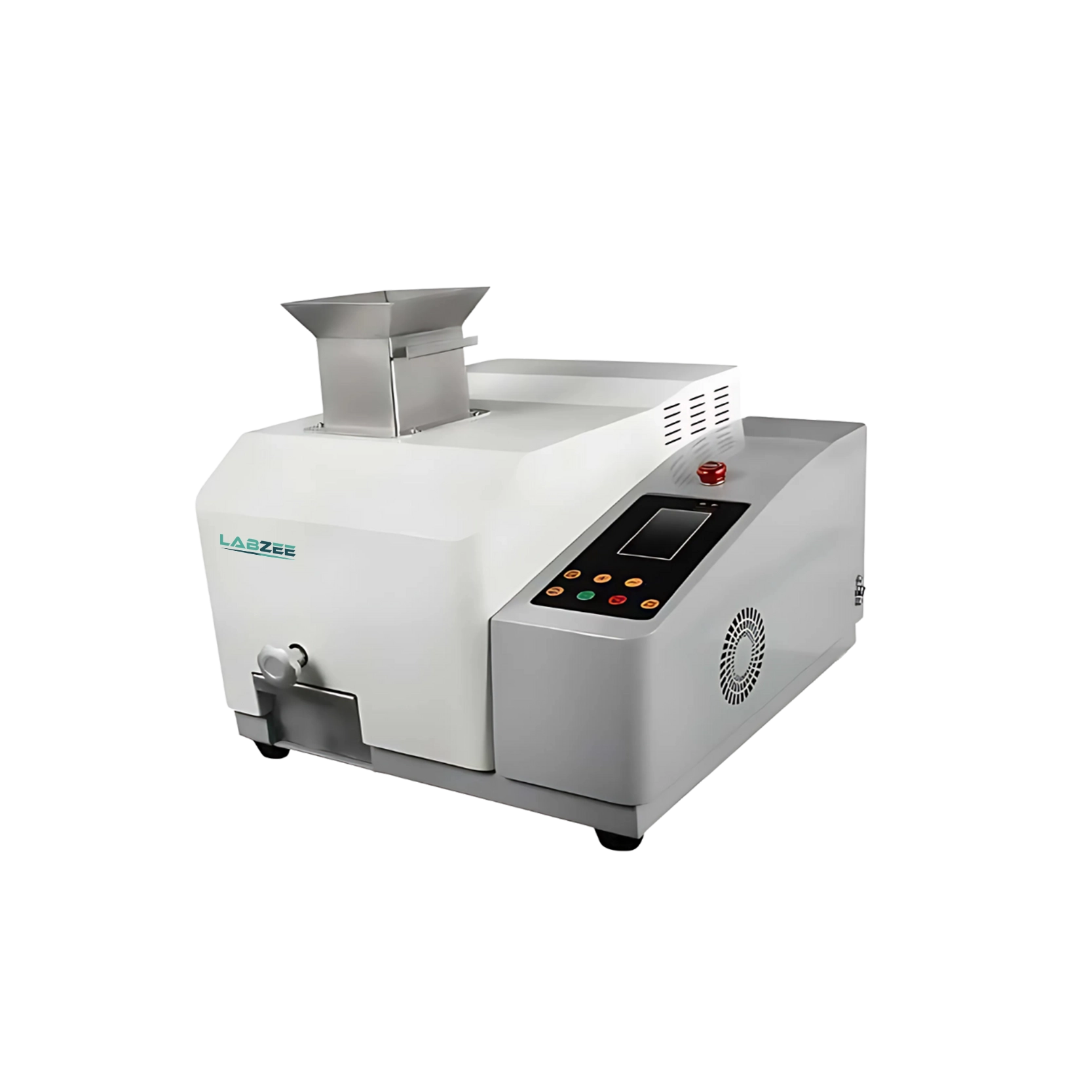
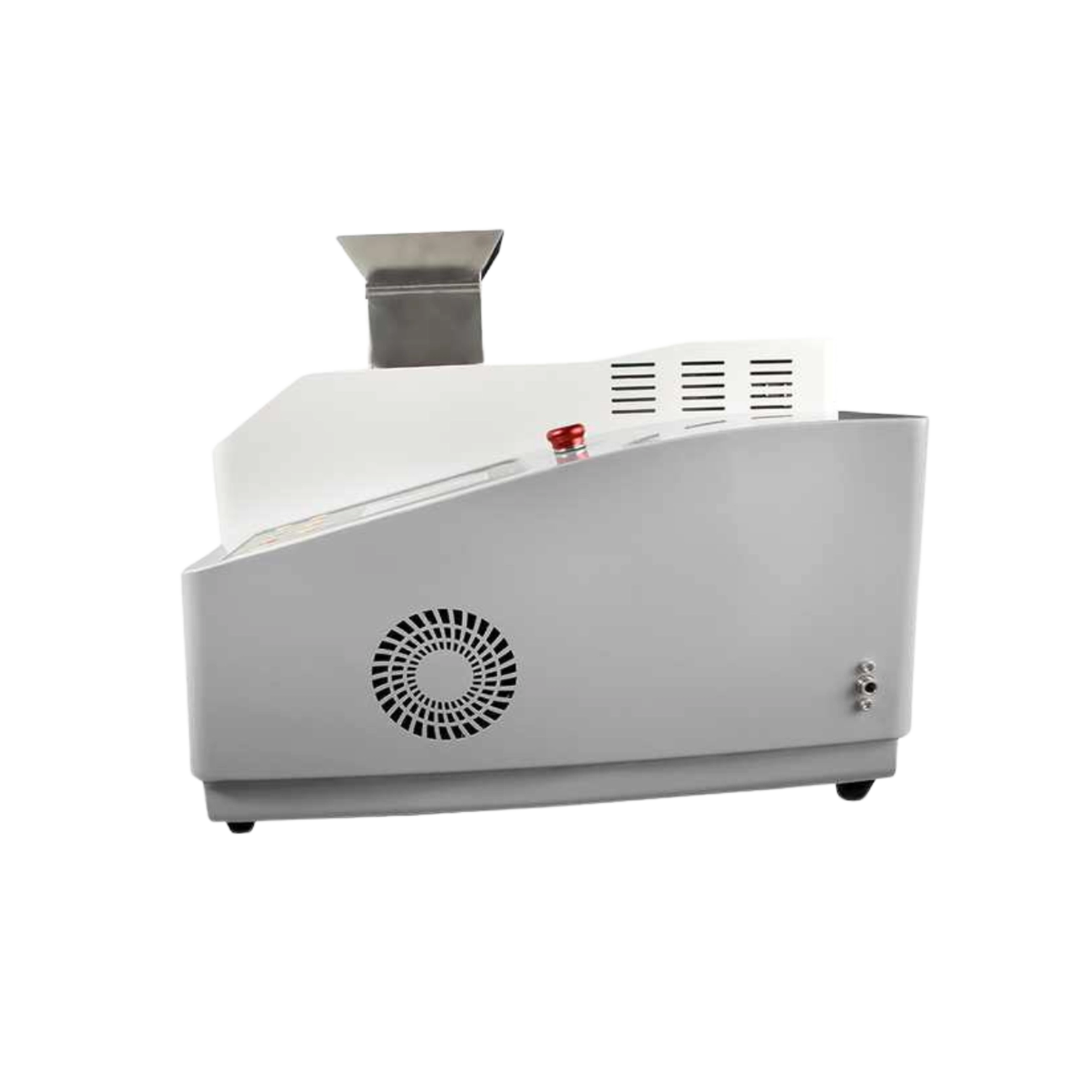
$ 16077
| Jaw Board Material | Tungsten Carbide |
| Throughput | 1-30 kg/h |
| Speed | 620 rpm |
| Feeding Port Size | 100 × 70 mm |
| Feed Size | ≤ 30 mm |
| Final Size (Material Size) | 1-10 mm |
| Crushing Hardness | < Moh's 5.0 |
| Power Consumption | 0.75 kW |
| Product Dimension (L×W×H) | 500 × 600 × 600 mm |
| Net Weight | 95 Kg |
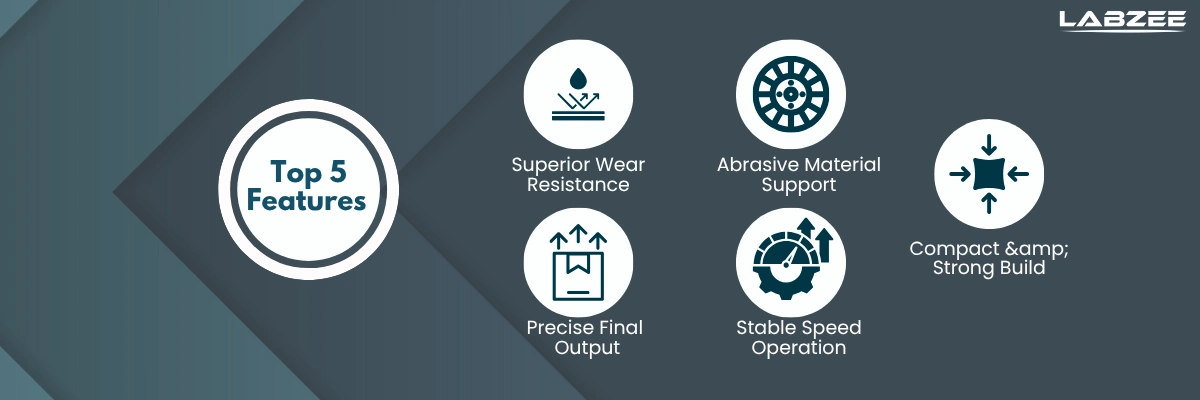
• Tungsten Carbide Jaws
• Superior Wear Resistance
• Abrasive Material Support
• Precise Final Output
• Stable Speed Operation
• Compact & Strong Build
Our Jaw Crusher BZJC-504 is specifically used in applications involving hard and abrasive materials such as metallic ores, slag, quartz, and industrial ceramics. It supports uniform reduction in sample size while withstanding long-term mechanical stress. It’s frequently chosen for research in metallurgy, geological exploration, cement labs, and mineral processing test environments.
Frequently Asked Questions
1: Is the jaw crusher suitable for large-scale operations?
Yes, jaw crushers are commonly used in large-scale mining and construction operations due to their high capacity and rugged design.
2: How does a jaw crusher compare to a cone crusher?
While jaw crushers are ideal for primary crushing, cone crushers are typically used for secondary crushing and are better suited for finer material.
3: What is the difference between a single-toggle and double-toggle jaw crusher?
Single-toggle crushers are simpler and faster, while double-toggle crushers are more robust and provide higher crushing capacity.
4: Can a jaw crusher be used in demolition projects?
Yes, jaw crushers are often used in demolition projects to crush concrete and other materials, making them easier to transport and recycle.
5: How do you ensure the safety of operators when using a jaw crusher?
To ensure safety, operators should follow all manufacturer instructions, wear proper safety gear, and use safety features like emergency stops and guards.
6: What is a jaw crusher used for?
A jaw crusher is primarily used for crushing large materials, such as rocks and ores, into smaller pieces for further processing in mining and construction.
7: How does a jaw crusher work?
It works by using two jaw plates to crush materials by applying pressure to break them down, one jaw moves in a reciprocating motion against the other.
8: Can a jaw crusher handle hard materials?
Yes, jaw crushers are designed to handle hard materials like granite, quartz, and limestone, making them suitable for tough mining environments.
9: What is the typical output size from a jaw crusher?
The output size varies, but it generally produces materials ranging from 2 inches to several feet, depending on the model and settings.
10: How do you adjust the output size of a jaw crusher?
You can adjust the output size by altering the settings on the discharge opening, which controls the size of the crushed material.
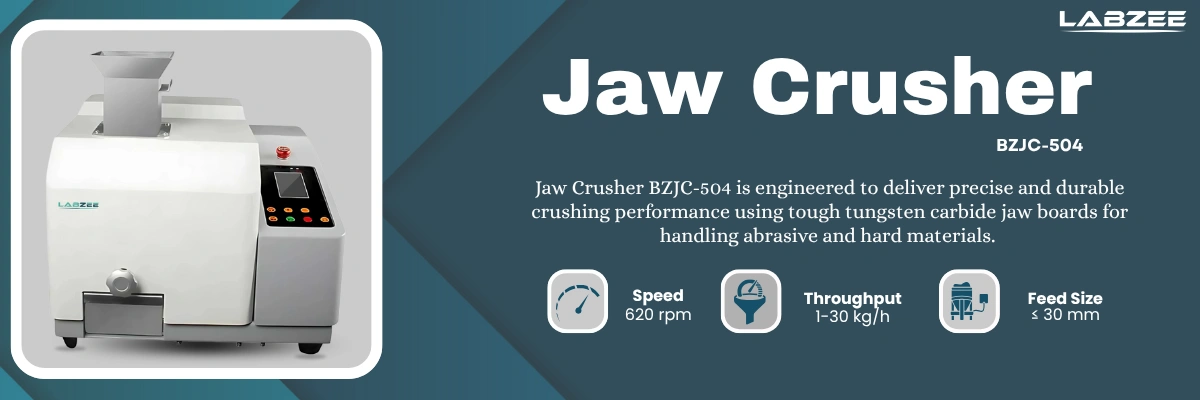
Labzee offers Jaw Crushers designed for efficient primary crushing of hard and brittle materials in laboratory and industrial environments. They feature a rugged construction, adjustable crushing jaws, and powerful motors that ensure uniform particle size reduction with minimal sample loss. These crushers are built for durability and continuous operation, delivering consistent performance even under demanding conditions. They offer easy cleaning, simple operation, and high throughput, making them suitable for both routine and heavy-duty crushing tasks. Their compact design and high crushing efficiency make them essential for material preparation in research and production. Our Jaw Crushers support various applications, including mineral and ore analysis, ceramic and glass processing, construction material testing, metallurgical research, and geological studies.