$ 6521
| Jaw Board Material | Manganese Steel |
| Throughput | 1-30 kg/h |
| Speed | 620 rpm |
| Feeding Port Size | 100 × 70 mm |
| Feed Size | ≤ 30 mm |
| Final Size (Material Size) | 1-10 mm |
| Crushing Hardness | < Moh's 5.0 |
| Power Consumption | 0.75 kW |
| Product Dimension (L×W×H) | 500 × 600 × 600 mm |
| Net Weight | 95 Kg |
• Manganese Steel Plates
• Steady Crushing Motion
• Wide Feed Opening
• Space-Saving Design
• Uniform Particle Output
• Sample Integrity Assurance
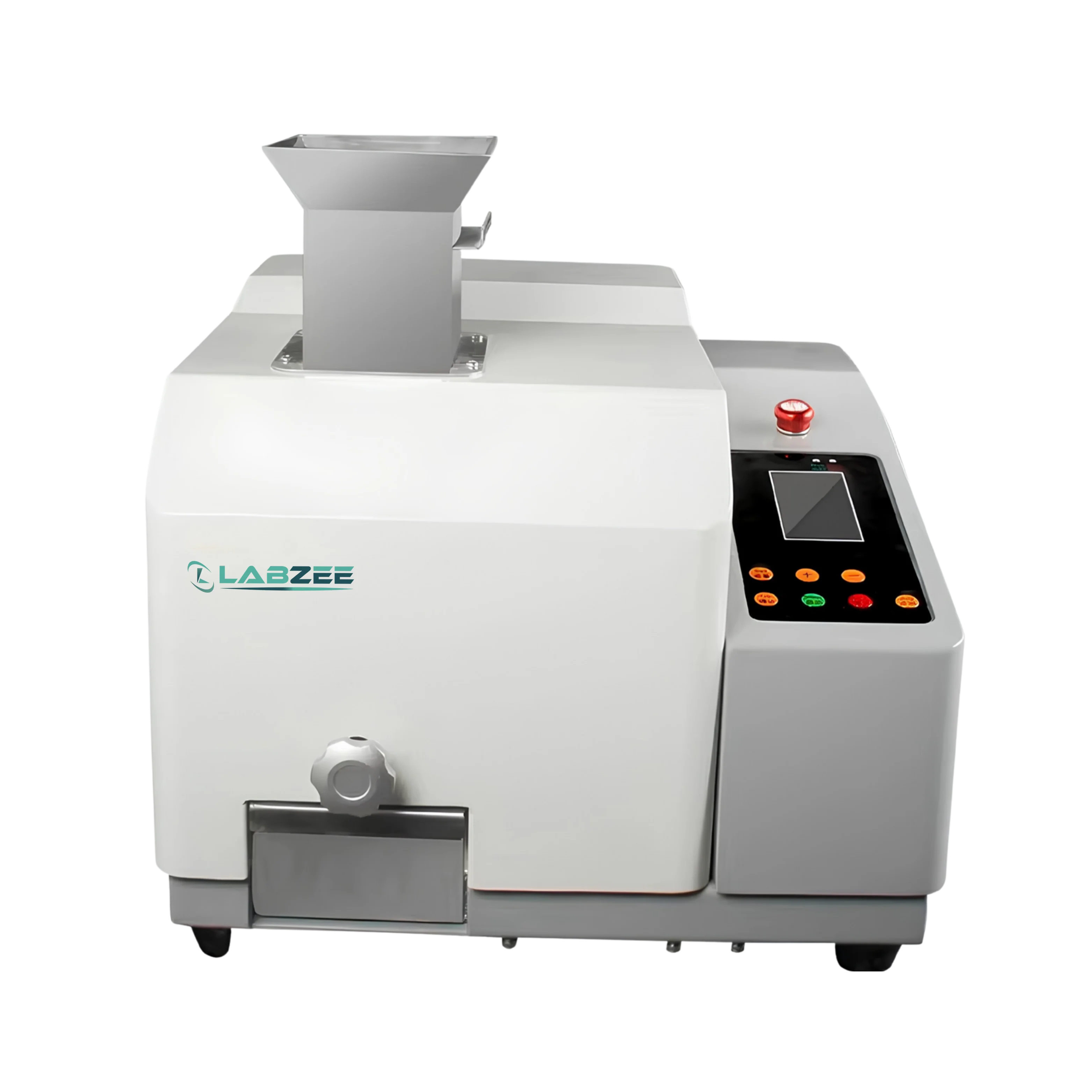
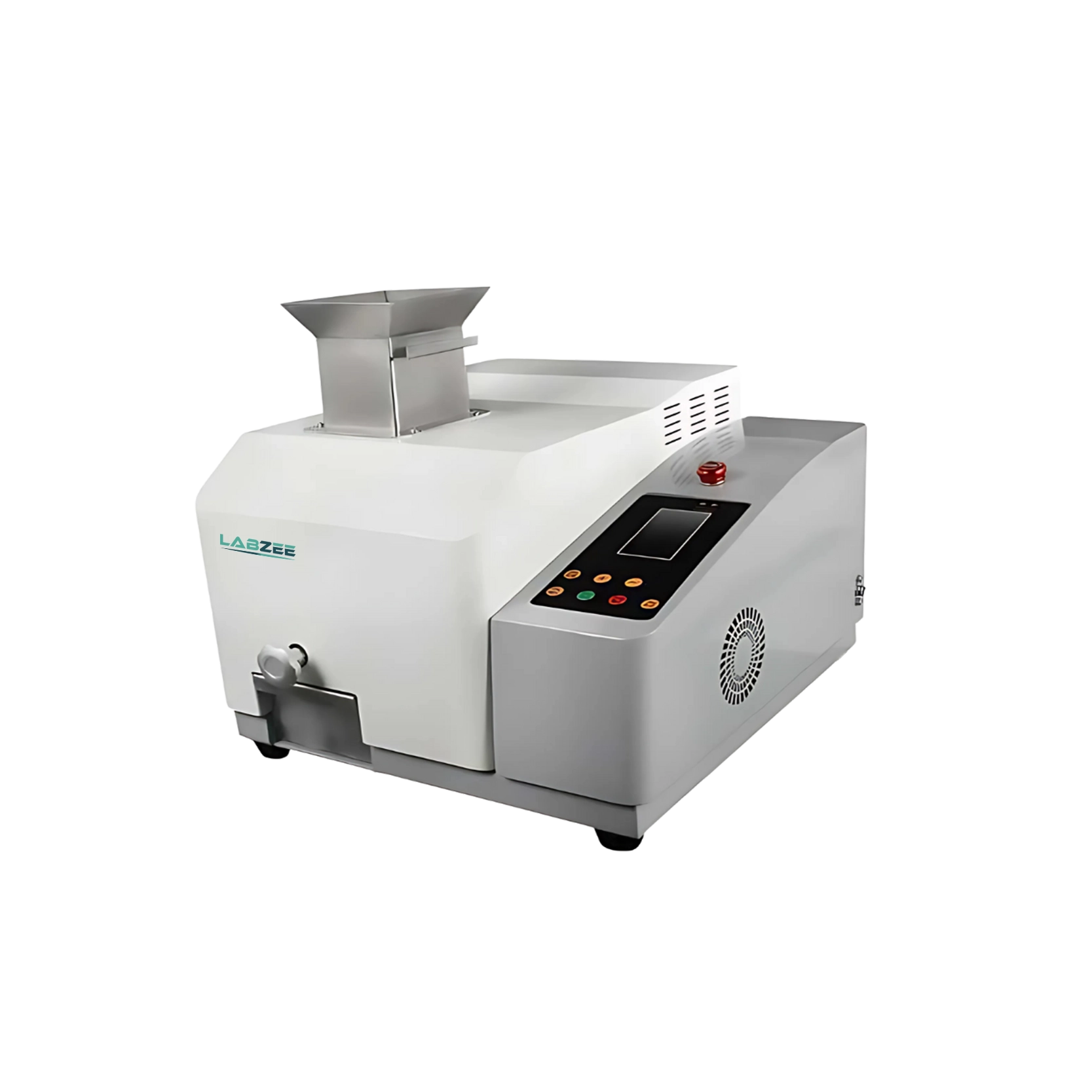
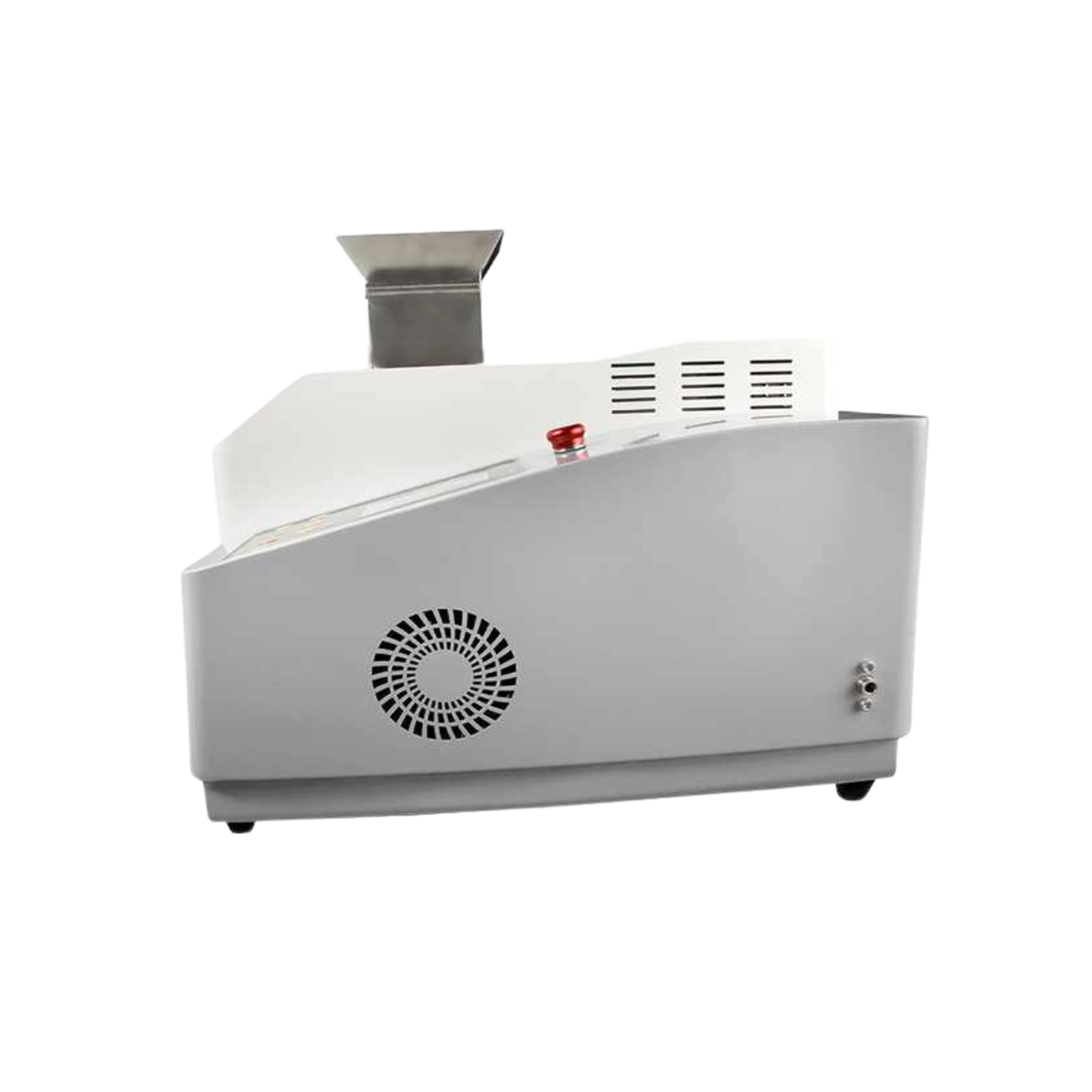
Our Jaw Crusher BZJC-502 facilitates sample preparation of moderately hard to soft materials including minerals, ceramic shards, rock fragments, and brittle solids. It is a practical tool in mineralogy, geology, and industrial material labs where particle size consistency and robustness are essential.
Frequently Asked Questions
1: What materials can be processed with a jaw crusher?
Jaw crushers can process materials such as granite, limestone, basalt, and other rocks and ores commonly found in construction and mining industries.
2: Can a jaw crusher be used in recycling operations?
Yes, jaw crushers are often used in recycling operations to crush materials like concrete, asphalt, and other recyclable construction debris.
3: What is the maximum feed size for a jaw crusher?
The maximum feed size varies by model, but typical jaw crushers can handle feed sizes of up to 36 inches (900 mm).
4: What are the key components of a jaw crusher?
The main components include the stationary jaw, movable jaw, flywheel, frame, and the crushing chamber.
5: What is the role of the flywheel in a jaw crusher?
The flywheel stores kinetic energy during operation, helping to maintain a smooth motion and reduce operational stress.
6: What is a jaw crusher used for?
A jaw crusher is primarily used for crushing large materials, such as rocks and ores, into smaller pieces for further processing in mining and construction.
7: How does a jaw crusher work?
It works by using two jaw plates to crush materials by applying pressure to break them down, one jaw moves in a reciprocating motion against the other.
8: Can a jaw crusher handle hard materials?
Yes, jaw crushers are designed to handle hard materials like granite, quartz, and limestone, making them suitable for tough mining environments.
9: What is the typical output size from a jaw crusher?
The output size varies, but it generally produces materials ranging from 2 inches to several feet, depending on the model and settings.
10: How do you adjust the output size of a jaw crusher?
You can adjust the output size by altering the settings on the discharge opening, which controls the size of the crushed material.
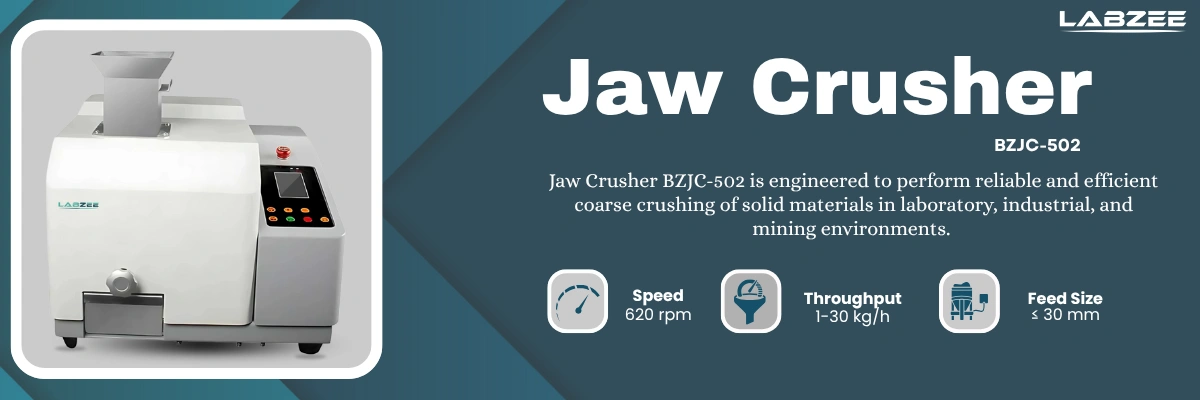

Labzee offers Jaw Crushers designed for efficient primary crushing of hard and brittle materials in laboratory and industrial environments. They feature a rugged construction, adjustable crushing jaws, and powerful motors that ensure uniform particle size reduction with minimal sample loss. These crushers are built for durability and continuous operation, delivering consistent performance even under demanding conditions. They offer easy cleaning, simple operation, and high throughput, making them suitable for both routine and heavy-duty crushing tasks. Their compact design and high crushing efficiency make them essential for material preparation in research and production. Our Jaw Crushers support various applications, including mineral and ore analysis, ceramic and glass processing, construction material testing, metallurgical research, and geological studies.