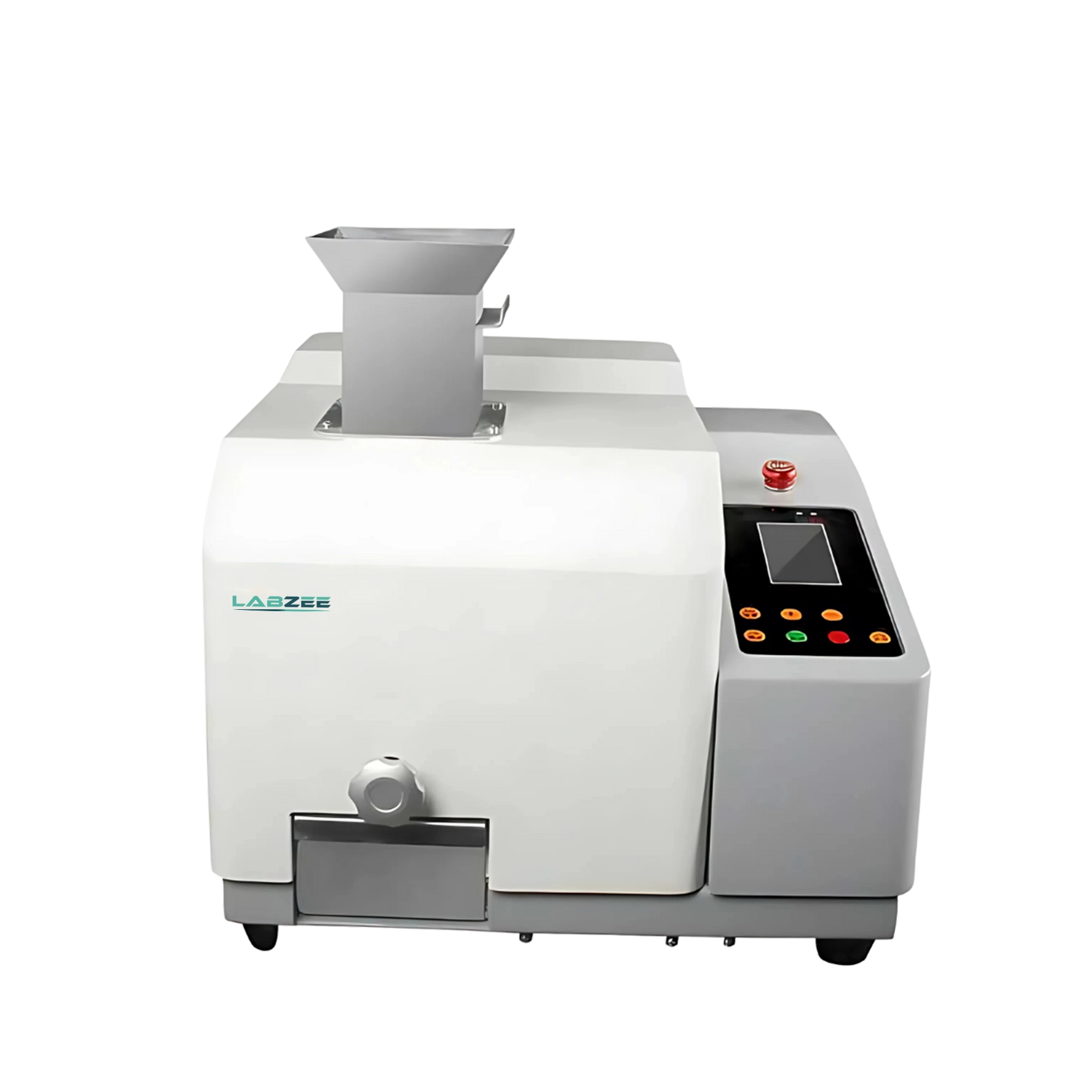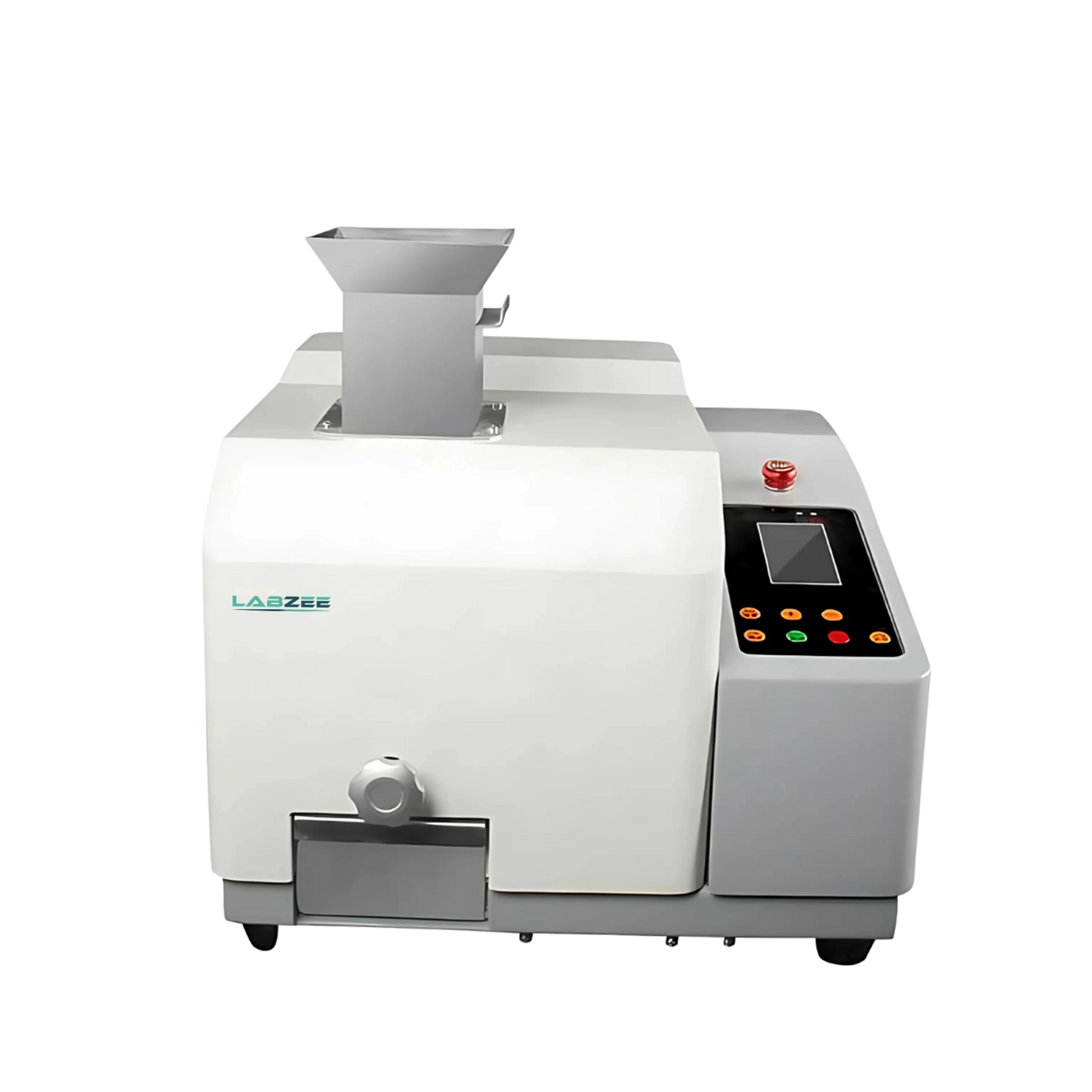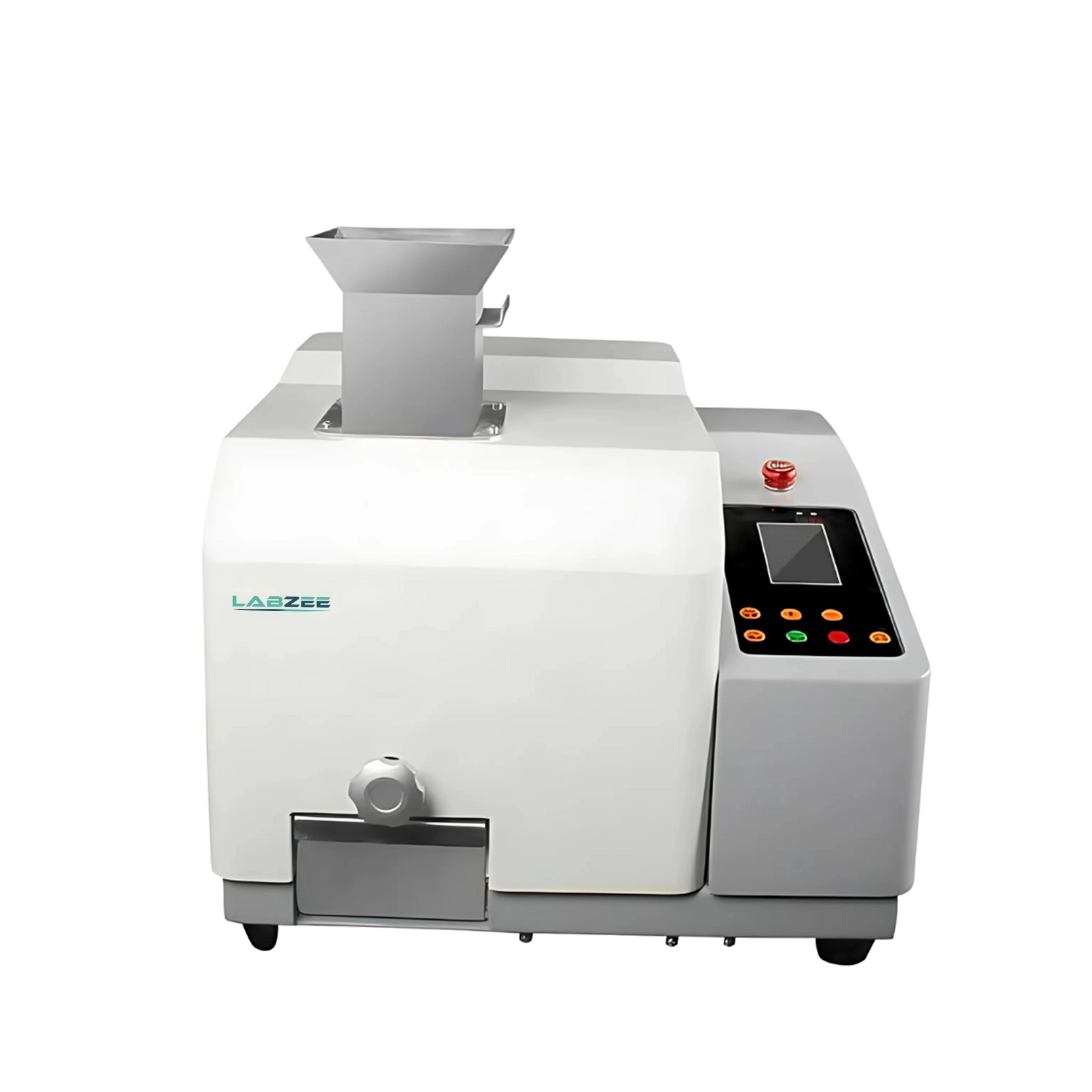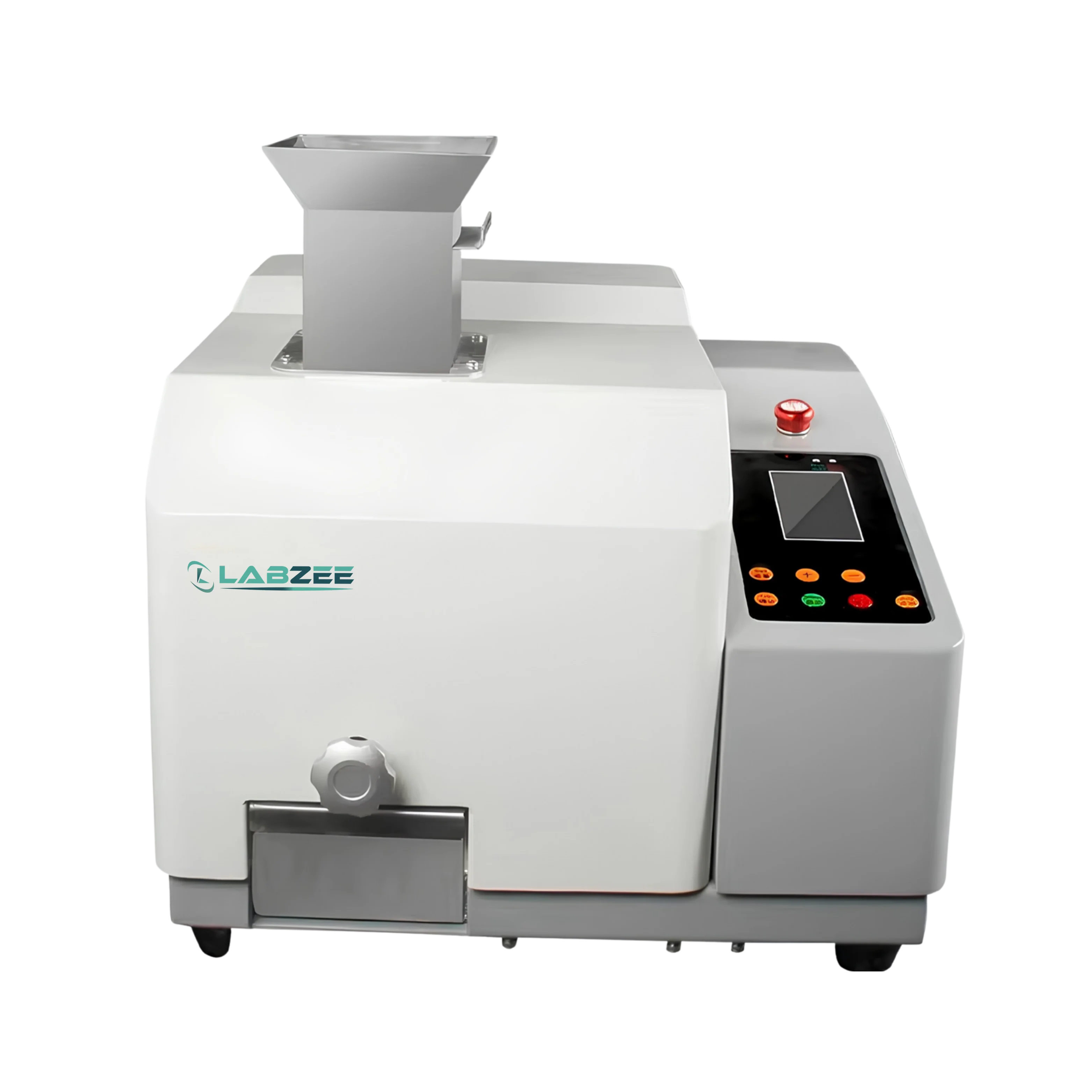
$ 7061
| Jaw Board Material | Corundum |
| Throughput | 1-30 kg/h |
| Speed | 620 rpm |
| Feeding Port Size | 100 × 70 mm |
| Feed Size | ≤ 30 mm |
| Final Size (Material Size) | 1-10 mm |
| Crushing Hardness | < Moh's 5.0 |
| Power Consumption | 0.75 kW |
| Product Dimension (L×W×H) | 500 × 600 × 600 mm |
| Net Weight | 95 Kg |
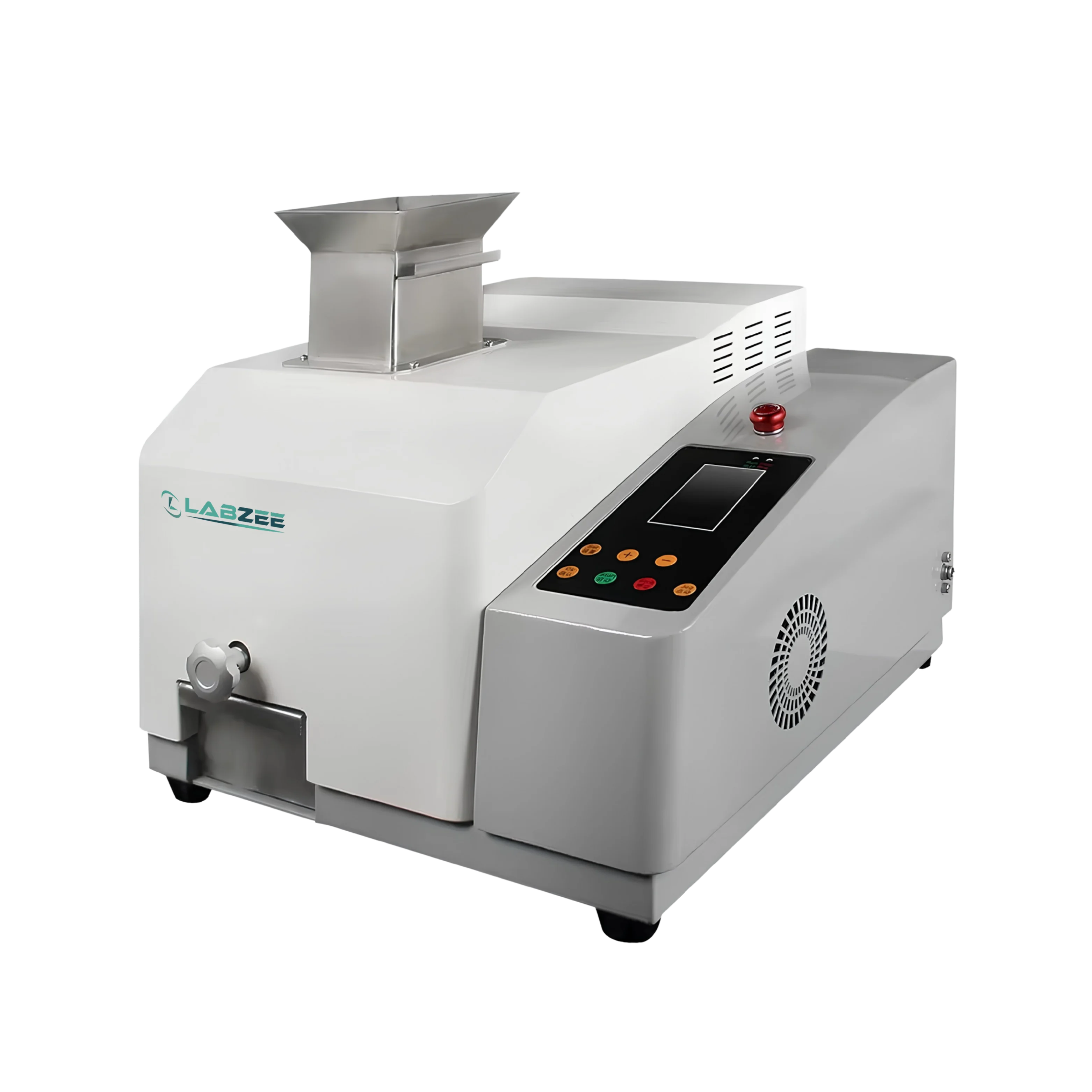
• Corundum Jaw Plates: Provide a corundum crushing surface for materials below Moh's 5.0 hardness.
• Adjustable Crushing Size: Produces a 1–10 mm final particle size for further grinding and analysis.
• 30 mm Feed Size: Accommodates sample pieces up to 30 mm for loading into the crushing chamber.
• Variable Throughput: Handles 1–30 kg/h according to the required sample quantity.
• Mechanical Digital Display: Shows jaw plate spacing in real time for easy adjustment.
• Mining and Metallurgy: Reduces ore and mineral samples for grinding, elemental analysis, and material evaluation.
• Chemical Industry: Breaks down solid samples into particles suitable for dissolution and chemical testing.
• Building Materials: Handles building-material samples for particle size assessment and quality testing.
• Ceramics and Refractory Materials: Crushes ceramic and refractory pieces for material characterization and further size reduction.
Frequently Asked Questions
1: What type of maintenance does a jaw crusher require?
Regular maintenance includes checking wear parts, lubricating components, and inspecting the jaw plates for damage or wear.
2: Can jaw crushers be used for both primary and secondary crushing?
Yes, jaw crushers are suitable for both primary and secondary crushing, making them versatile for various stages of material processing.
3: What is the lifespan of a jaw crusher?
The lifespan of a jaw crusher can vary, but with proper maintenance, it can last for many years, providing reliable performance.
4: Are jaw crushers energy-efficient?
Yes, jaw crushers are designed to minimize energy consumption, with features like optimized drive mechanisms that improve efficiency.
5: How can you ensure the efficiency of a jaw crusher?
Ensure that the crusher is properly maintained, the feed size is appropriate, and the discharge opening is set correctly for optimal performance.
6: What is a jaw crusher used for?
A jaw crusher is primarily used for crushing large materials, such as rocks and ores, into smaller pieces for further processing in mining and construction.
7: How does a jaw crusher work?
It works by using two jaw plates to crush materials by applying pressure to break them down, one jaw moves in a reciprocating motion against the other.
8: Can a jaw crusher handle hard materials?
Yes, jaw crushers are designed to handle hard materials like granite, quartz, and limestone, making them suitable for tough mining environments.
9: What is the typical output size from a jaw crusher?
The output size varies, but it generally produces materials ranging from 2 inches to several feet, depending on the model and settings.
10: How do you adjust the output size of a jaw crusher?
You can adjust the output size by altering the settings on the discharge opening, which controls the size of the crushed material.
Labzee offers Jaw Crushers designed for efficient primary crushing of hard and brittle materials in laboratory and industrial environments. They feature a rugged construction, adjustable crushing jaws, and powerful motors that ensure uniform particle size reduction with minimal sample loss. These crushers are built for durability and continuous operation, delivering consistent performance even under demanding conditions. They offer easy cleaning, simple operation, and high throughput, making them suitable for both routine and heavy-duty crushing tasks. Their compact design and high crushing efficiency make them essential for material preparation in research and production. Our Jaw Crushers support various applications, including mineral and ore analysis, ceramic and glass processing, construction material testing, metallurgical research, and geological studies.