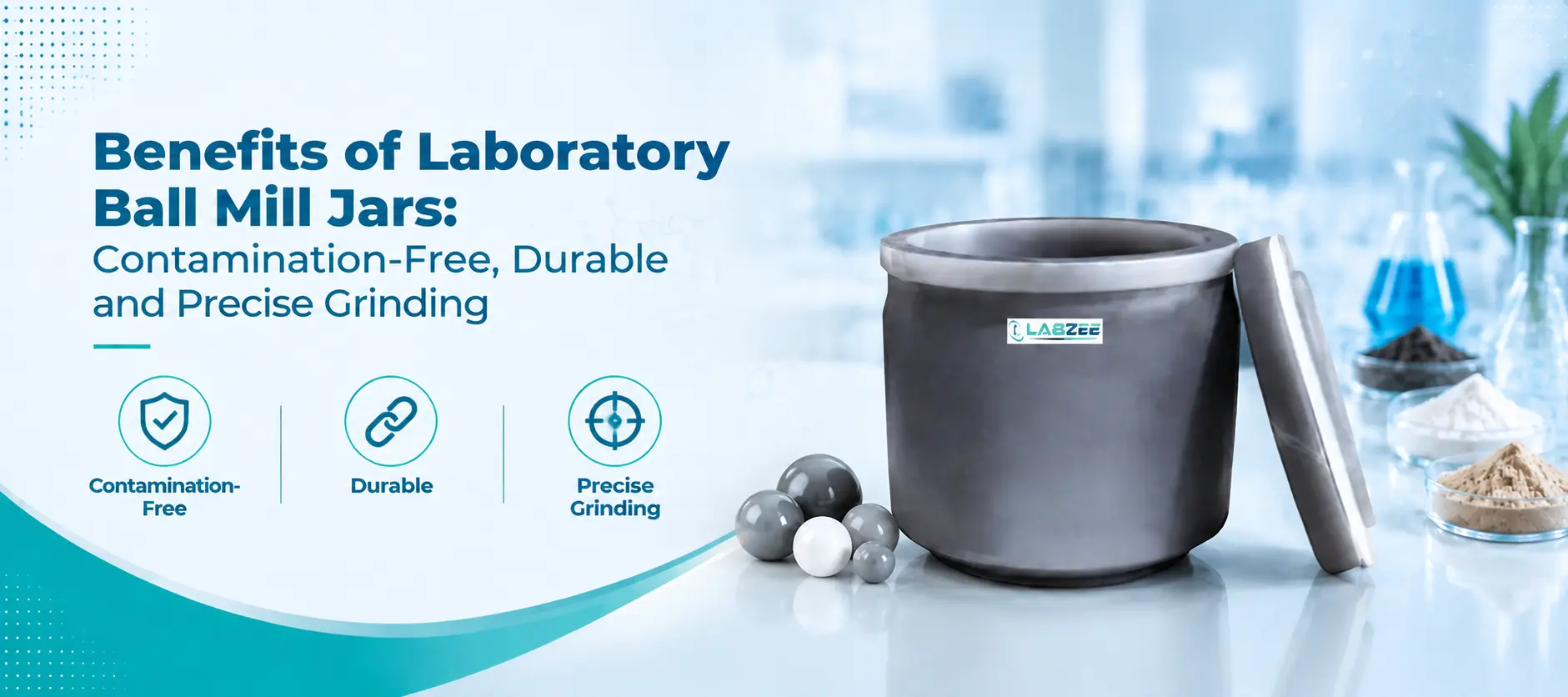
The vessel that holds the sample shapes the result as much as the mill that drives it, so the gains from a well-chosen jar show up directly in the data. This guide sets out the practical benefits a quality grinding vessel brings to the bench, from clean chemistry to a steady particle size, with the Agate Ball Mill Jar BZABJ-501 as a reference point throughout.
During milling the wall of a ball mill jar is in constant contact with the sample and the moving media, so a share of whatever the wall is made of works its way into the powder. That single fact links three separate outcomes: how clean the sample stays, how long the vessel lasts, and how tightly the particle size can be held. Choosing the material well is what turns those from hopes into measured gains.
Because the vessel carries chemical as well as mechanical duty, a ball mill grinding jar is judged on more than its shape. A laboratory that matches the jar to the sample spends less time chasing stray results and more time on the work the grind was meant to support.
Diagram: how jar material links sample purity, wear life and size control
Add a simple flow of jar wall to sample, wear and particle sizeThe advantages of a good grinding vessel group into three that matter across most laboratory work.
An inert wall adds little to the sample, so the powder reflects the material rather than the vessel.
A hard, wear-resistant surface holds its shape through many runs before it needs replacing.
A stable chamber lets the same charge give the same particle size from one run to the next.
Contamination is the quiet cost of grinding. A metal vessel can shed traces of iron, chromium or nickel into the powder, and for trace analysis those traces are enough to move a result. An agate grinding jar answers this with chemically inert silica and a polished interior that releases powder cleanly and resists carry-over between runs, which is why it is a frequent pick for low-level and contamination-sensitive work. Pairing the jar with balls of the same material keeps the whole charge on one chemistry.
The second benefit is service life. Sitting near 7 on the Mohs scale, agate resists abrasion from most samples, so a jar keeps its wall thickness and inner shape through repeated use rather than wearing into an uneven chamber. That steadiness protects the other two benefits, since a worn vessel both sheds more debris and loses the geometry that keeps grinding consistent. A few habits extend that life further.
Grind samples softer than the jar, and leave harder feed to zirconia or tungsten carbide so the wall is not chewed away.
Agate is brittle and dislikes sudden temperature change, so use interval milling and avoid harsh heat or rapid cooling.
Cushion the vessel against knocks and store lids and gaskets clean, since a chip or a tired seal ends a jar early.
The third benefit is control. A vessel that keeps its shape and adds nothing to the sample lets the grind itself set the result, so a ball milling jar filled to the right ratio produces a narrow size distribution and repeats it batch after batch. That repeatability is what lets a method move from a single good result to a documented routine, and it is the reason a planetary ball mill jar is specified for fine and nano-scale work where a wandering size band would undermine the analysis.
The benefits matter most where a stray trace or a shifting size band would change the conclusion.
Preparing clean powders where jar pickup would swamp the low levels being measured.
Milling electrode and functional powders where metal contamination would alter performance.
Reducing actives to an even size while keeping the powder chemically untouched.
Homogenising rock and ore for elemental work that a metal jar could bias.
The gains above hold only when the jar is chosen and run with a little care. A few missteps undo them.
Feed harder than the wall wears the vessel and seeds the powder with debris, trading clean chemistry for contamination.
A jar far larger or smaller than the batch upsets the fill ratio, so precision slips even with the right material.
Pairing agate jars with metal balls reintroduces the contamination the jar was picked to avoid; keep the charge on one material.
The Agate Ball Mill Jar BZABJ-501 belongs to a wider category of grinding jars made in materials such as agate, zirconia, alumina, stainless steel, hardened steel and tungsten carbide, in a spread of volumes to suit different mills. When teams weigh options here, the same three benefits drive the decision: contamination behaviour of the wall material, wear life and hardness, and how well jar and balls hold a repeatable result, alongside volume and lid design.
You can see how Labzee groups its instruments and accessories across laboratory disciplines on the Labzee home catalogue, while the full spread of materials and sizes is laid out on the ball mill jar category page for side-by-side review. Comparing the range first makes it easier to line up jar material with the sample a team plans to run.

A short comparison lines the benefits up against the alternative, whether a lab standardises on agate or keeps a mix of vessels from the Labzee grinding jar range.
| Benefit | Agate jar | Steel or metal jar |
|---|---|---|
| Contamination | Low, inert silica | Metal pickup possible in the powder |
| Wear life | Hard at about 7 Mohs, long service | Tough, handles hard abrasive feed |
| Precision | Stable chamber, narrow size band | Consistent, with contamination trade-off |
| Handling | Brittle, needs gentle care | Tolerates knocks and heat |
| Suited to | Trace and contamination-sensitive work | Rugged, high-hardness grinding |




