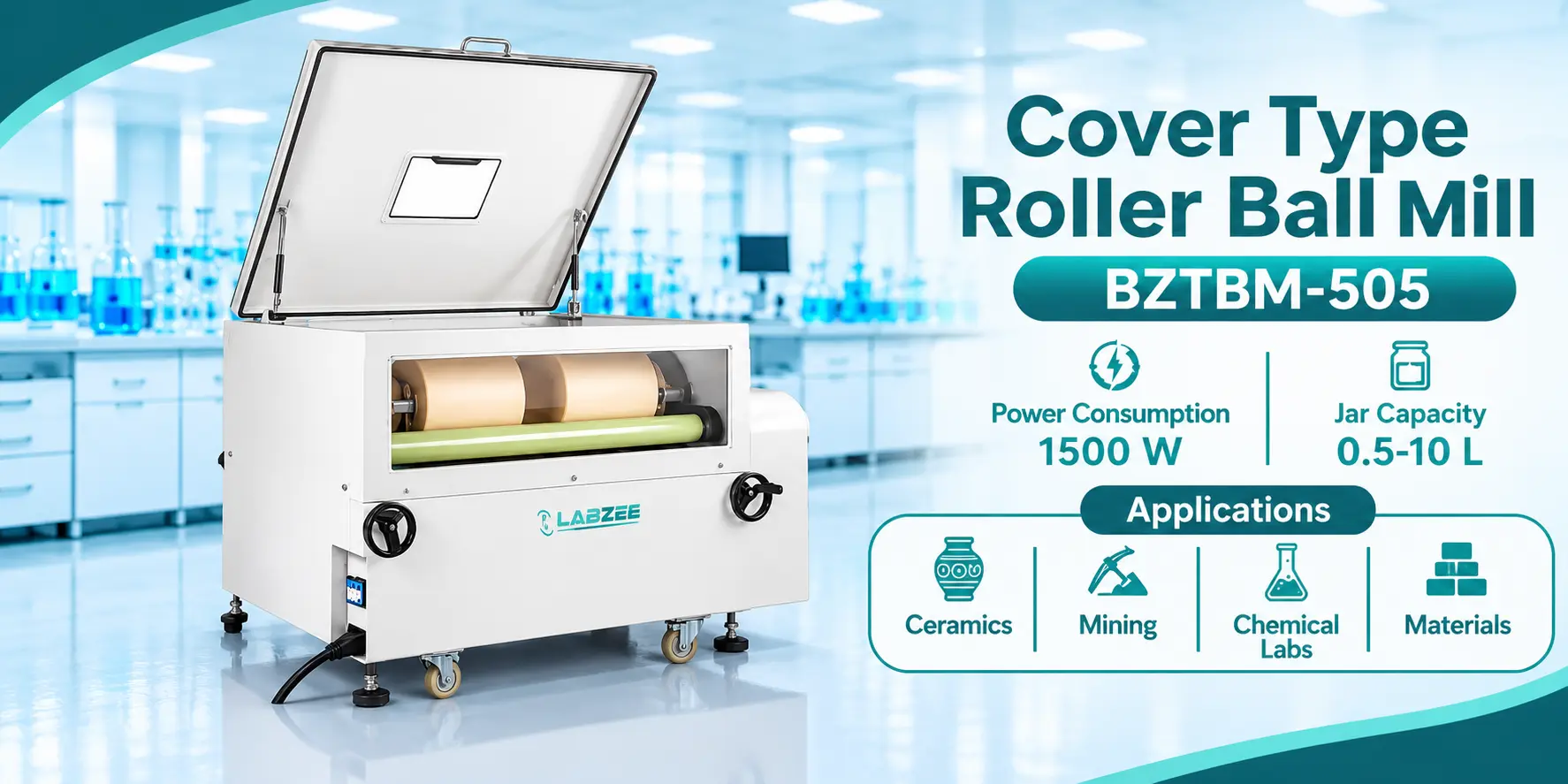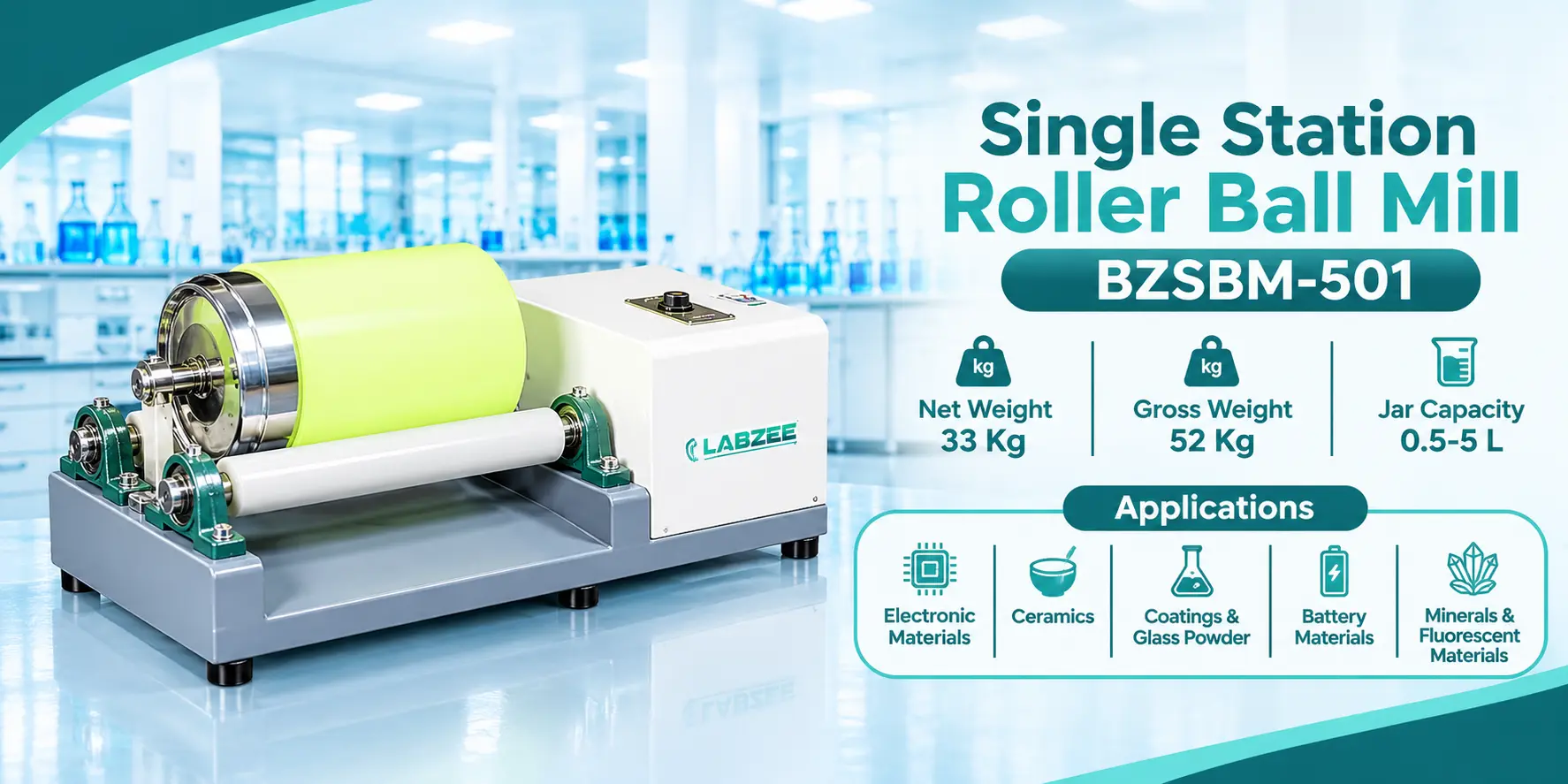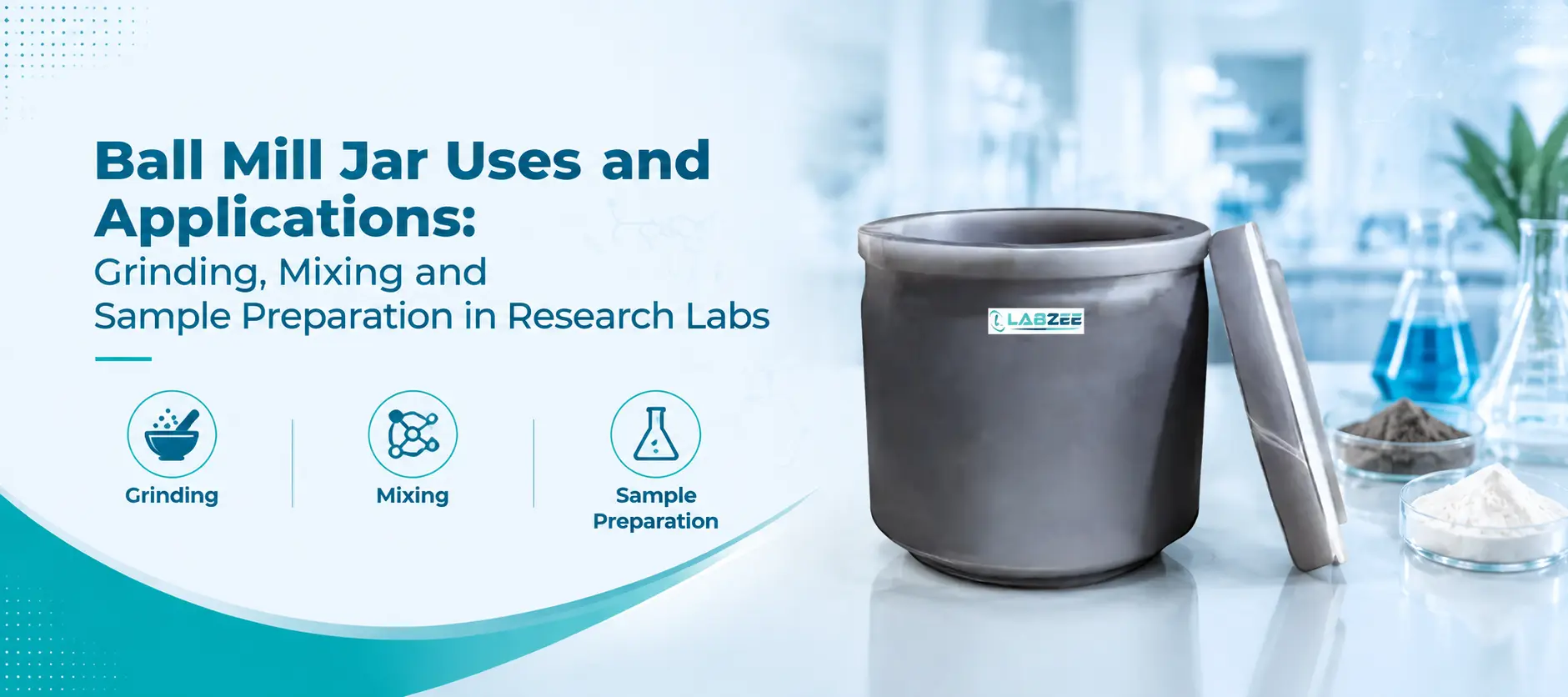
The jar is where grinding actually happens, so its material and fit shape the powder as much as the mill that spins it. This guide looks at how a grinding jar is used for reducing, mixing and preparing samples, and why the material you choose changes the result, with the Agate Ball Mill Jar BZABJ-501 as a reference point throughout.
A ball mill jar is the sealed chamber that holds the sample and the grinding balls while the mill drives them. As the mill turns, the balls tumble and collide inside the jar, and that motion, not the jar itself, reduces the particles. The jar defines the volume, keeps the charge contained, and, through its wall material, decides how much of itself ends up in the powder.
Because the chamber is doing chemical as well as mechanical duty, the choice of a ball mill grinding jar is rarely an afterthought. A jar mill or planetary unit can only work as cleanly as the vessel inside it, so labs match the jar to the sample before they think about speed or time.
Diagram: jar cross-section showing balls, sample charge and headspace
Add a labelled cutaway of the jar, media and fill levelAgate is a dense, fine-grained form of silica, and three properties make it a frequent pick for a laboratory grinding vessel.
At roughly 7 on the Mohs scale, agate resists abrasion from most samples, so the jar keeps its shape over long service.
Chemically inert silica adds little to the sample, which matters when trace analysis follows the grind.
A polished interior releases powder cleanly and wipes down fast between runs, cutting carry-over.
Those same traits are why an agate grinding jar suits soft to medium-hard material, while harder feed may call for zirconia or tungsten carbide instead.
The vessel handles more than one job on the bench, often across the same working day.
Reducing brittle powders and granules to a fine, even size for analysis or further processing.
Sealed jars allow milling in a solvent, pushing toward finer distributions and holding volatile material.
Blending powders to a uniform composition before sampling, without heavy size reduction.
Preparing clean, representative material where jar contamination would skew low-level results.
Good results come from how the three parts of the charge are balanced. The balls supply the energy, the sample takes it, and the jar holds the ratio steady from run to run. A ball milling jar filled correctly gives the media room to move; overfill it and the balls jam, underfill it and they clatter without grinding.
A charge near 10:1 by mass is a common starting point, then adjusted to the material and the target size.
Balls, sample and any liquid together should reach roughly a third of the jar volume, leaving space for movement.
Balls of the same material as the jar limit contamination, and a sound lid gasket keeps wet or volatile charges contained.
A well-made vessel can still give poor data when the wrong one is fitted or it is handled carelessly. A few missteps come up often.
Grinding material harder than the jar wears the vessel and seeds the powder with jar debris. Match hardness before a run.
Agate is brittle and dislikes sudden temperature change, so avoid harsh heat, rapid cooling and hard knocks that can crack it.
A jar far larger or smaller than the batch upsets the fill ratio, which flattens grinding or wastes capacity.
A tired seal leaks solvent and lets fines escape, so inspect and replace closures as part of upkeep.
The Agate Ball Mill Jar BZABJ-501 belongs to a wider category of grinding jars made in materials such as agate, zirconia, alumina, stainless steel, hardened steel and tungsten carbide, in a spread of volumes to match different mills. When teams weigh options here, they compare wall material and hardness, jar volume, lid and gasket design, and whether the jar and balls are offered as a matched set.
You can see how Labzee groups its instruments and accessories across laboratory disciplines on the Labzee home catalogue, while the full spread of materials and sizes is laid out on the ball mill jar category page for side-by-side review. Reading across the category first makes it easier to line up jar material with the sample a team plans to run.

A short comparison shows why material choice comes before volume, whether a lab standardises on agate or keeps a mix of vessels from the Labzee grinding jar range.
| Property | Agate jar | Steel or metal jar |
|---|---|---|
| Hardness | About 7 Mohs, suits soft to medium feed | Higher, handles hard and abrasive feed |
| Contamination | Low, inert silica | Metal pickup possible in the powder |
| Fragility | Brittle, sensitive to thermal shock | Tough, tolerates knocks and heat |
| Cleaning | Smooth surface, wipes down fast | Cleans well but can retain fines |
| Suited to | Trace and contamination-sensitive work | Rugged, high-hardness grinding |