Optical Emission Spectrometer from Labzee provides elemental composition analysis of metals and alloys through optical emission spectroscopy. Our Optical Emission Spectrometers feature wavelength ranges from 165 to 589 nm and resolution of 10 pm/pixel for spectral analysis. Models with Paschen-Runge full-vacuum optical structures, CMOS array detectors, argon gas excitation, automatic purge, and thermal compensation provide different configurations for metal and alloy elemental analysis. OES Spectrometers provide elemental composition data to support metal and alloy identification, composition analysis, and material quality testing.
Optics
Grating
First-Order Dispersion
Wavelength Range
Resolution
Top Products
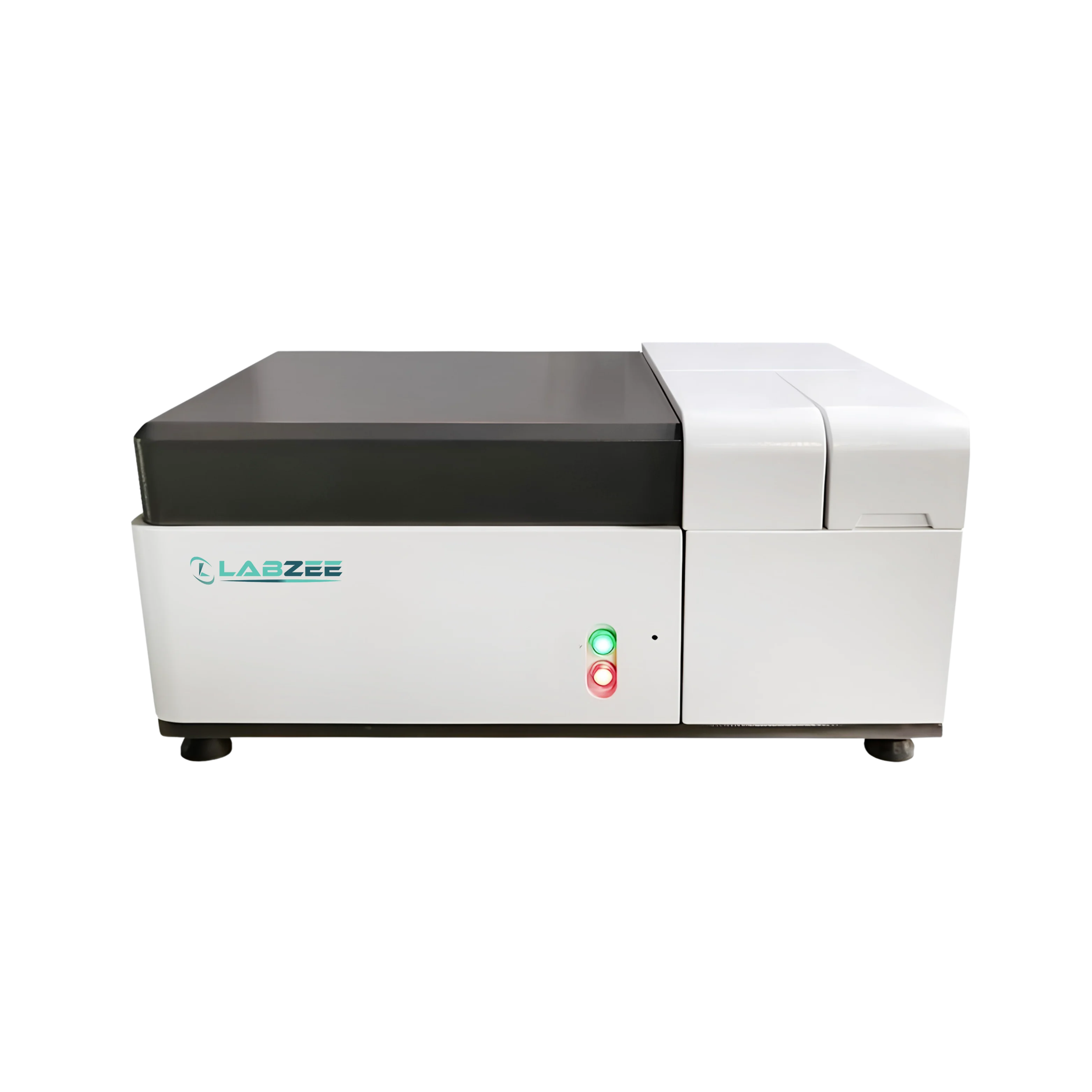
Optics: Paschen-Runge polychromator, 400 mm focal length
Grating: Holographic concave, 2400 lines/mm
First-Order Dispersion: 1.04 nm/mm
Wavelength Range: 135–680 nm
$ 35397
Frequently Asked Questions
1: Can you explain what an Optical Emission Spectrometer is used for?
An Optical Emission Spectrometer (OES) is used to analyze the elemental composition of metal samples. It determines the type and concentration of elements present by measuring the light emitted from a sample excited by an electrical discharge, making it vital in quality control and material verification.
2: How does the Optical Emission Spectrometer work?
The spectrometer works by introducing a metal sample to an electrical arc or spark, which excites the atoms in the sample. These excited atoms emit light at specific wavelengths, which the spectrometer detects and analyzes to identify and quantify the elements present.
3: Can you use the Optical Emission Spectrometer for non-metallic materials?
OES is primarily designed for metallic samples and is not suitable for non-metallic substances. It is most effective when analyzing alloys like steel, aluminum, copper, and other metals where precise elemental analysis is required.
4: What industries commonly use an Optical Emission Spectrometer?
Industries such as metallurgy, aerospace, automotive, and foundries frequently use OES equipment. It plays a key role in ensuring the chemical composition of metals meets required standards and specifications.
5: Can you analyze multiple elements at once using this equipment?
Yes, the Optical Emission Spectrometer can simultaneously detect and measure multiple elements from a single sample. This capability makes it both time-efficient and accurate for comprehensive analysis.
