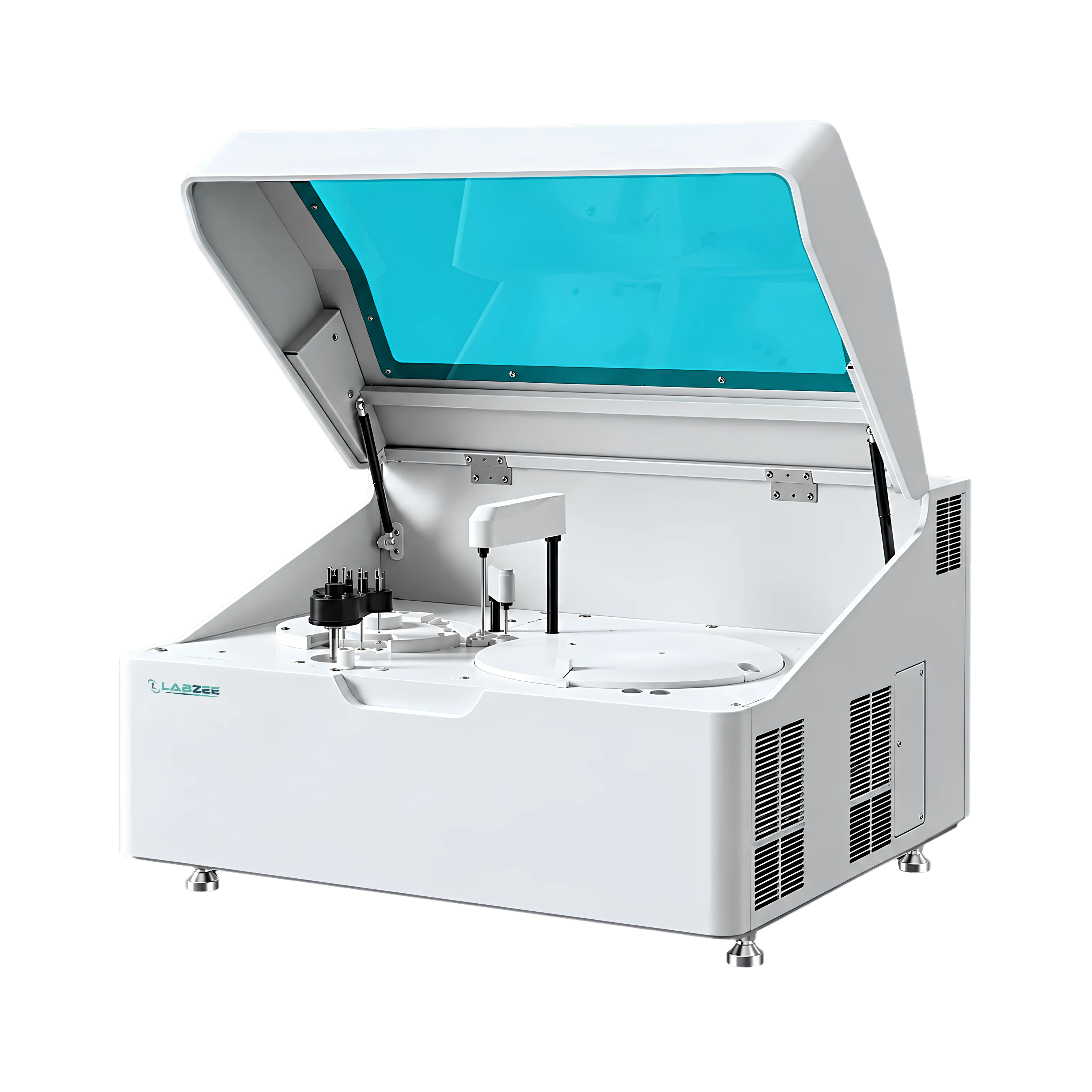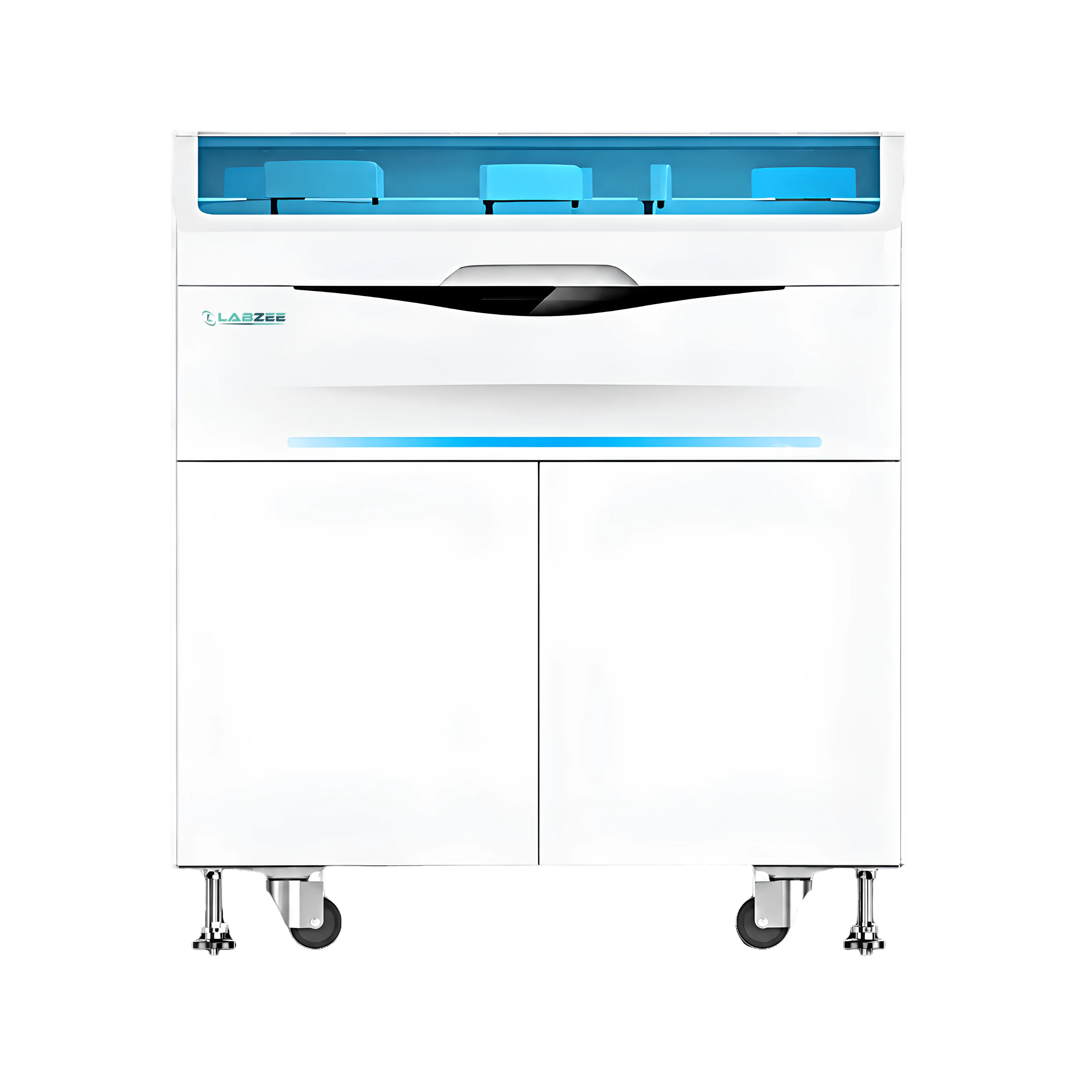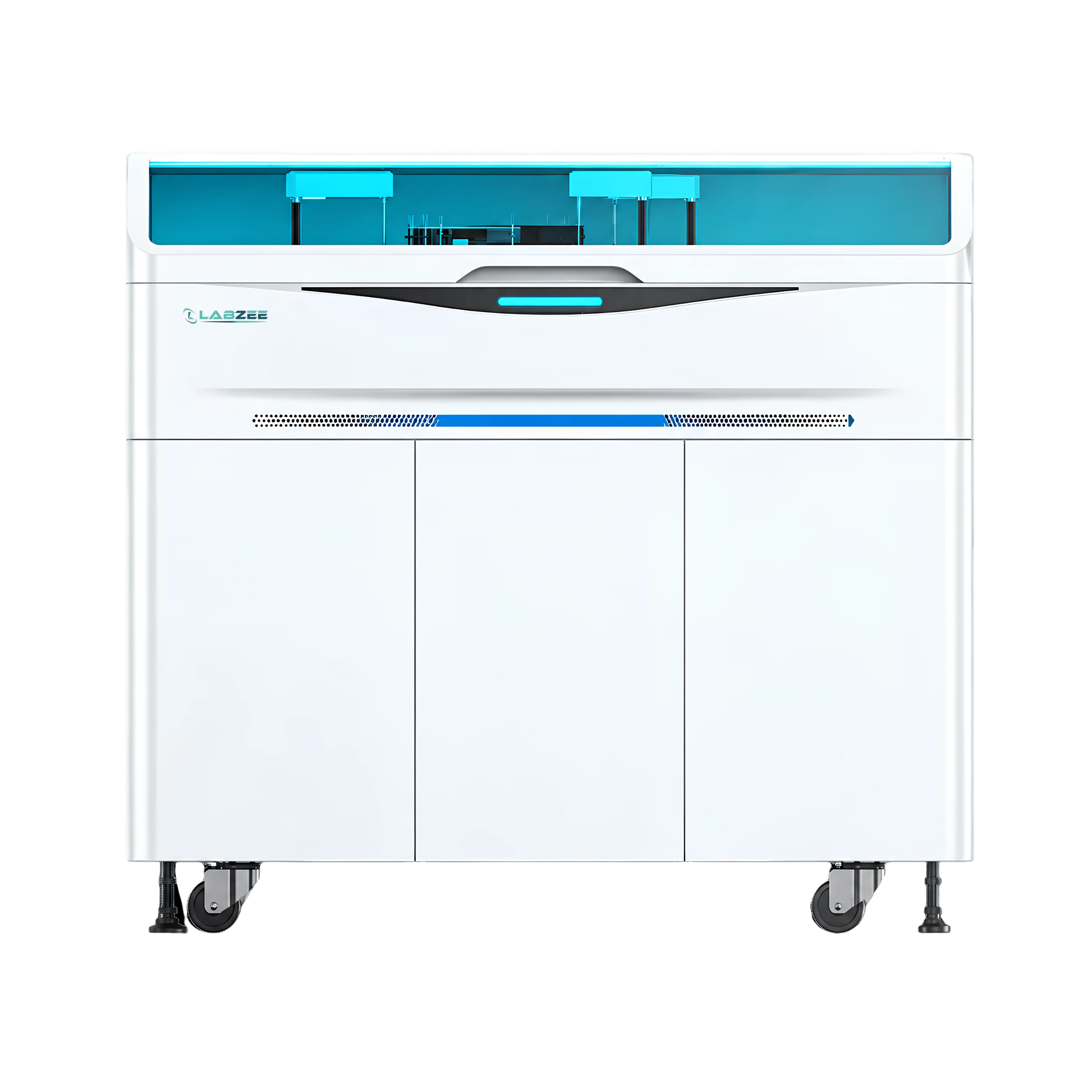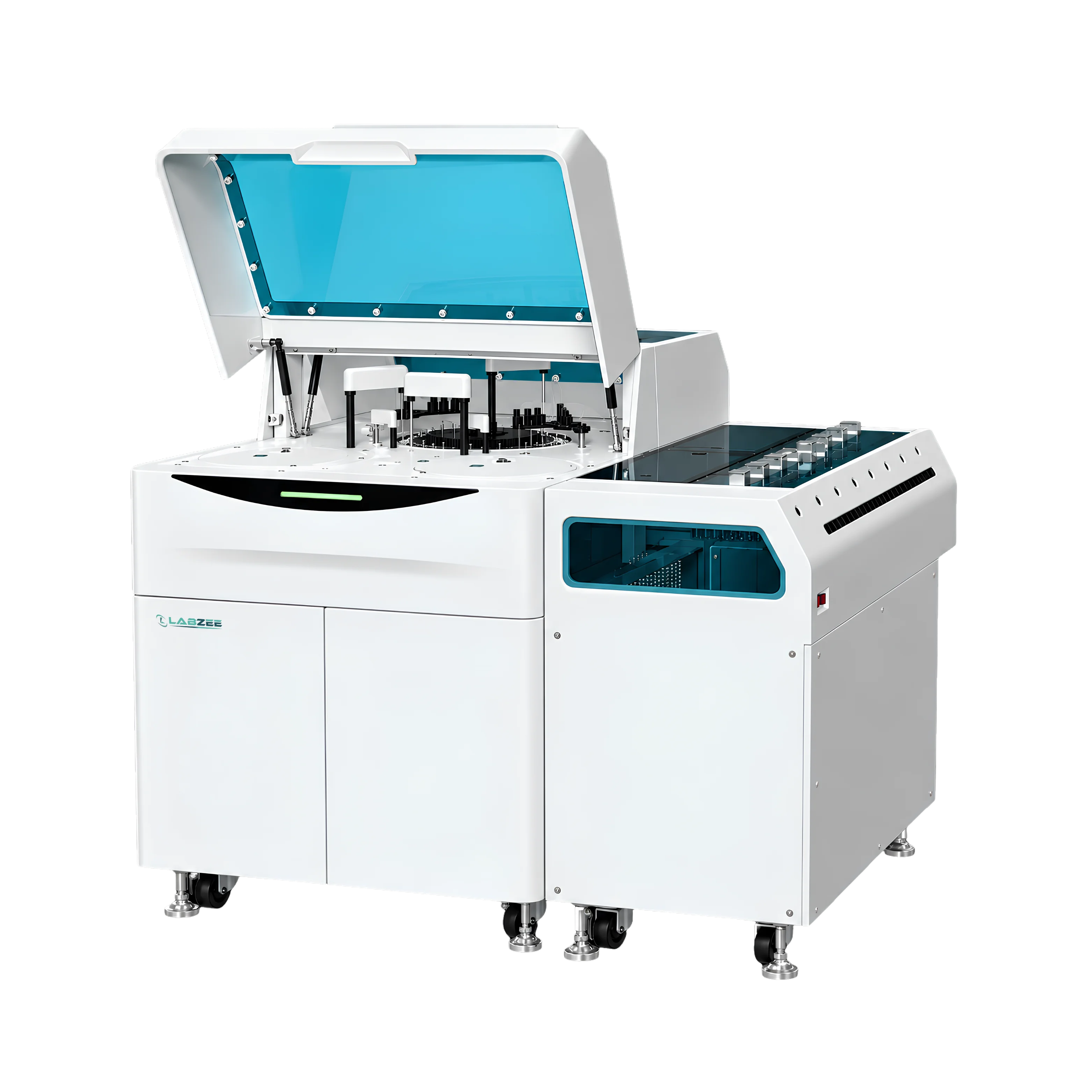
$ 32200
| Wavelength Range | 340 - 800 nm |
| Reaction Temp | 37°C circulating water bath pre-warming method |
| Temp Accuracy | ±0.1°C, PID control |
| Testing Projects | Up to 88 colorimetry projects, 3 ion testing projects |
| Testing Speed | 800 regular tests/hour, 300 ion tests/hour (Na/K/Cl) |
| Reagent Plate & Sites | 2 reagent plates with cooling system, 45 × 2 sites |
| Reagent Volume | 10 - 350 μL, 1 μL per step |
| Reagent Bottle | 20 ml, 70 ml, 100 ml |
| Storage Temp | 2 - 8°C (customizable) |
| Sampling Method | Autoloader |
| Sample Storage | Up to 300 samples in 30 sample racks |
| Sample Volume | 1.5 - 35 μL |
| Liquid Level Sensor | Digital sensor with anti-collision and probe blocking detection |
| Interface | RJ45 Ethernet |
| Cuvette Type | Plastic |
| Cuvette Light Path | 5 mm |
| Reaction Cuvette Sites | 8 groups, 20 per group, 160 total |
| Reaction Volume | 120 - 450 μL |
| Light Source | 20W/12V long-lived quartz halogen tungsten lamp |
| Absorbance Range | 0 - 3.3 Abs |
| Contamination Rate | <0.1% |
| Quality Control | Manual & auto processing for linear/nonlinear calibration, real-time, intra-day, cross-day QC |
| Auto Flushing | Yes |
| Power Consumption | 2000 W |
| Product Dimension | 1371 × 1326 × 1185 mm |
| Net Weight | 400 Kg |
High‑Capacity Sample Storage: Stores up to 300 samples in 30 sample racks for efficient batch processing.
Wavelength Range: Enables multi-wavelength analysis for accurate colorimetric detection.
Optimized Reagent Handling: Enables efficient reagent utilization for stable testing workflows.
High-Accuracy Detection: Supports precise analytical measurement for consistent result generation.
Contamination Control: Minimizes carryover risk and supports sample integrity during processing.
Clinical Diagnostics: Used for blood culture testing and infection screening workflows.
Hospital Microbiology: Supports microbial detection and culture-based analysis.
Sepsis Investigation: Applied in bloodstream infection detection studies.
Pharmaceutical Research: Used in microbial monitoring and analytical studies.
Laboratory Pathogen Detection: Supports identification workflows for bacterial and fungal growth.
Frequently Asked Questions
1: Is training required to use it?
Basic training is required to load bottles, interpret results, and handle samples safely. Most systems are user-friendly and easy to learn.
2: How often is maintenance needed?
Maintenance varies by model but usually involves daily checks and periodic servicing. Preventive maintenance helps ensure smooth operation.
3: Can it be connected to a LIS?
Yes, most systems can be integrated with a Laboratory Information System (LIS) for automatic data entry and result sharing.
4: What are the benefits of automation in blood culture?
Automation reduces errors, improves detection time, and ensures continuous monitoring. It helps labs work faster and more efficiently.
5: Is it suitable for pediatric samples?
Yes, special pediatric blood culture bottles are available. The system can process small volume samples safely and effectively.
Labzee Blood Culture Units are advanced diagnostic equipment used for detecting bacterial and fungal infections in blood samples. Our units provide automated monitoring, precise incubation control, and real-time detection for accurate microorganism identification. Available in multiple sample volumes and operating under controlled temperature conditions for optimal growth. ISO- and CE-certified, Labzee Blood Cultures deliver workflow efficiency, diagnostic accuracy, and faster time-to-results for clinical microbiology labs.