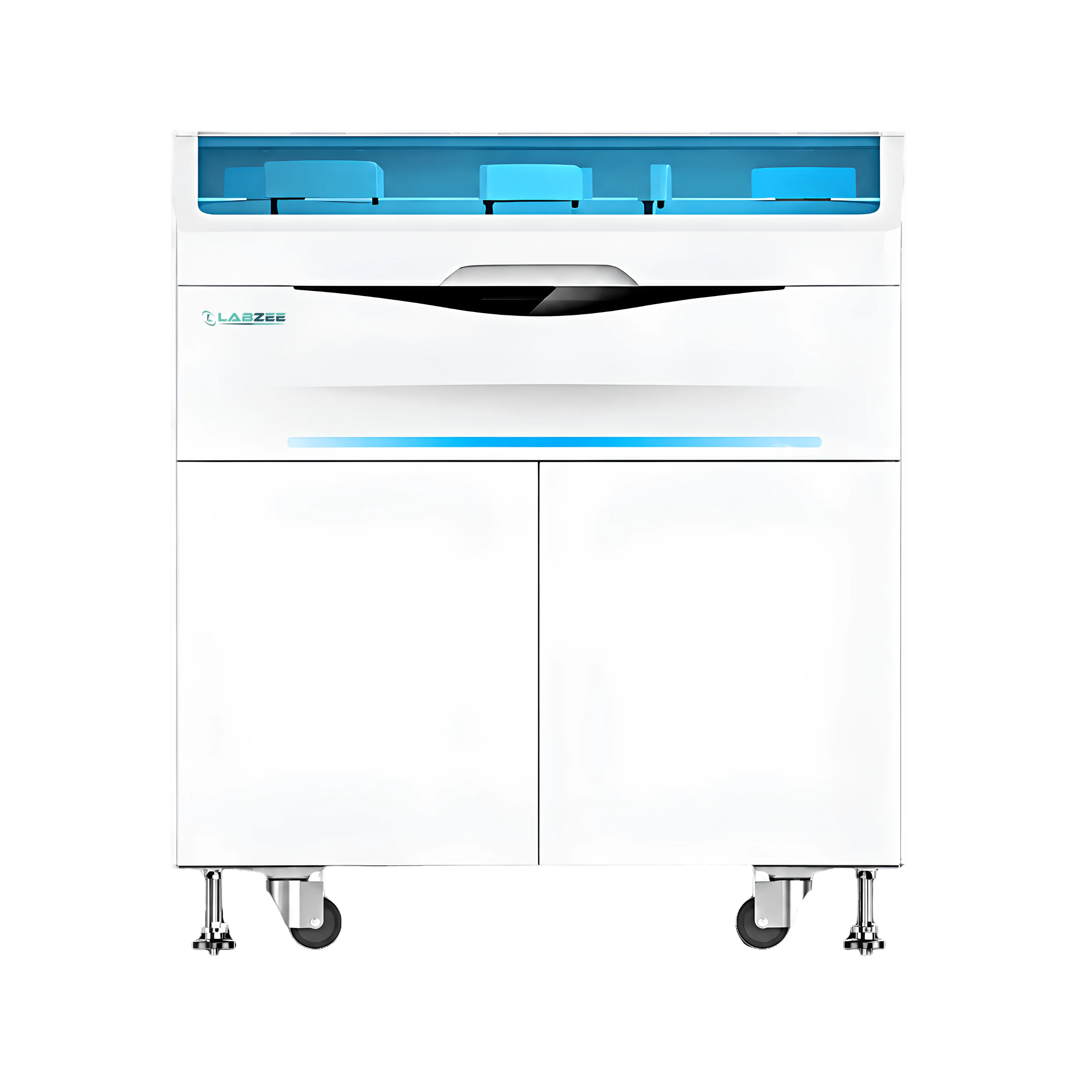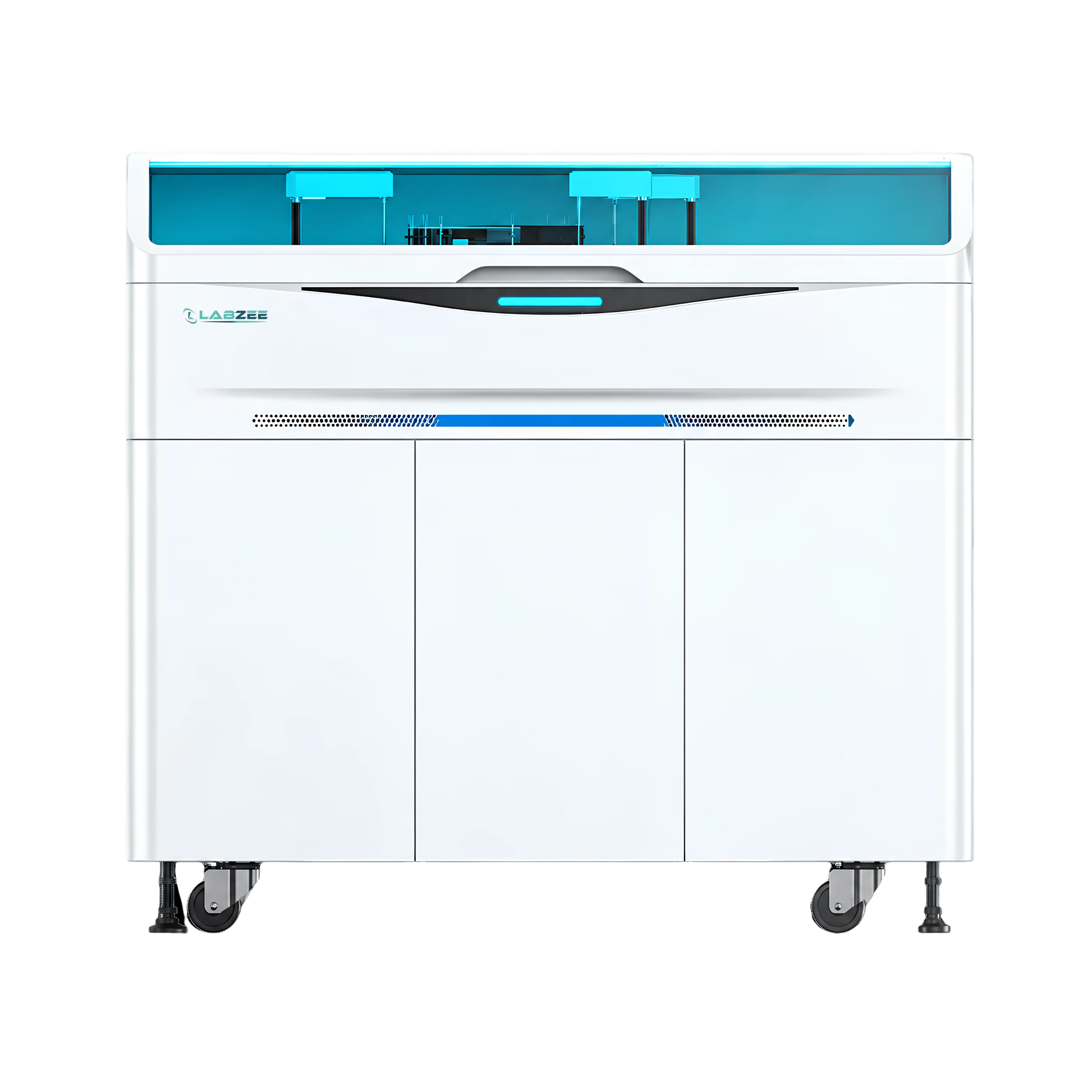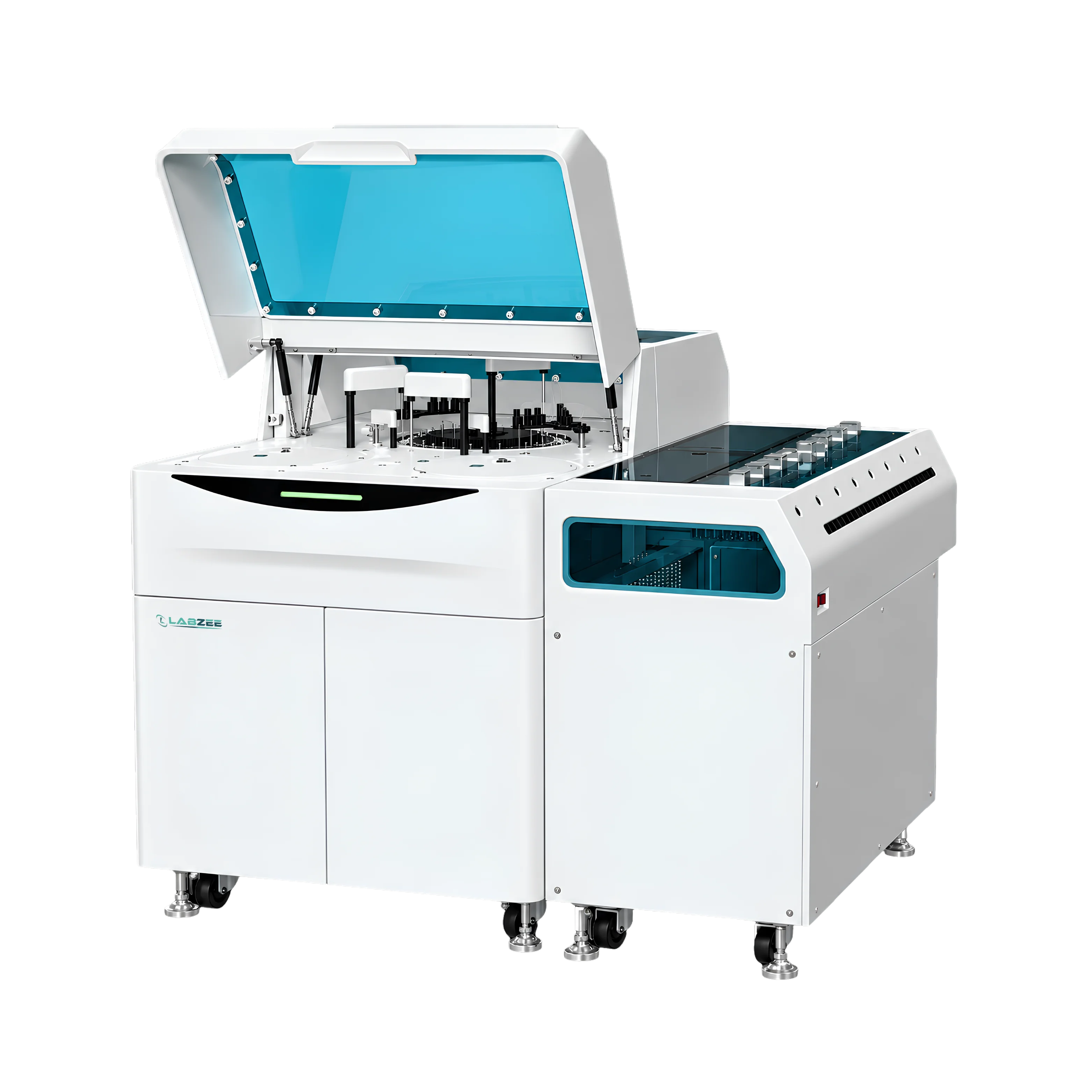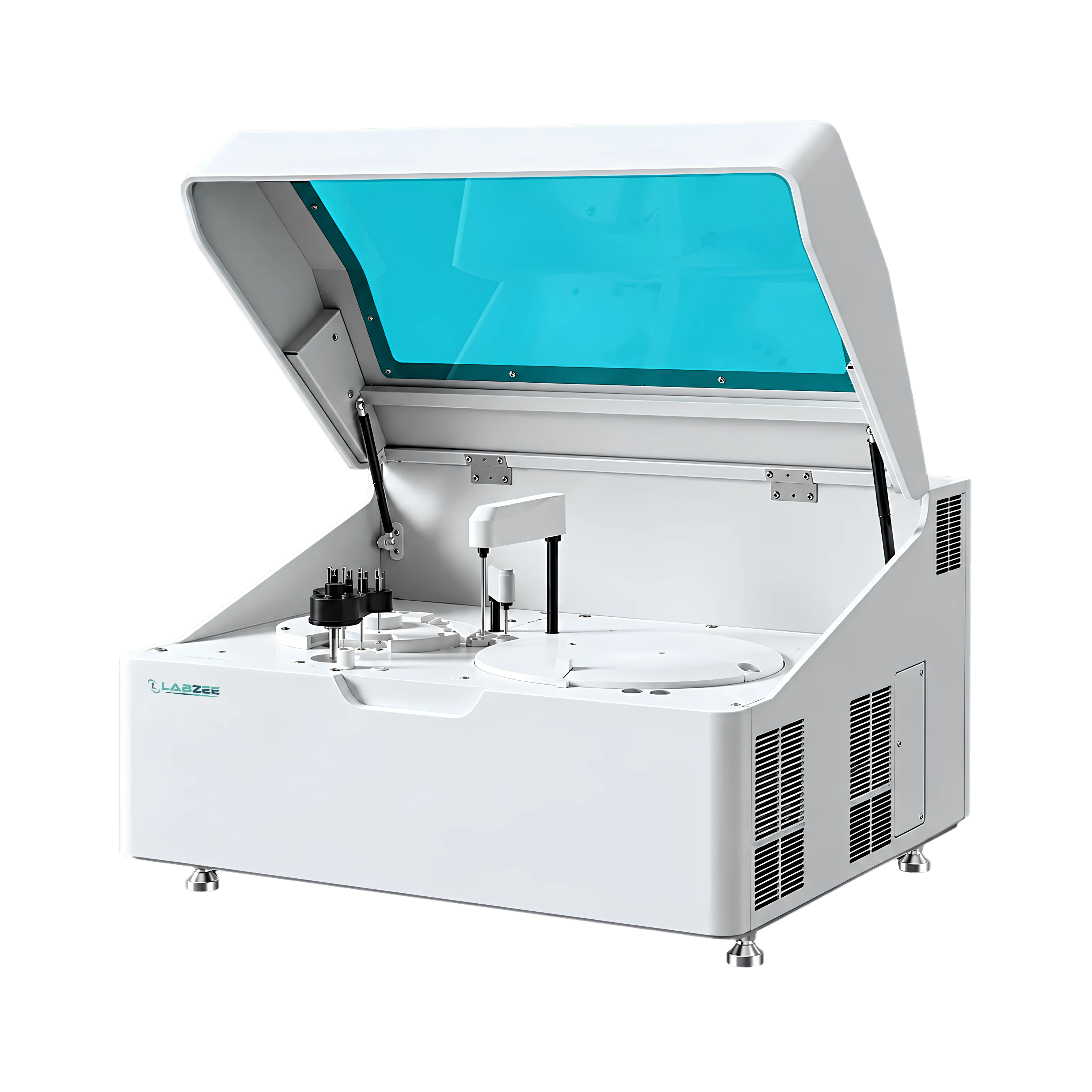
$ 10787
| Sample Sites | 40 (Regular, Emergency, Calibration, QC) |
| Sample Container | Φ13 Sample Tube, 2mL Standard Tube |
| Sample Volume | 2 - 30 μL, 0.1 μL per step |
| Liquid Level Sensor | Digital, Anti-Collision |
| Reagent Site | 80 |
| Reagent Volume | 10 - 30 μL, 0.5 μL per step |
| Reagent Bottle | 20 ml, 35 ml, 70 ml |
| Storage Temp | 2 - 12°C (Customizable) |
| Reaction Cuvette Sites | 56 |
| Reaction Temperature | 37°C |
| Temperature Accuracy | ±0.1°C |
| Reaction Volume | 100 - 360 μL |
| Wavelength Range | 340 - 800 nm |
| Cuvette Type | Quartz |
| Cuvette Light Path | 5 mm |
| Test Principle | Calorimetry |
| Interface | RJ45 Ethernet |
| Light Source | 20W/12V Halogen |
| Colling Method | Air Cooling |
| Absorbance Range | 0 - 3.6 Abs |
| Contamination Rate | <0.1% |
| Quality Control | Manual & Auto QC |
| Auto Flushing | Yes |
| Power Consumption | 500 W |
| Product Dimension | 820 × 716 × 506 mm |
| Net Weight | 100 Kg |
Automated Sample Processing: Supports efficient handling and monitoring of blood culture samples.
Temperature-Controlled Incubation: Maintains a stable reaction environment for consistent culture performance.
Contamination Control: Minimizes carryover risk and supports sample integrity during processing.
Optical Detection Analysis: Supports sensitive monitoring through colorimetric measurement capability.
Sample Monitoring: Enables continuous observation of culture status during incubation.
Clinical Microbiology: Used for detection of bloodstream microbial infections.
Pathogen Detection: Supports identification workflows for bacterial and fungal growth studies.
Diagnostic Laboratories: Applied in routine blood culture testing and infection screening.
Infectious Disease Research: Supports microbial investigation and culture-based studies.
Clinical Research: Supports culture-based analysis in laboratory research workflows.
Frequently Asked Questions
1: What is a blood culture system?
A blood culture system is a laboratory device used to detect bacterial or fungal infections in a patient's bloodstream. It monitors blood samples for microbial growth automatically.
2: Why is a blood culture done?
A blood culture helps identify the cause of a bloodstream infection. It allows doctors to select the right antibiotic or antifungal treatment quickly.
3: How does a blood culture system work?
The system incubates blood samples and continuously checks for signs of microbial growth. If any organism grows, the system alerts the lab staff.
4: What samples are used in this system?
The system uses blood samples collected from patients. These samples are placed in special culture bottles and loaded into the machine.
5: How long does a blood culture take?
Preliminary results may be available within 24–48 hours. Final results, including organism identification and sensitivity, may take up to 5 days.
Labzee Blood Culture Units are advanced diagnostic equipment used for detecting bacterial and fungal infections in blood samples. Our units provide automated monitoring, precise incubation control, and real-time detection for accurate microorganism identification. Available in multiple sample volumes and operating under controlled temperature conditions for optimal growth. ISO- and CE-certified, Labzee Blood Cultures deliver workflow efficiency, diagnostic accuracy, and faster time-to-results for clinical microbiology labs.