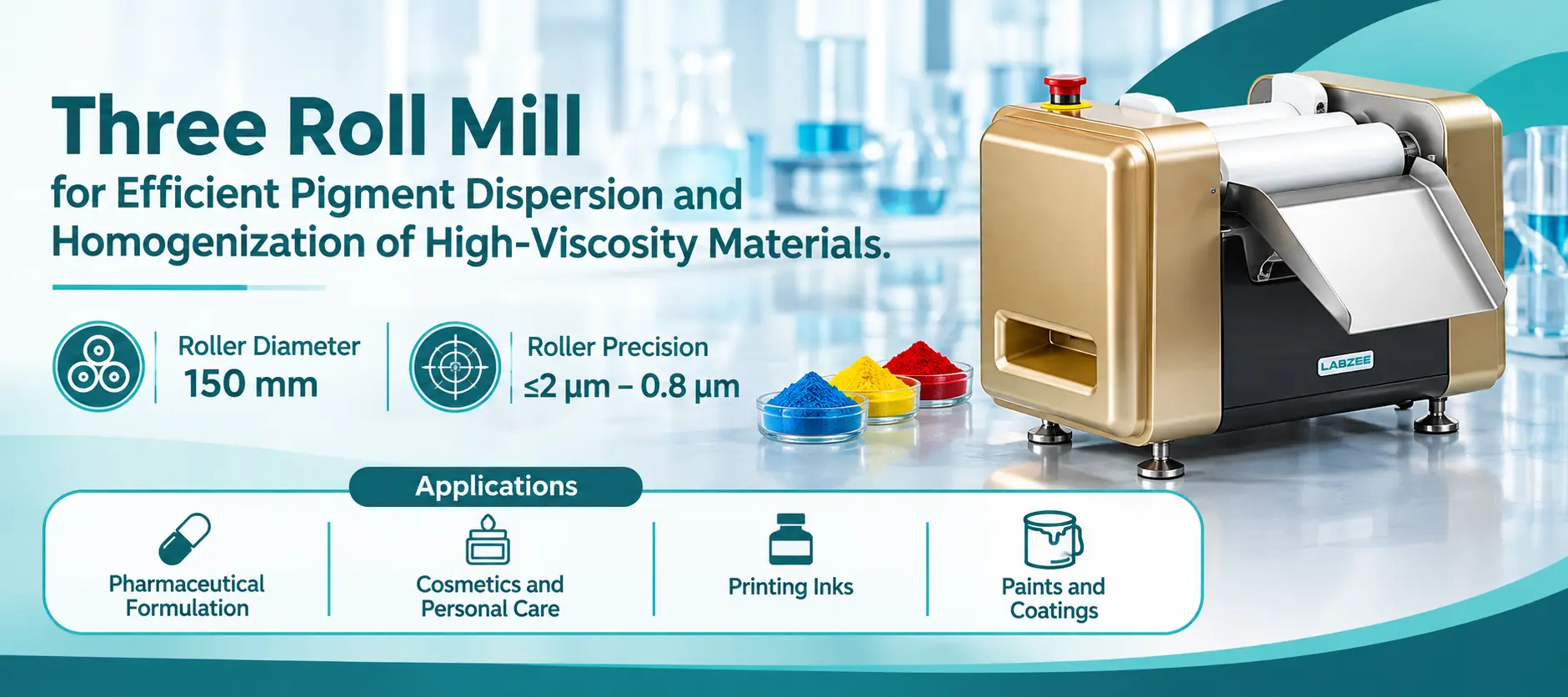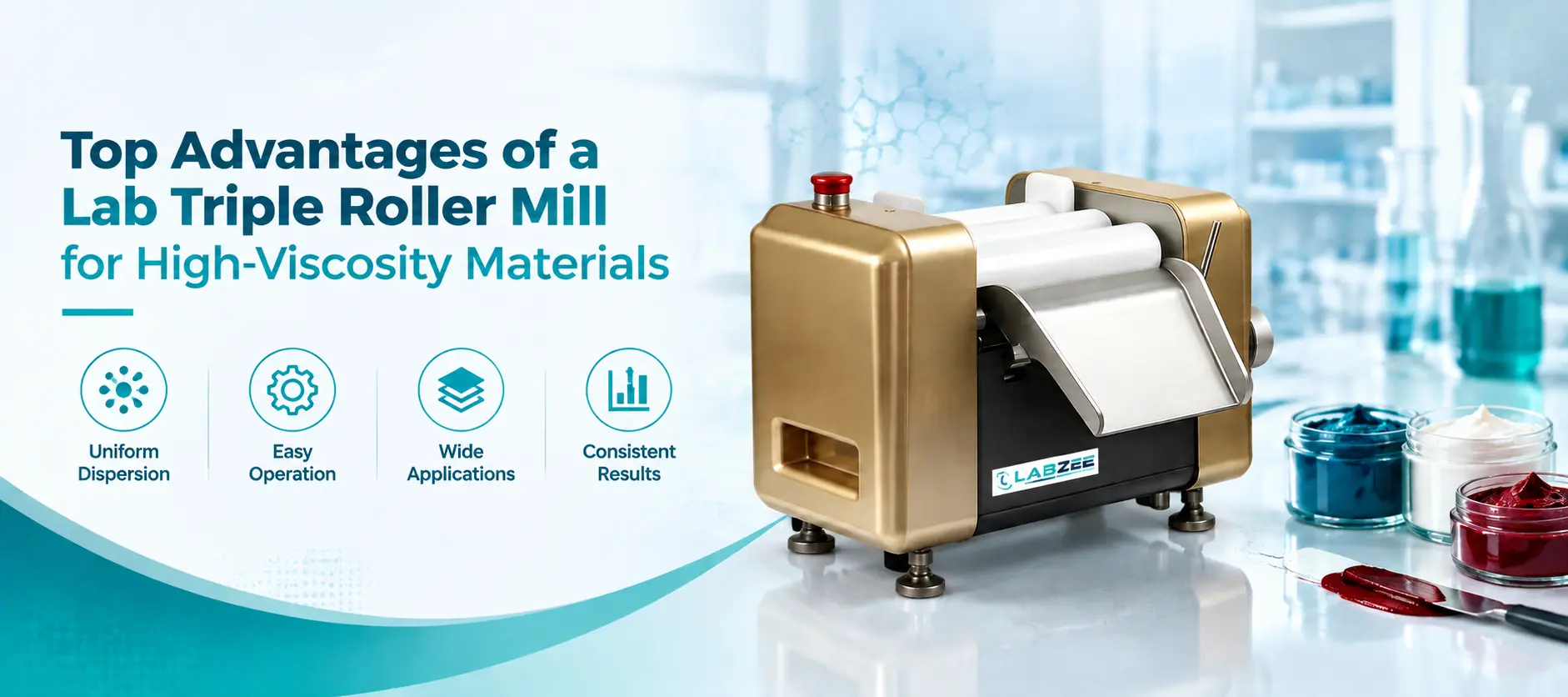
Thick, high-solid pastes are hard to disperse cleanly: they will not flow into a media mill, and hand mixing leaves clumps behind. A roll-based disperser answers this with shear, working stiff material that other formats cannot draw in. This guide sets out the gains that follow, with the Three Roll Mill BZTRM-501 as a reference point throughout.
Viscosity decides which mill can even move a sample. A bead or ball mill relies on the material flowing around loose media, so a stiff paste simply will not circulate. A roll disperser instead pulls the material through narrow gaps between turning rollers, so the thicker the paste, the better it grips and shears. That is the reason a triple roller mill is reached for when the carrier is closer to a putty than a liquid.
Once the format matches the material, a set of practical gains follow, each tied to how the rolls act on a high-viscosity paste. The sections below take them in turn.
Diagram: a stiff paste drawn through the roll gaps by rising roll speeds
Add a three roll mill diagram of the nip and material pathFour advantages come up most often when the material is thick and the result has to be even.
Shear between rolls works high-solid, high-viscosity material that a media mill cannot circulate.
No loose media means no media wear in the product and no separation step after milling.
Closing gaps break agglomerates uniformly, giving strong colour and a smooth, consistent paste.
Set gaps and speeds reproduce a result, so a proven recipe runs the same way on the next batch.
The advantages trace back to how the rolls handle the paste, controlled through a few settings.
Three parallel rolls form two nips, so the paste is sheared twice in a single pass through the machine.
Each roll turns faster than the one before it, and that difference is what generates the shear that pulls clumps apart.
Adjustable clearance between rolls sets how fine the dispersion becomes and how many passes a paste needs.
Jacketed rolls carry off the heat that shear generates, which keeps heat-sensitive bases within range.
The stiffer and more solid-loaded the material, the clearer the advantage on the bench.
Grinding pigment into stiff vehicle for printing inks and coatings with strong, even colour.
Dispersing actives smoothly through thick medicated bases for a uniform pharmaceutical paste.
Working pigments and fillers into lipsticks, pastes, sealants and conductive compounds.
The gains hold only when the paste and the settings suit each other. A few missteps undo them.
A crumbly, under-wetted mix will not grip the rolls, so wet the premix enough to feed the nip evenly.
Forcing a coarse paste through a narrow gap in one step strains the rolls and heats the material; reduce the gap over passes.
Shear warms the paste, and a heat-sensitive base can shift or separate, so use cooled rolls and paced passes.
Roll hardness and finish should suit the product, since the wrong surface wears fast or lets abrasive fillers score the rolls.
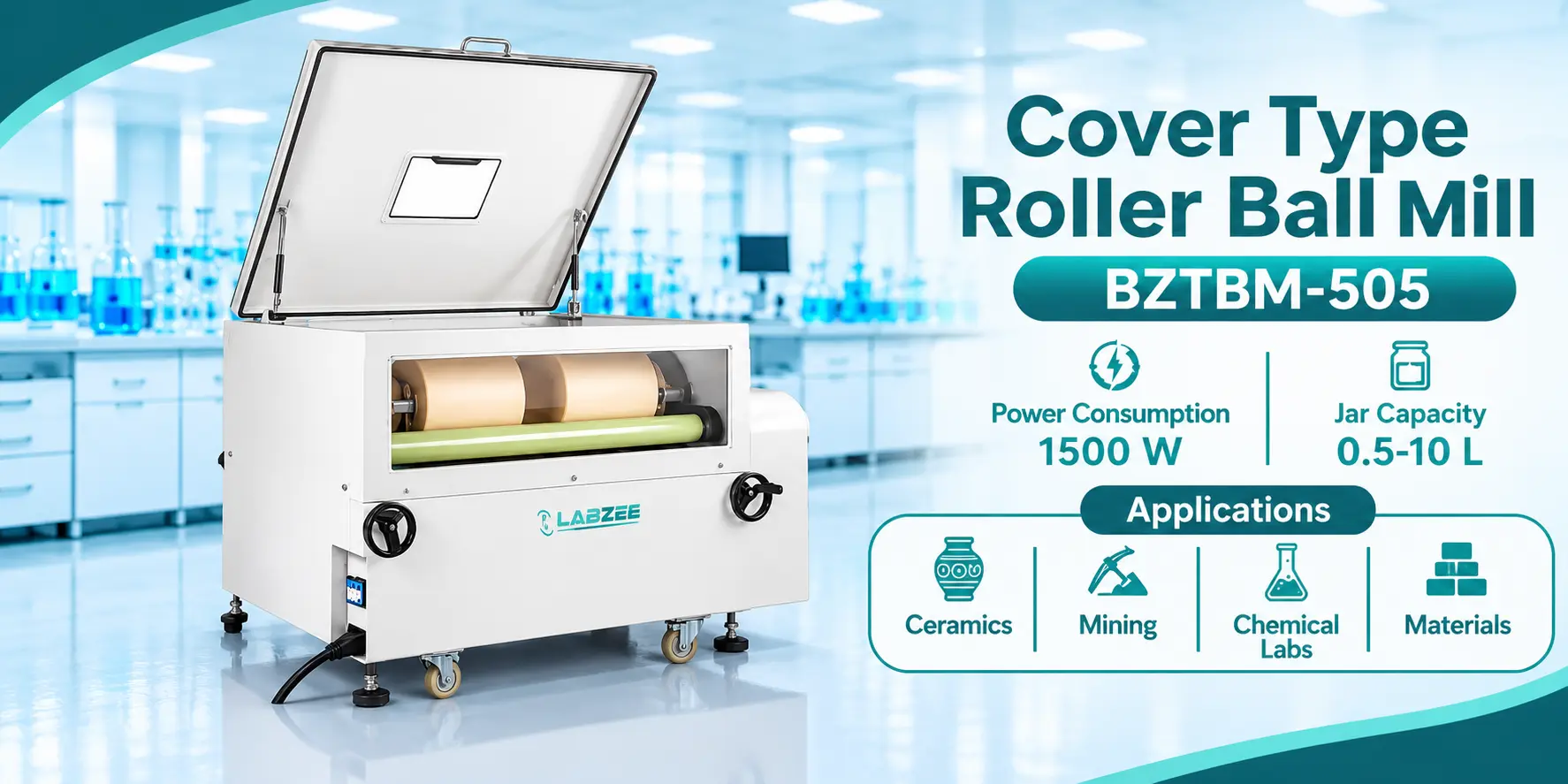
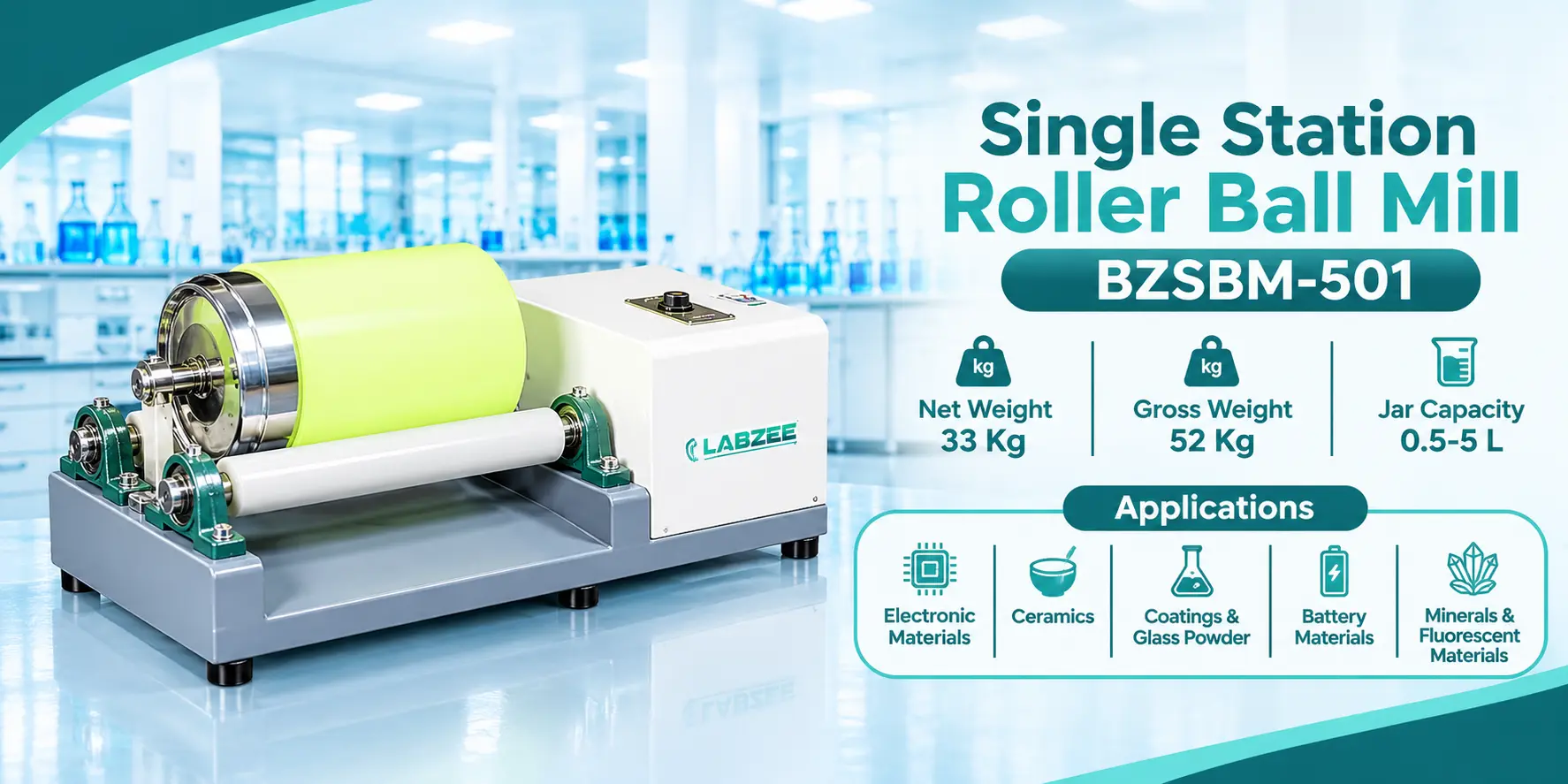
The Three Roll Mill BZTRM-501 belongs to Labzee's wider family of laboratory grinding and dispersion equipment, which spans roll mills for viscous pastes alongside ball, planetary and bead mills for free-flowing feed. When teams weigh options in this group, they compare the milling action against the material, the roll or jar dimensions on offer, the range of gap or speed control, and how cleanly a unit runs without loose media.
You can see how Labzee arranges its instruments across laboratory disciplines on the Labzee home catalogue, while the wider set of grinding and milling formats is laid out on the milling machine category page for side-by-side review. Reading across the range first makes it easier to match the milling action to the material a team plans to run.

A short comparison shows why the milling action follows the viscosity, whether a lab runs one method or mixes formats from the Labzee milling range.
| Advantage | Three roll mill | Bead or ball mill |
|---|---|---|
| Viscosity handled | Thick, high-solid pastes | Low to medium viscosity |
| Media contamination | None, no loose media | Possible media wear |
| Post-processing | No media to separate out | Media removal needed |
| Fineness | Fine dispersion, few microns | Down to sub-micron and nano |
| Suited to | Ointments, inks, sealants | Free-flowing suspensions |