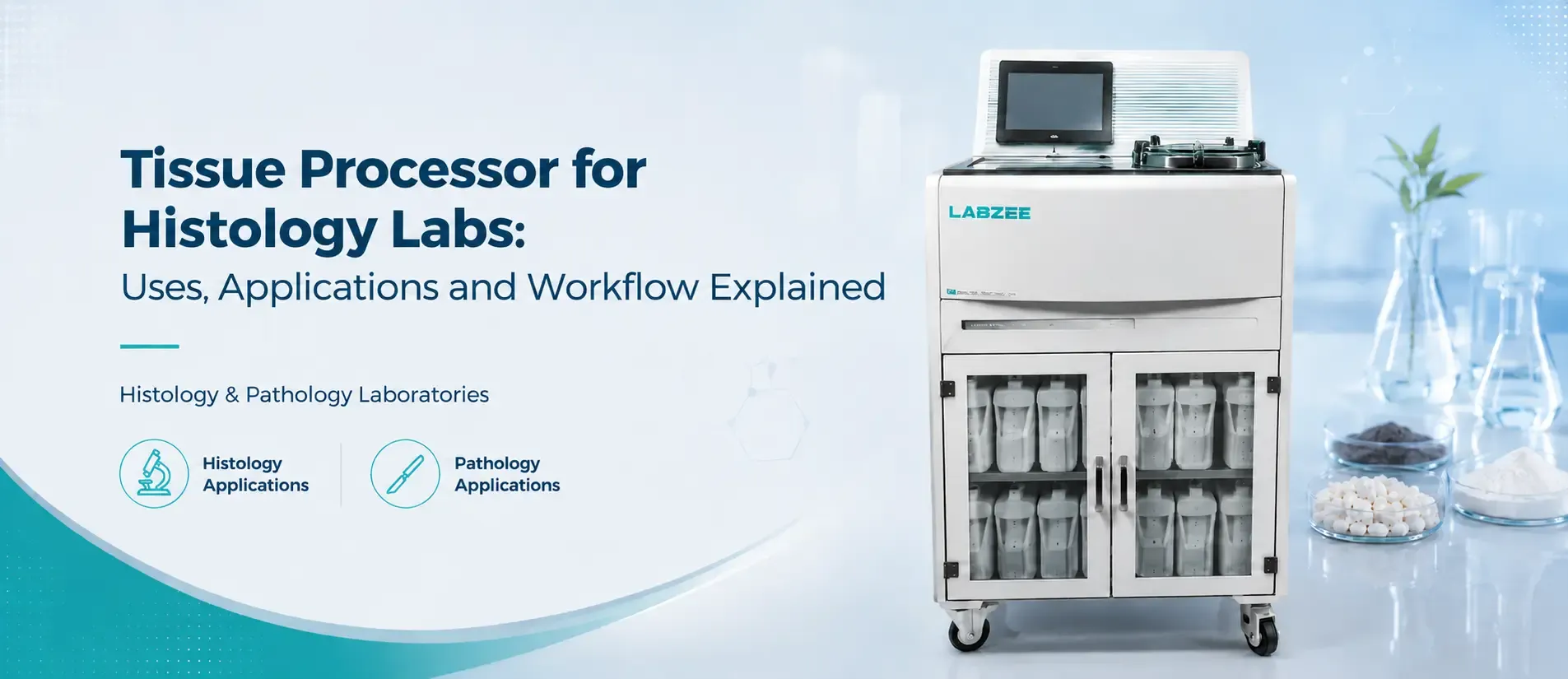
Between the grossing bench and the microtome sits a step that decides whether a specimen becomes a readable slide: processing. This guide explains what the Enclosed Tissue Processor BZCTP-502 does in a histology lab, the sequence it automates, and where it fits in daily work, so the equipment makes sense before the specifications do.
An automated tissue processor prepares fixed specimens so they can be embedded in paraffin and cut into thin sections. Fresh tissue is mostly water, which paraffin cannot penetrate, so the processor moves each specimen through a series of fluids that remove water, replace it with a wax-compatible fluid, and finally infiltrate the tissue with molten paraffin. The result is firm, supported tissue that holds its structure under the blade.
Doing this by hand across a full load of cassettes would tie up a bench for hours and invite uneven results. A histology tissue processor carries the load through the sequence on a set schedule, holding time, temperature, and agitation steady so each cassette meets the same conditions. As tissue processing equipment goes, it is the step that most directly shapes downstream staining quality.
Tissue processor diagram: cassette basket moving through fixation, dehydration, clearing, and wax stations
Add a labelled flow of the station sequence and fluid changesThe value of the machine is clearest when you follow the tissue processing steps it runs in order. Each stage prepares the specimen for the next, and skipping or shortening one shows up later as a soft block or a section that will not hold together.
Specimens arrive fixed, and the first station often continues fixation to make sure the interior is stabilised before fluids are exchanged.
A graded series of alcohols removes water gradually, so tissue is not shocked by an abrupt change that would distort delicate structures.
A clearing agent replaces the alcohol with a fluid that mixes with paraffin, making the tissue translucent and ready to accept wax.
Molten paraffin moves into the spaces the water once filled, supporting the tissue from within so it can be embedded and sectioned.
An automatic tissue processing machine holds each of these stages to a timed schedule, which is what lets a lab load in the evening and collect processed tissue ready for embedding the next morning.
The role of a tissue processor in histopathology is central, but the same machine supports work well beyond routine diagnostics.
Surgical and biopsy specimens are processed overnight so blocks are ready for sectioning and staining the next day.
Animal and plant studies process batches under set conditions so results stay comparable across a project.
Higher-volume services depend on a tissue processor machine that runs large cassette loads to a predictable timetable.
Training programmes use a clear schedule display so students follow how each stage changes the tissue.
Because processing sits upstream of everything else, choosing a unit on capacity alone misses the features that protect specimens and staff. A few missteps recur when a lab shops for tissue processor equipment.
Open systems release clearing-agent vapour into the room. An enclosed design contains and manages fumes, which matters for a machine that runs unattended overnight.
Ask what happens during a power or fluid interruption. A unit that holds tissue safe under fluid until service resumes protects an entire load from a single failure.
Reagent management, schedule flexibility, and cleaning access shape daily use as much as cassette count. Weigh a tissue processor device on the whole workflow, not one figure.
The BZCTP-502 belongs to the wider group of histology laboratory equipment used to prepare specimens for sectioning, which spans enclosed and open processors, embedding stations, and the microtomes that follow. When a lab weighs options in this category, it usually compares cassette capacity, reagent handling and rotation, fume containment, specimen protection during faults, and how simply a schedule is set and repeated. Matching those features to specimen volume and safety needs matters more than headline capacity.
You can see how Labzee arranges its instruments across laboratory disciplines on the Labzee home catalogue, and the full set of processor models is laid out on the tissue processor category page for side-by-side review. Reading across the category first makes it easier to line up capacity, containment, and reagent handling against how a tissue processing lab actually runs its day.

A short comparison helps frame why many labs move to an enclosed design before they weigh capacity figures across the Labzee processor range.
| Consideration | Enclosed processor | Open processor |
|---|---|---|
| Fume handling | Contained and managed | Released into the room |
| Unattended running | Suited to overnight loads | Needs more oversight |
| Specimen safety on fault | Held under fluid until resumed | Varies by model |
| Reagent control | Managed rotation and sealing | More manual handling |
| Typical placement | Main histology bench | Ventilated stations |