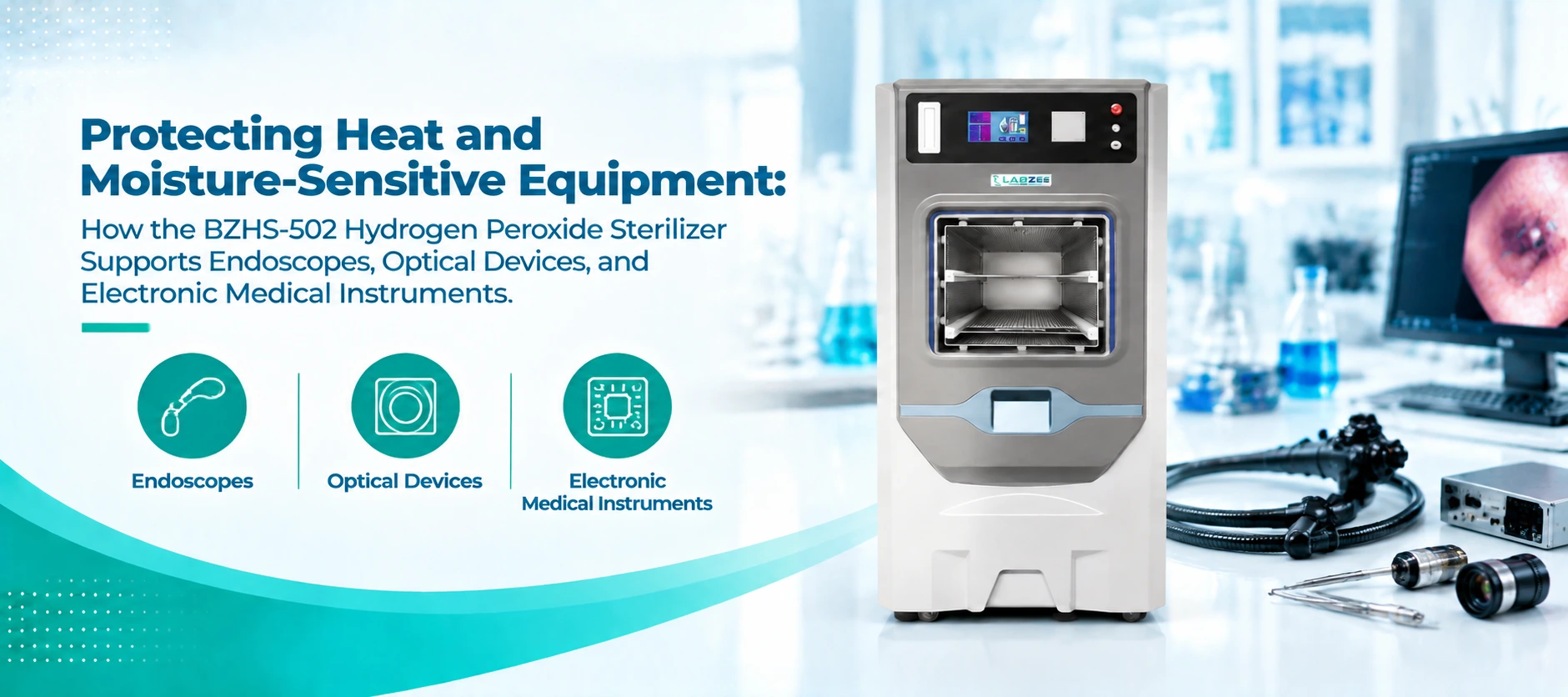
Not all instruments on a sterile processing shelf can pass through a steam autoclave. Flexible endoscopes, camera heads, battery packs, and fine optics carry seals, lenses, and electronics that heat and moisture degrade over repeated cycles. The Hydrogen Peroxide Sterilizer BZHS-502 is built around that gap, running a plasma-based cycle at low temperature so these instruments can be sterilized without steam ever reaching them.
A hydrogen peroxide sterilization system loads instruments into a sealed chamber, then injects a vaporized hydrogen peroxide mixture around them. Once the vapour has diffused through the load, an electrical field converts part of it into a low-temperature plasma, breaking the hydrogen peroxide down into reactive species that finish inactivating any surviving organisms before the chamber returns to a stable state. This is the hydrogen peroxide plasma sterilization process that gives the method its name, and it runs without the steam and pressure a conventional autoclave depends on.
Because the chemistry does the work rather than heat, the hydrogen peroxide sterilization temperature stays low throughout, typically well under the levels a steam cycle would reach. That single difference is what allows a hydrogen peroxide plasma sterilizer to process instruments that would warp, cloud, or fail electrically inside a hot, wet chamber.
A simplified view of the stages a hydrogen peroxide sterilization device runs through in one cycle
Instruments fail in sterile processing for predictable reasons, and steam is often the cause rather than the cure. Flexible endoscope channels can retain moisture that damages internal components over repeated autoclave cycles, camera and light-source connectors corrode when seals are exposed to condensation, and circuit boards inside powered handpieces are not built to withstand a wet, heated chamber at all. A hydrogen peroxide sterilization equipment cycle avoids each of these failure paths by keeping the process dry and cool.
The trade-off runs the other way for certain loads. Long, narrow lumens and densely packed trays can be harder for vapour to reach evenly than for steam, so instrument compatibility and load configuration matter as much as the sterilizer itself. Reviewing manufacturer instructions for each device against the cycle parameters of the hydrogen peroxide sterilizer is a step laboratories should not skip when building a sterile processing workflow around this method.

The same hydrogen peroxide sterilization device supports several categories of equipment across a hospital or laboratory, each sharing the same underlying constraint of being unsuited to steam.
Channels, seals and imaging components in flexible scopes hold up better across repeated cycles when moisture and heat are kept out of the process entirely.
Lenses, coatings and fibre bundles are prone to clouding or delamination under steam, which is why optical instrumentation is a common candidate for this cycle.
Battery packs, handpieces and powered surgical tools with internal circuitry can be processed without the electrical risk a hot, humid chamber would introduce.
Hospitals running a mixed instrument tray often keep one method for general surgical sets and a separate low-temperature path for the items above, turning both around within the same working day.
The BZHS-502 belongs to the broader sterilizer category, which spans steam autoclaves, dry-heat units and low-temperature systems such as hydrogen peroxide and ethylene oxide chambers. Buyers comparing hydrogen peroxide sterilization equipment within this category typically weigh chamber volume against the instrument mix they process, cycle time, how vapour is distributed through dense or lumened loads, and how aeration is handled once a cycle finishes.
Laboratories and hospital departments can review the wider range on the sterilizer category page, which groups units by method and chamber size. That category sits within a broader catalogue of laboratory equipment, and the Labzee home page sets out the other instrument groups the company covers, which is a useful starting point when a sterilization purchase is being planned alongside the rest of a department's equipment.
A few recurring gaps surface once a low-temperature sterilizer is already in daily use.
Departments sometimes standardize on a single sterilization method without checking whether each instrument on the tray is actually rated for it. Long, narrow lumens in particular need to be checked against the cycle's validated reach before they are routed through a hydrogen peroxide sterilization device.
Cycle time alone does not tell the full story. Aeration and cool-down add to the total turnaround, and a department that sizes its workflow on cycle time alone can find instrument availability tighter than expected during busy periods.
A chamber sized for a light caseload becomes a bottleneck once a department's instrument volume grows. Matching chamber capacity to peak daily throughput, not an average day, avoids a backlog forming around the sterilizer, and comparing chamber sizes across the sterilizer range before ordering helps confirm the right fit.
Manufacturer instructions for each device state whether it can be processed in a hydrogen peroxide plasma sterilizer at all. Skipping that check, rather than confirming it before the first cycle, is where instrument damage most often begins.
Neither method replaces the other across a full instrument set, but the differences below explain why departments run both.
| Aspect | Steam autoclave | Hydrogen peroxide plasma |
|---|---|---|
| Operating temperature | High heat and pressure | Low temperature throughout |
| Moisture in the chamber | Steam and condensation | Dry vapour and plasma phase |
| Suited to electronics | Not suited | Suited within validated limits |
| Suited to optics and lenses | Risk of clouding | Suited within validated limits |
| Long narrow lumens | Well suited | Requires checking against validated reach |
| Typical cycle length | Shorter per cycle | Longer, plus aeration time |
In practice, most sterile processing departments keep both paths available and route each instrument by what its manufacturer has actually validated, rather than by habit.




