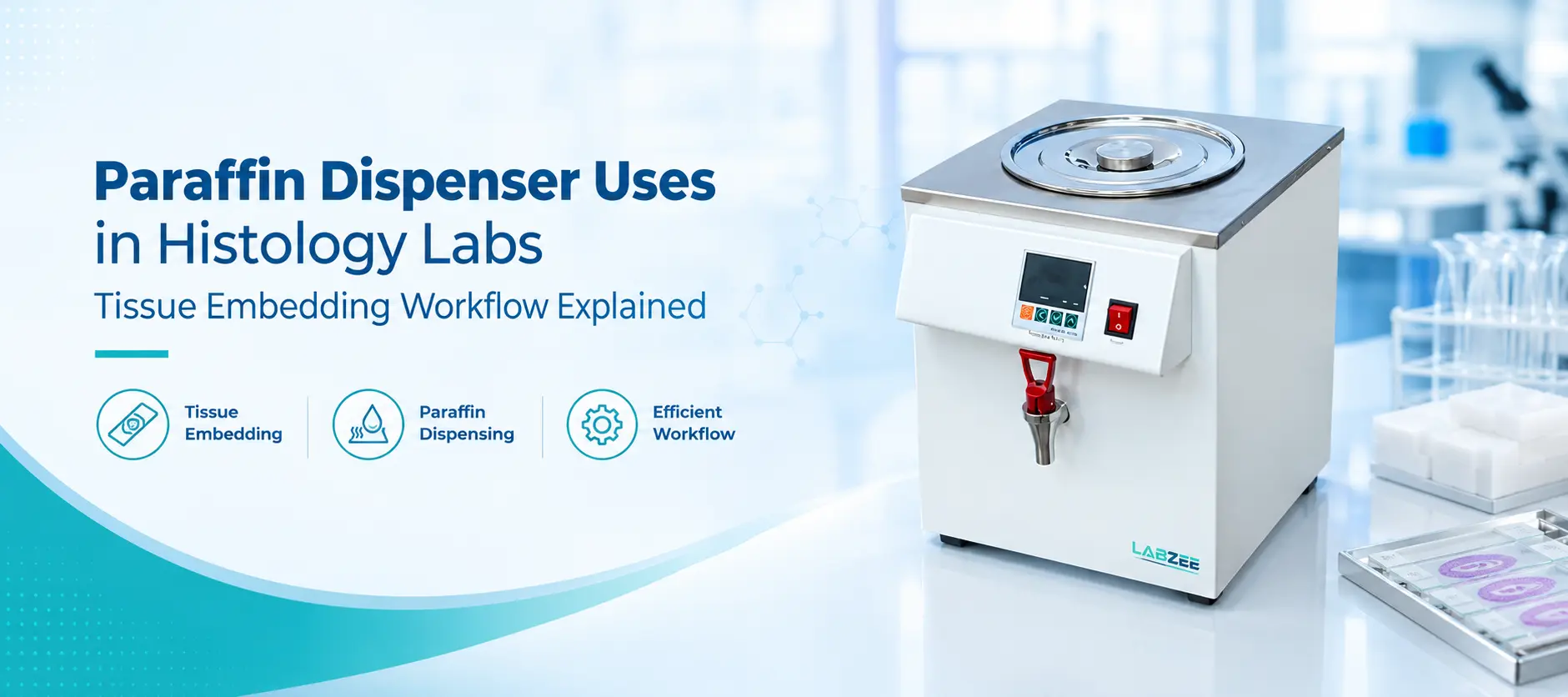
Before a tissue section reaches a microtome, it passes through an embedding step where molten wax surrounds and supports the specimen. A paraffin dispenser is the piece of equipment that keeps that wax at a workable temperature and delivers it to the mold cleanly, and its behavior at that single step affects how consistent each subsequent section cut turns out to be. This article walks through where a histology paraffin dispenser sits in the embedding workflow, using the Paraffin Dispenser BZPD-501 as a working example.
Paraffin wax is solid at room temperature and has to be held above its melting point without overheating it, since repeated overheating degrades the wax and can affect how it infiltrates tissue. A paraffin dispenser histology labs rely on for embedding stations solves this with a heated reservoir: wax is loaded in, brought up to a working temperature, and held there so it stays pourable through a service session rather than needing to be re-melted between blocks.
On the BZPD-501, that reservoir holds up to 10 liters and heats across a range of ambient temperature up to 70°C, with the working temperature adjustable between 50°C and 70°C and held to within ±1% once set. That precision matters more than the headline range: a bath that overshoots its set point risks scorching wax sitting near the heating surface, while one that drifts too low lets wax begin to set before it reaches the mold.
Paraffin dispenser drawing: reservoir, heating element, temperature control, and dispensing nozzle labelled
Add a labelled cross-section diagram of the BZPD-501's reservoir and nozzle pathBuyers researching a paraffin wax dispenser machine will run into several overlapping terms, and they are not all describing the same mechanism. A paraffin bath machine generally refers to any heated reservoir that keeps a working supply of wax molten, which covers the BZPD-501's design. Some dispensers marketed as an automatic paraffin dispenser or a paraffin pump dispenser add a motorized delivery stage that moves wax from reservoir to nozzle on a cycle, rather than relying on gravity feed through an open tap a distinction worth checking closely, since a paraffin wax dispenser in histopathology use may run continuously through a full shift.

| Specification | Value |
|---|---|
| Reservoir capacity | 10 L |
| Temperature range | Ambient to 70°C |
| Adjustable working range | 50°C – 70°C |
| Temperature precision | ±1% |
| Power consumption | 1200 VA |
| Voltage options | AC 220V 50Hz or AC 110V 60Hz |
| Product dimensions (W×D×H) | 350 × 450 × 510 mm |
| Net weight | 10 kg |
| Gross weight | 15 kg |
| Packaging | Wooden case |
The Labzee paraffin dispenser category page groups wax dispensing equipment for histology and pathology use, where buyers typically compare reservoir capacity, temperature precision, and dispensing mechanism rather than choosing on footprint alone. Paraffin dispensers sit alongside Labzee's broader catalog of laboratory instruments, which spans shakers, ovens, refrigerators, stirrers, and ultrasonic cleaners, viewable from the Labzee home page for labs sourcing equipment beyond tissue embedding.