Labzee Lab Desktop Shakers deliver reciprocating oscillation modes with uniform mixing, adjustable speed, and a built-in timer from 0 to 999.9 hours for consistent mixing across flasks, beakers, and test tubes. Our benchtop shakers provide compact footprints with LCD displays, quiet operation, wide temperature compatibility, and a maximum load capacity suitable for various vessel types, offering precise control to suit different sample types and protocols in batches.
Volume
Temperature Range at 25°C
Temperature Range
Temperature Resolution
Temperature Fluctuation at 37°C

Volume: 70 L
Temperature Range: 5 to 60°C
Temperature Resolution: 0.1°C
Temperature Fluctuation at 37°C: ±0.5°C
$ 3566
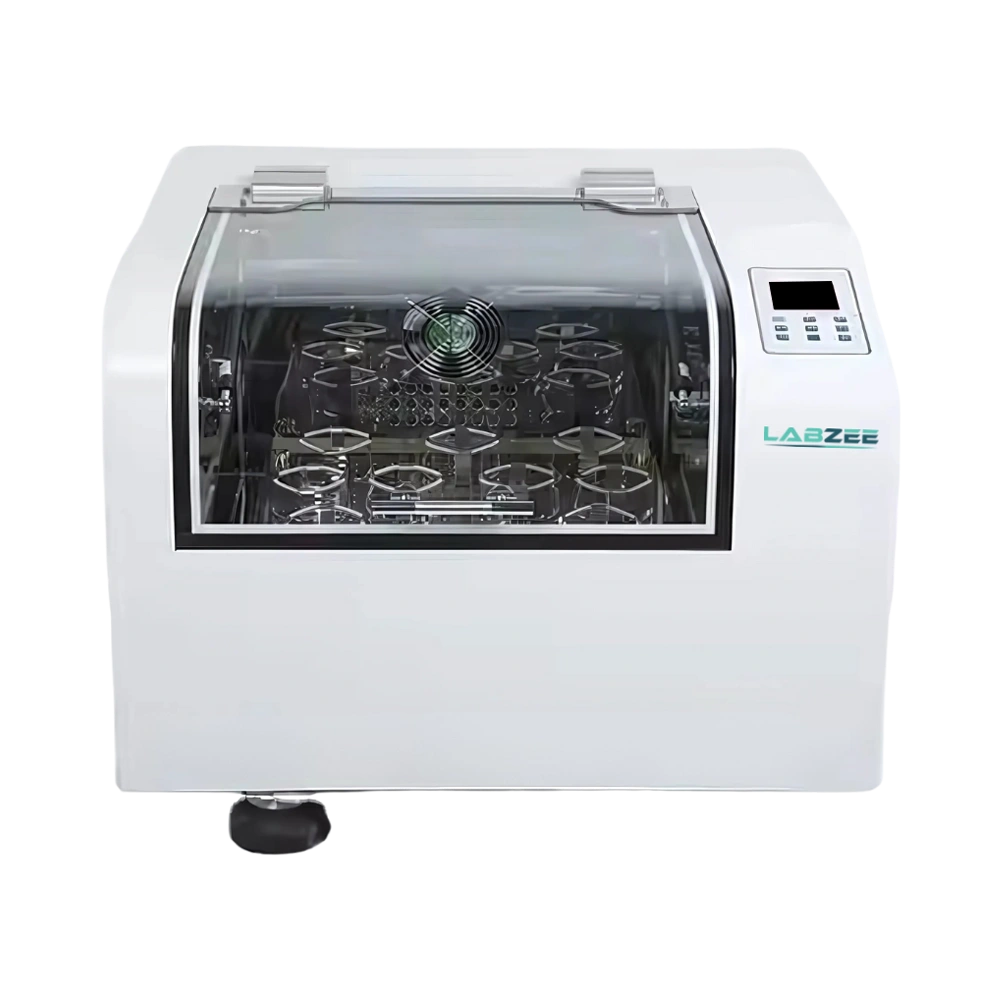
Volume: 70 L
Temperature Range: RT, +5 to 60°C
Temperature Resolution: 0.1°C
Temperature Fluctuation at 37°C: ±0.5°C
$ 3023

Volume: 45 L
Temperature Range: RT, +5 to 60°C
Temperature Resolution: 0.1°C
Temperature Fluctuation at 37°C: ±0.5°C
$ 2867
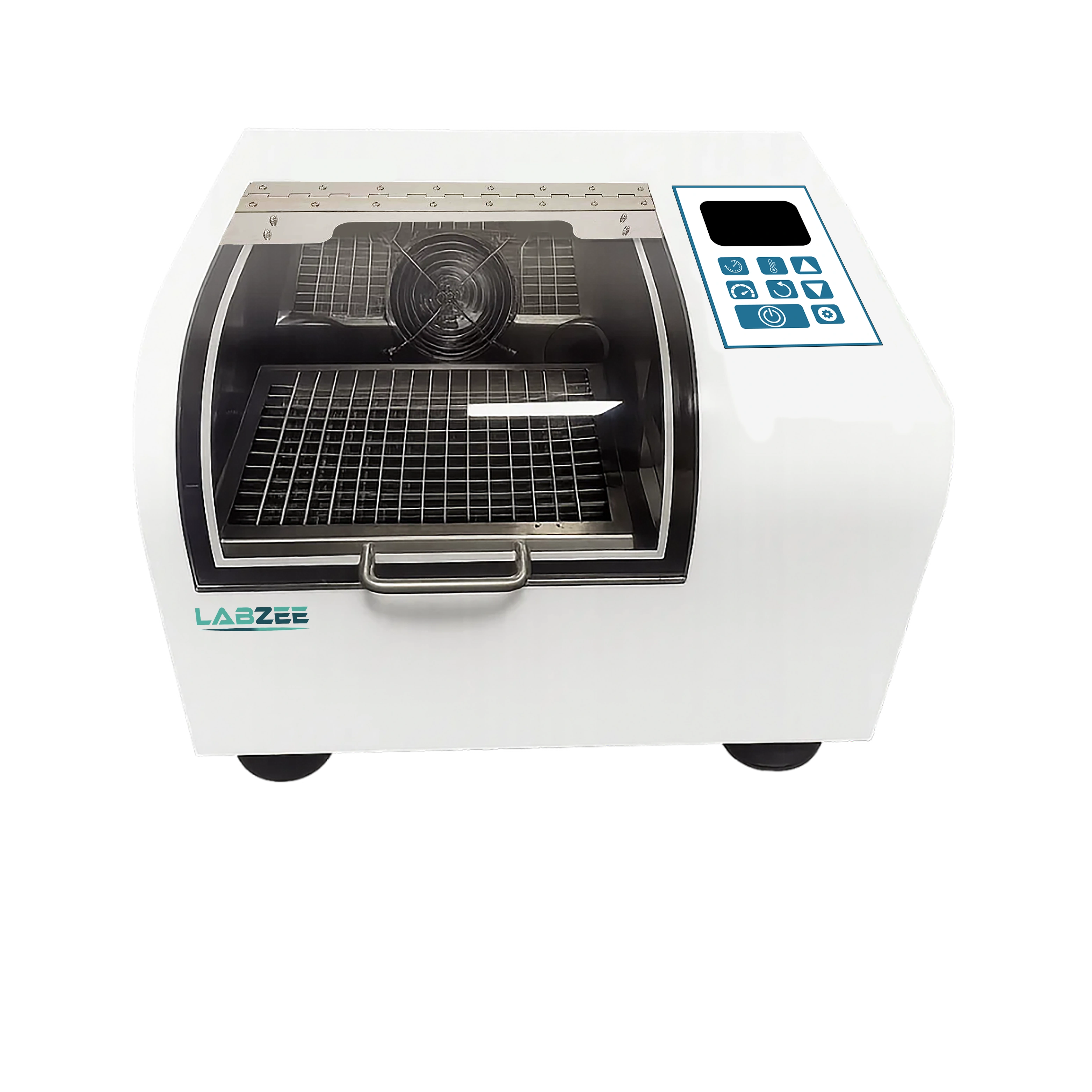
Volume: 18 L
Temperature Range: RT, +5 to 60°C
Temperature Resolution: 0.1°C
Temperature Fluctuation at 37°C: ±0.5°C
$ 2725
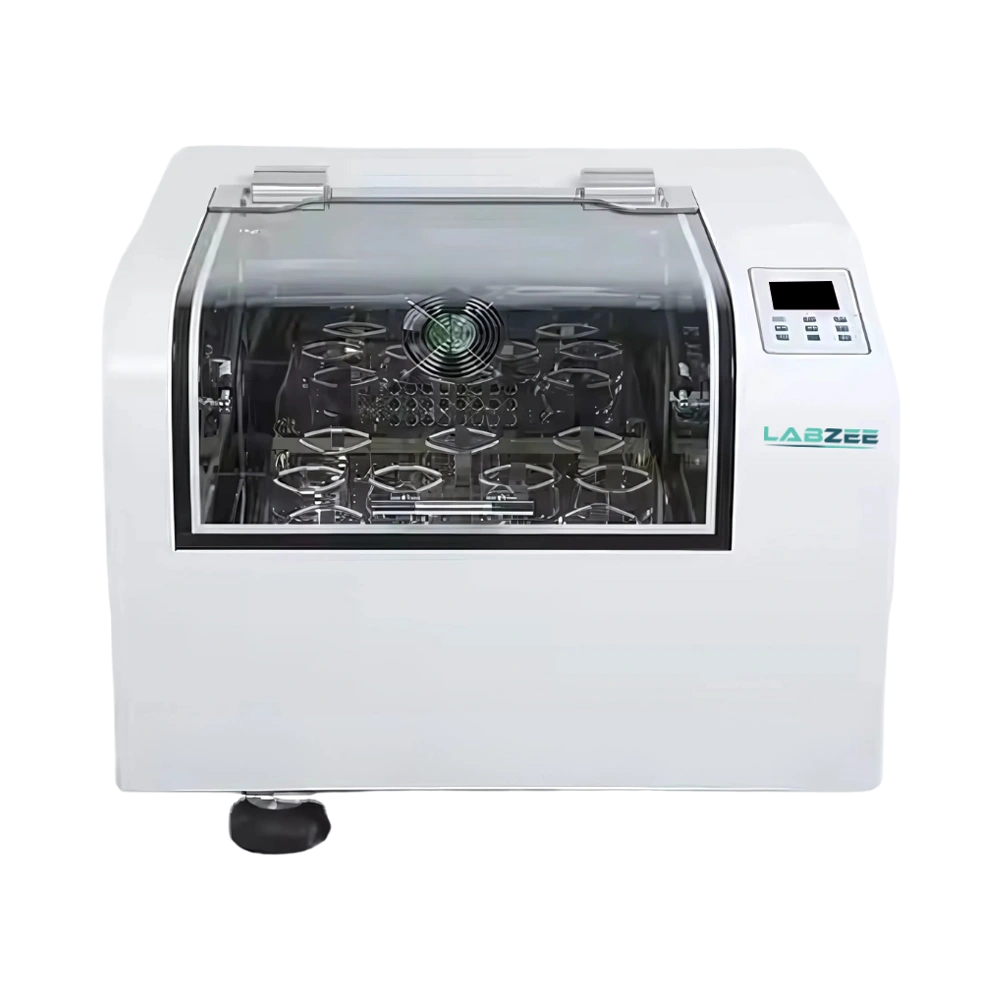
Volume: 55 L
Temperature Range at 25°C: 4 to 60°C
Temperature Resolution: 0.1°C
Temperature Fluctuation at 37°C: ±0.5°C
$ 3793
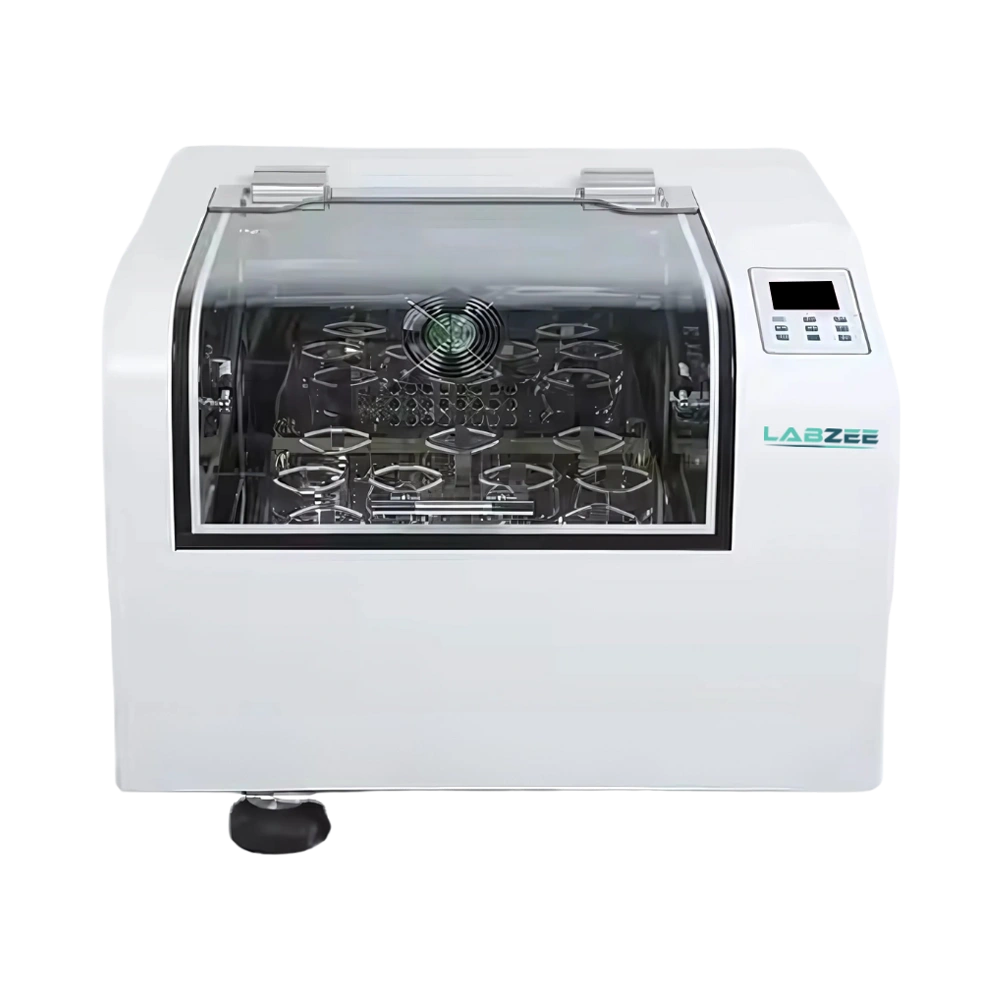
Volume: 75 L
Temperature Range at 25°C: 4 to 60°C
Temperature Resolution: 0.1°C
Temperature Fluctuation at 37°C: ±0.5°C
$ 4391
Frequently Asked Questions
1: What types of containers can be used on a desktop shaker?
Desktop shakers can accommodate test tubes, flasks, beakers, and microplates, depending on the model and accessories like clamps or platforms.
2: What shaking motions are available?
Most desktop shakers offer orbital or linear shaking motions, and some models may provide adjustable speed and amplitude settings.
3: Is the desktop shaker safe for sensitive samples?
Yes, many models are designed to provide gentle agitation to avoid damaging delicate samples like cells or protein solutions.
