$ 36306
| Slide Capacity per Set | 240 Slides |
| No. of Cover Slides | Max 800 Slides/Hour |
| No. of Slide Racks | 20 Slides/Rack |
| No. of Cover Modes | 6 Quick Modes |
| No. of Slide Storage Sets | 12 Sets |
| Control Screen | 8-Inch Touch |
| Glass Detection | Auto Detect & Removal |
| Alarm Function | Voice + Text Alert |
| Sealing Agent Monitor | Auto Refill Alert |
| Spray Needle Detection | Real-Time with Alarm |
| QC Function | USB Data Export |
| Tail Gas Handling | Activated Carbon Filter |
| Slide Basket Detection | Real-Time Access |
| Self-Diagnosis | Yes |
| Air Dry Function | Yes |
| Operation Type | Auto/Manual |
| Product Dimension | 600 × 600 × 682 mm |
| Package Dimension | 650 × 650 × 750 mm |
| Net Weight | 60 Kg |
| Gross Weight | 75 Kg |
| Packaging Type | Wooden Case |
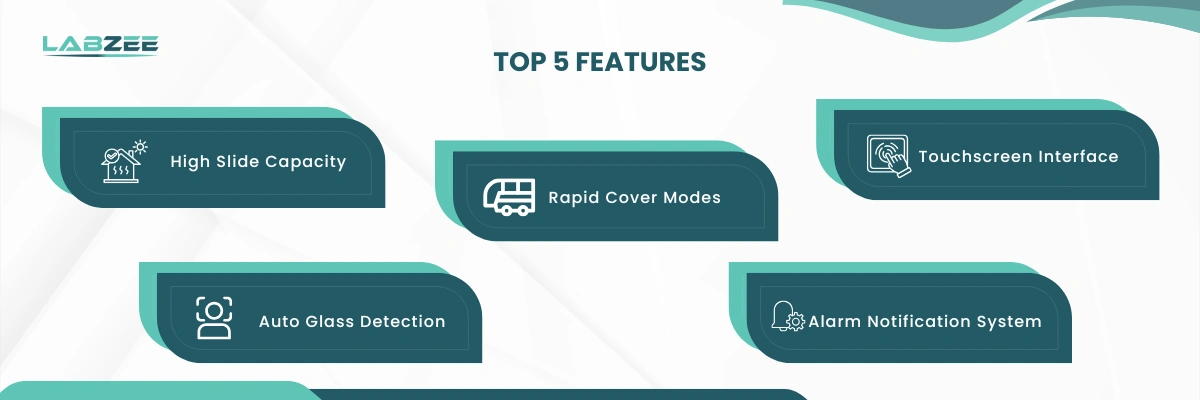
High Slide Capacity
Rapid Cover Modes
Touchscreen Interface
Auto Glass Detection
Alarm Notification System
USB QC Export
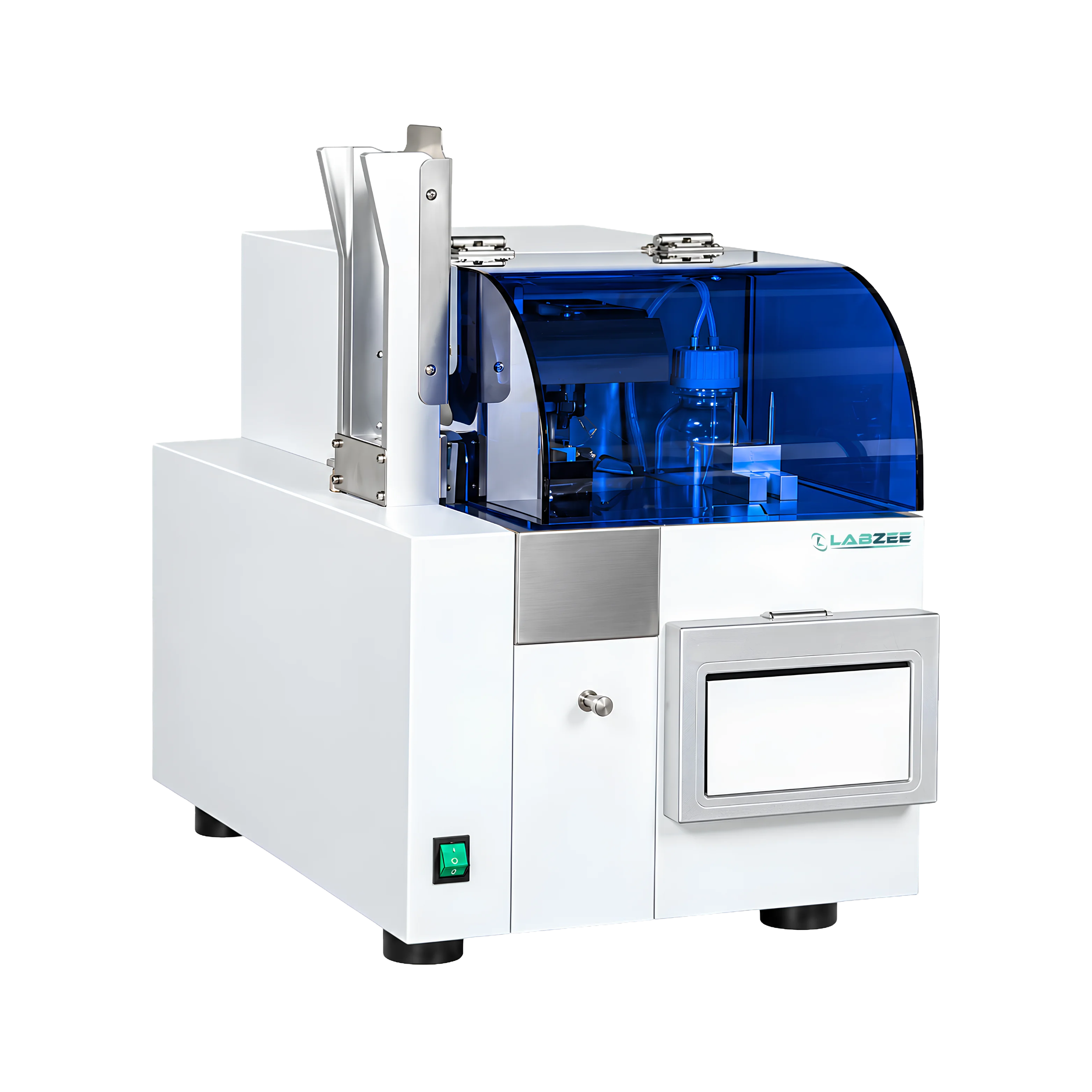
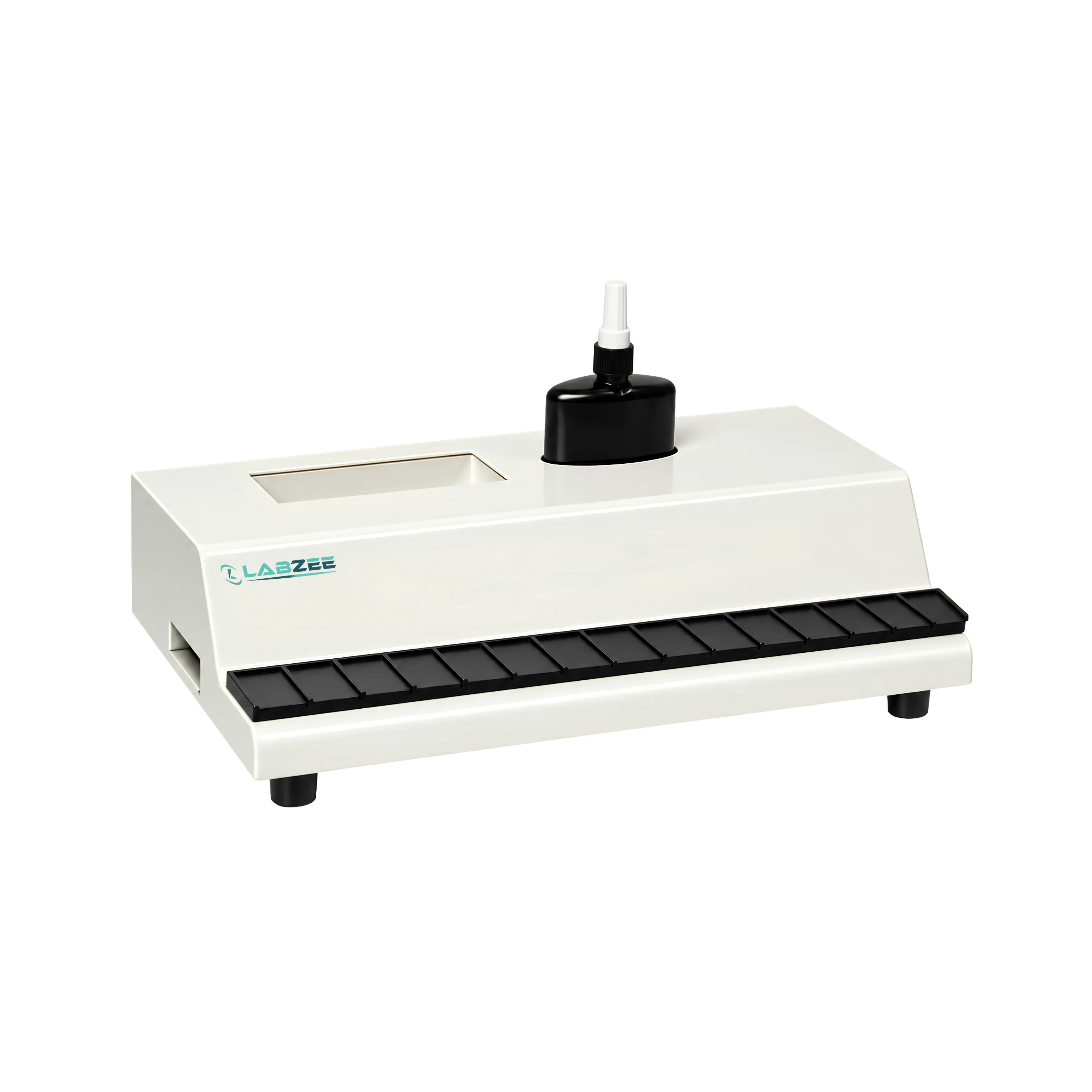
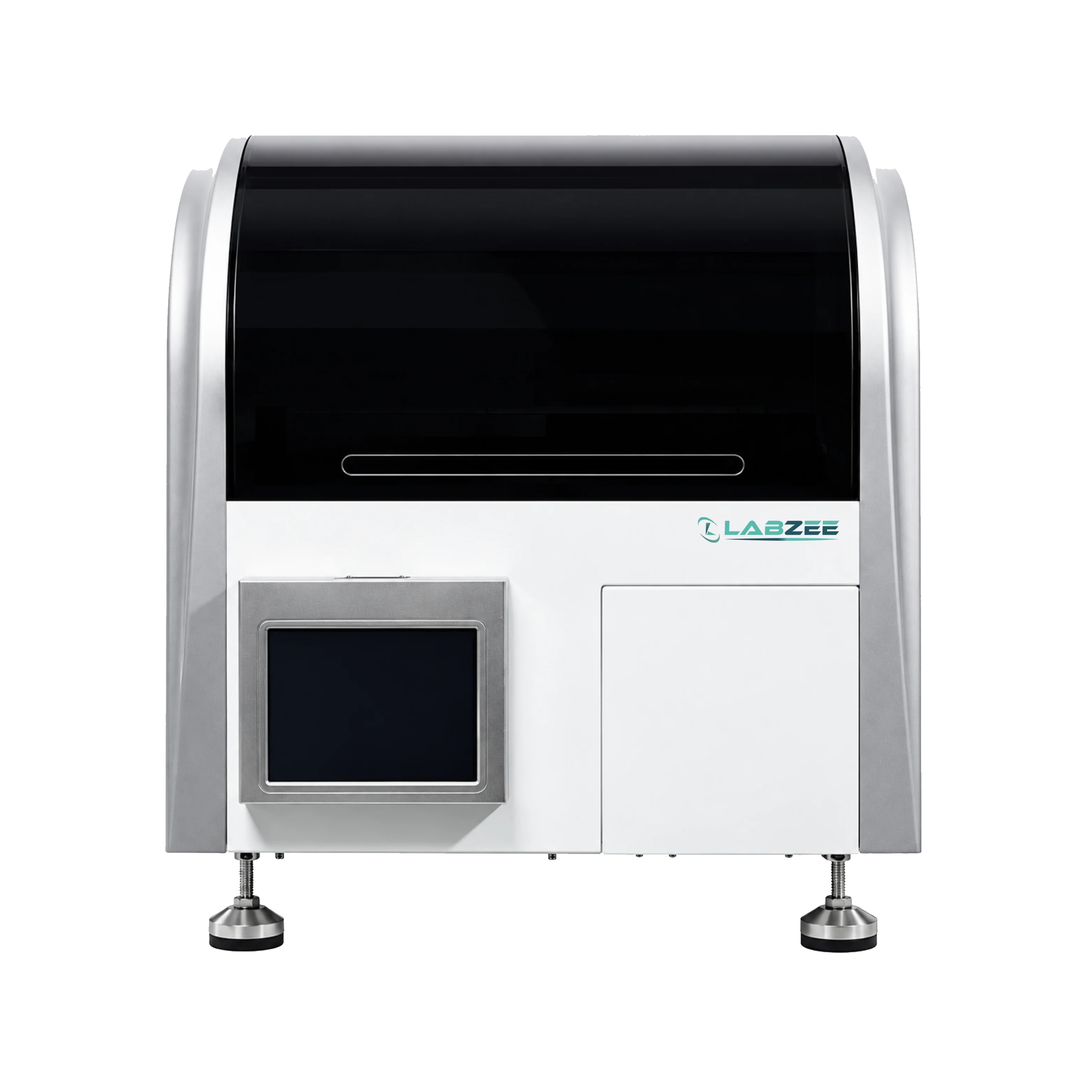
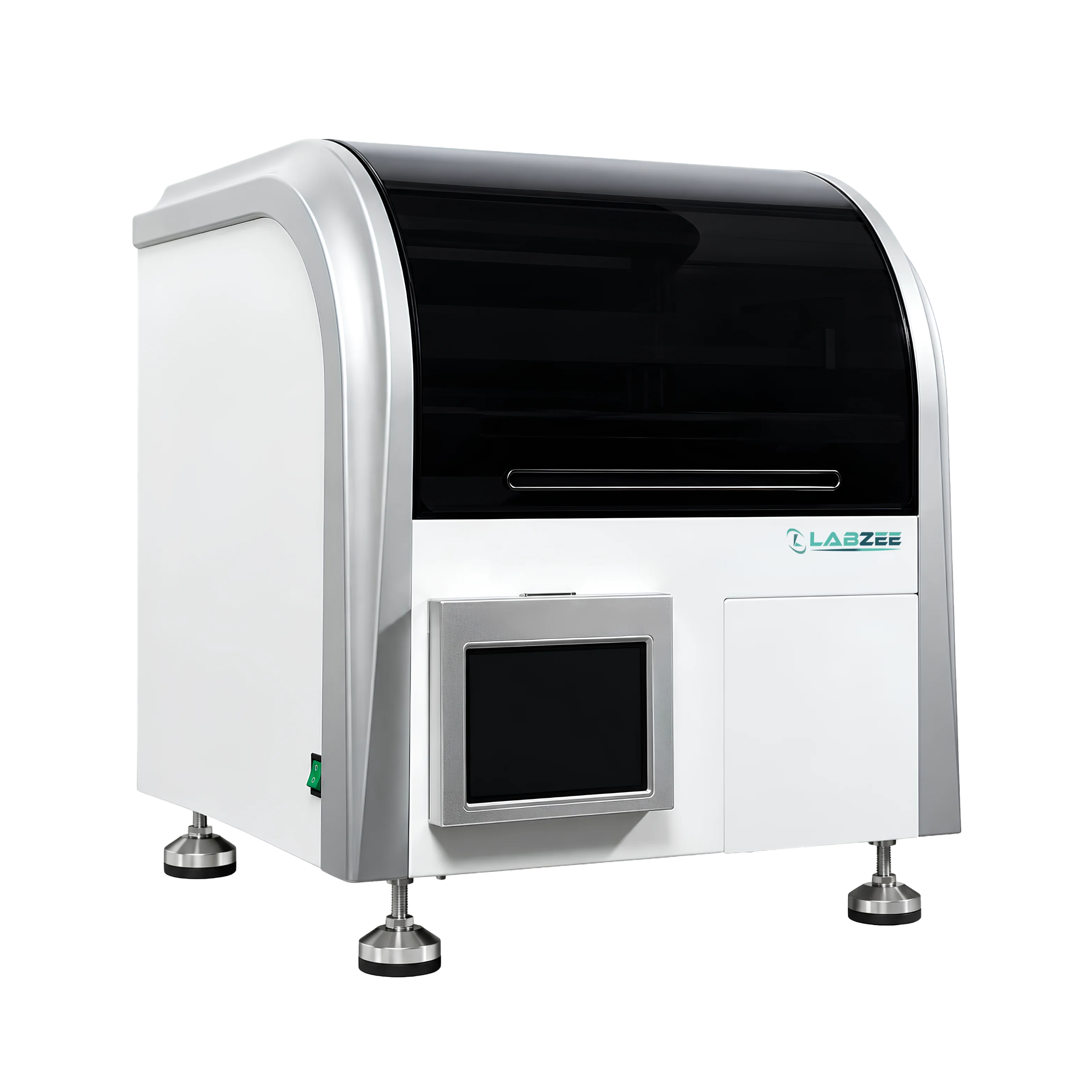
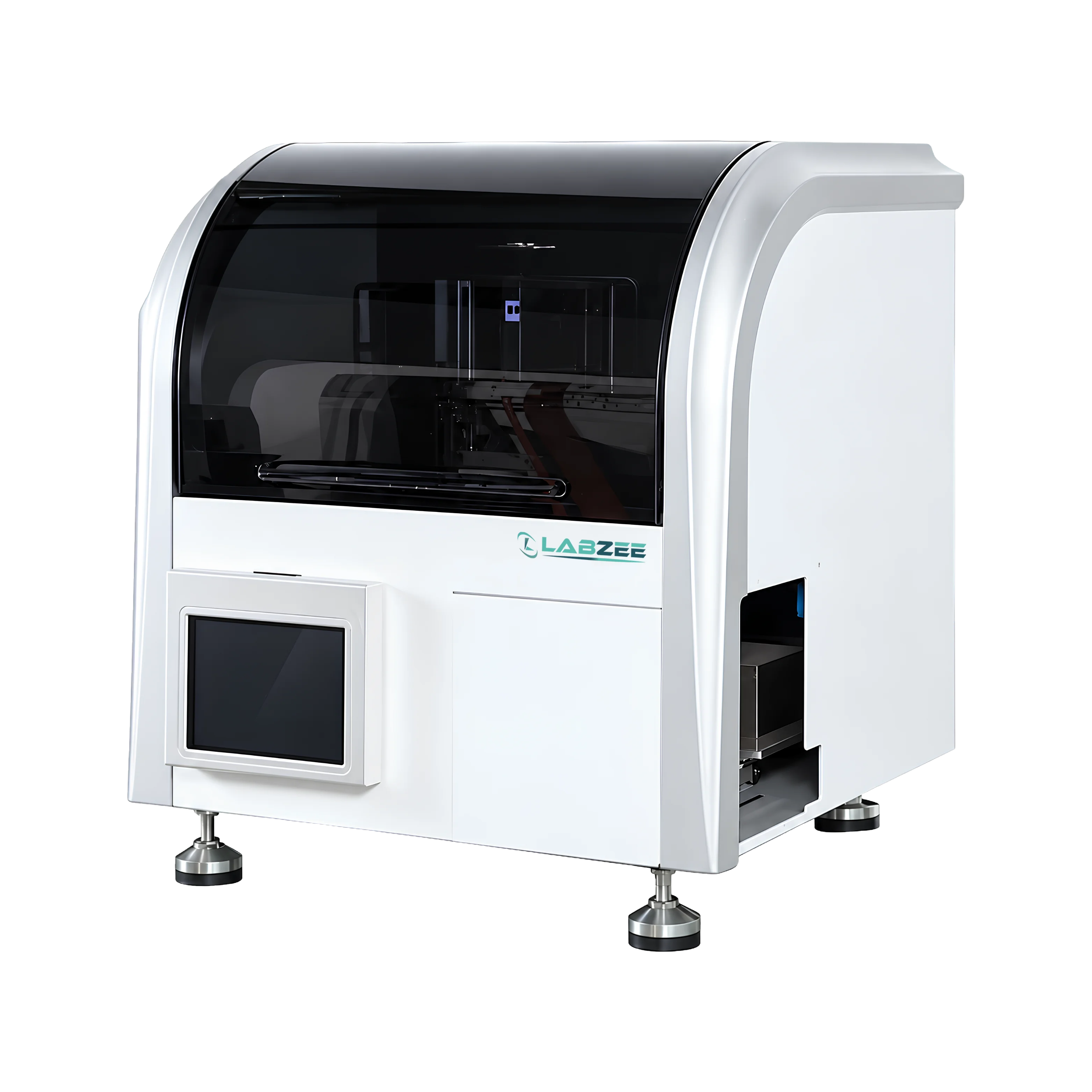
Our Cover Slipper BZCOS-501 enhances slide preparation efficiency in histology and pathology labs, automating the cover-slipping process with high slide throughput, intelligent monitoring, and fast-switching cover modes for reliable specimen sealing in clinical diagnostic environments.
Frequently Asked Questions
1: Can you explain how many slides it processes per hour?
The Cover Slipper BZCOS-501 can handle up to 800 cover slides per hour using its six quick cover modes, enabling high-volume lab operations.
2: What are the key monitoring and alert features?
It includes auto glass detection, spray needle alarms, sealing agent refill alerts, and voice plus text alarms to ensure uninterrupted operation.
3: Does it have user-friendly controls?
Yes, it features an 8-inch touch screen with intuitive controls, allowing users to switch between manual and automatic operation seamlessly.
4: What is the capacity for slides and racks?
The unit supports 240 slides per set and 20 slides per rack, with storage capacity for 12 sets, making it suitable for large lab batches.
5: How does it support lab quality control?
The built-in QC function enables USB data export, ensuring comprehensive performance tracking and report generation for lab compliance.
6: When is a Cover Slipper used in the slide preparation process?
It is used after staining and drying to apply coverslips to microscope slides. This protects the sample and prepares it for long-term storage or microscopy. Proper cover slipping ensures optimal imaging.
7: Can differently mounting media be used with the system?
Yes, most cover slippers are compatible with both xylene-based and aqueous mounting media. Settings can be adjusted based on viscosity and drying time. Check manufacturer guidelines for media compatibility.
8: Can it handle various slide sizes or formats?
Yes, standard cover slippers support common slide sizes (usually 25×75 mm). Some models allow adjustable trays or custom holders. Confirm format compatibility before use.
9: When should the coverslip reservoir be refilled or cleaned?
Refill when the system notifies low supply or as part of daily checks. Clean the reservoir and applicator paths regularly to avoid clogs. Routine maintenance improves accuracy and lifespan.
10: Can the unit be integrated with other staining systems?
Yes, advanced models can be connected to auto stainers for seamless workflows. This enhances throughput in high-volume labs. Integration depends on system compatibility and lab setup.
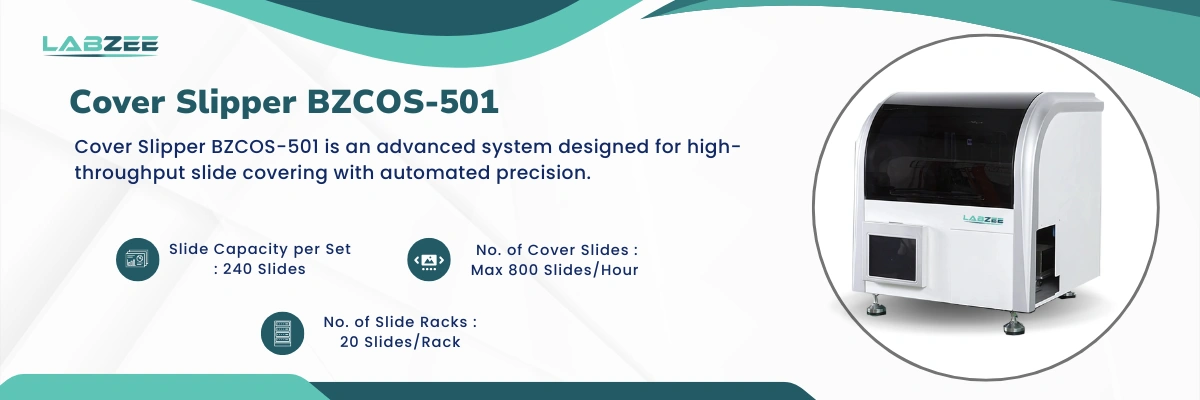
Labzee Cover Slippers are precision automated systems designed for efficient and accurate application of coverslips on stained microscope slides. Our product delivers consistent, bubble-free adhesion and rapid drying, preserving sample integrity and enhancing optical clarity for high-quality microscopy. Compatible with multiple mounting media and standard slide sizes, Labzee Cover Slippers provide flexibility to meet diverse histology workflow requirements. Labzee Cover Slippers' compact design, easy loading mechanism, and programmable operation streamline routine laboratory processes while ensuring steady performance. Ideal for pathology laboratories, diagnostic centers, research institutes, and academic labs, Labzee Cover Slippers enhance productivity and consistency in slide preparation. By combining precision, ease of use, and workflow efficiency, we offer a professional-grade system for laboratories seeking to maintain high standards in sample handling and microscopy analysis.