Vertical Planetary Ball Mill from Labzee offers ultra fine grinding, mixing, and mechanical alloying of laboratory samples through planetary motion in a compact vertical design. Our laboratory planetary ball mill models support high energy milling, fine grinding, and nano grinding, with adjustable speed and time, wet or dry milling, two or four jar operation, vacuum compatibility, digital control, and safety interlocks. The vertical planetary ball mill grinder supports nanoparticle synthesis, ceramic dispersion, and alloy preparation in ceramics, metallurgy, and pharmaceutical laboratories.
Material Capacity
Capacity
Total Setting Time
Grinding Jars
Revolution Speed
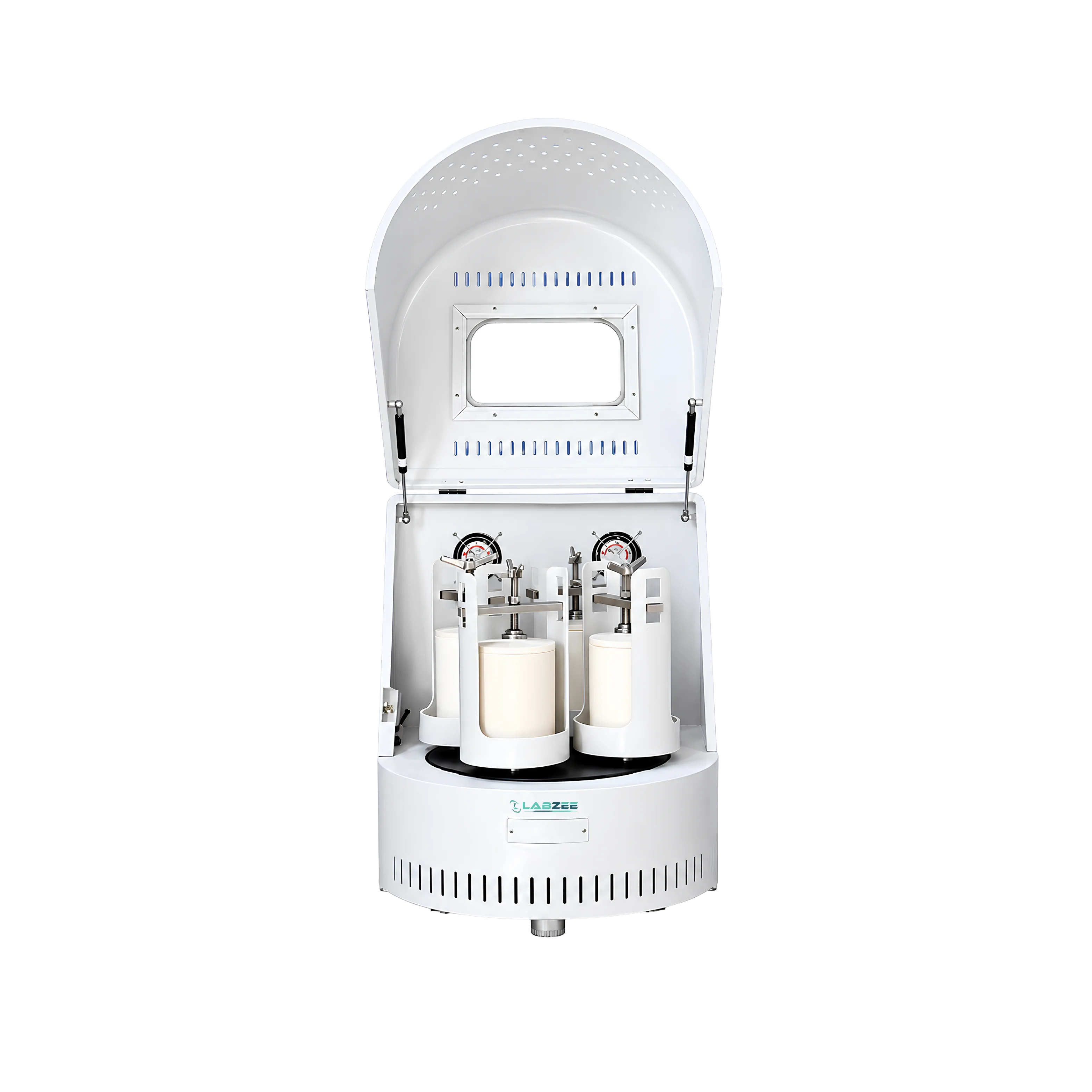
Material Capacity: 1:2
Total Setting Time: 1 - 9999 Min
Rotation Speed: 70 - 670 rpm
Revolution Speed: 35 - 335 rpm
$ 4112
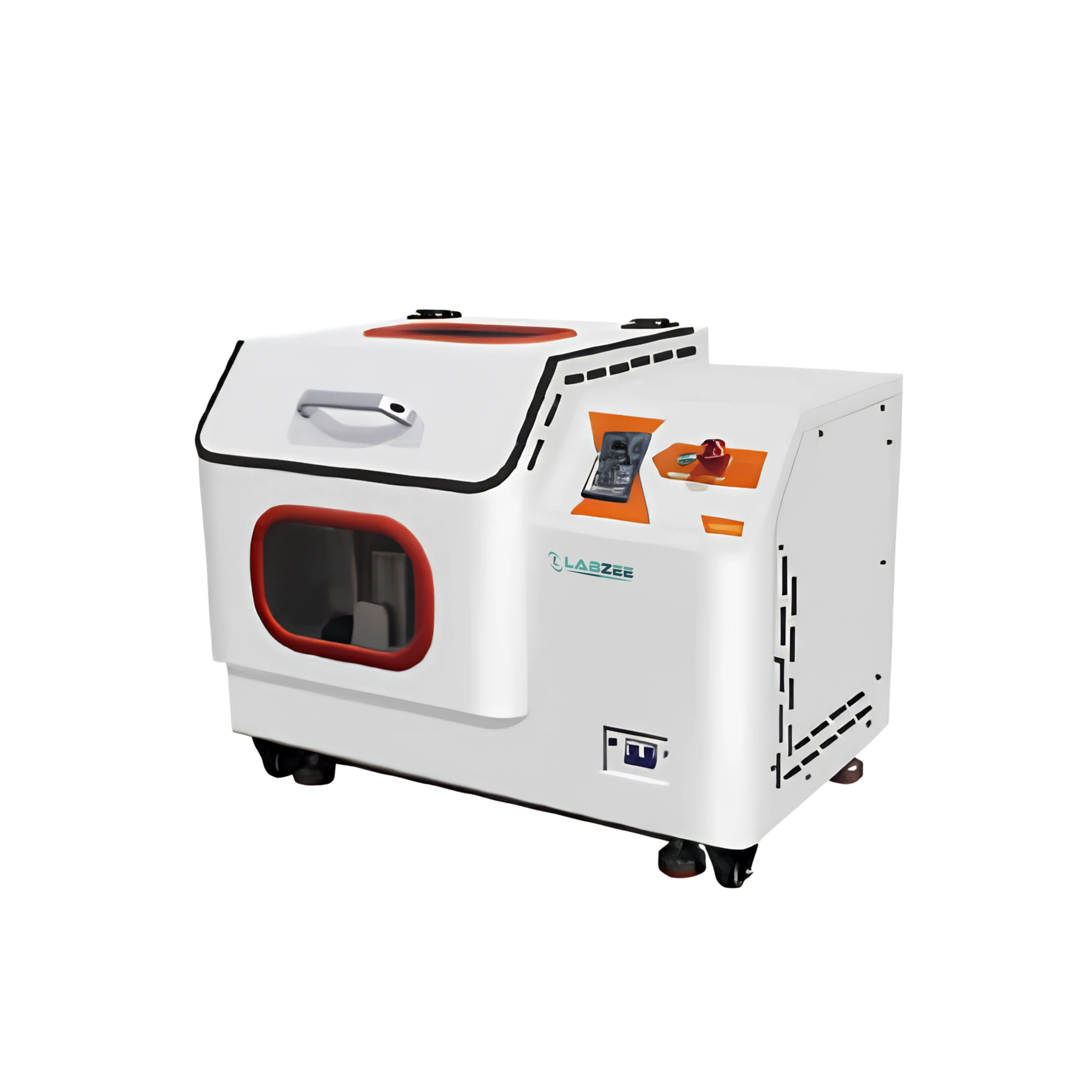
Capacity: 2 L
Grinding Jars: 4 × 50–500 mL
Revolution Speed: 35–335 rpm
Rotation Speed: 70–670 rpm
$ 5394
Frequently Asked Questions
1: What is the working principle of a Vertical Planetary Ball Mill?
The mill uses a rotating disc that holds milling jars, which spin on their own axes while orbiting the central axis. This dual motion produces strong shear and impact forces, ideal for fine grinding.
2: Can this machine be used for both dry and wet grinding?
Yes, it supports both wet and dry milling. The jars can be sealed for liquid media or fitted with vacuum lids for inert atmosphere processing.
3: What jar types are compatible with this mill?
It is compatible with stainless steel, zirconia, agate, nylon, PTFE, and polyurethane jars, with optional vacuum or lined versions based on sample requirements.
4: What are typical applications for this mill?
Used for nanoparticle synthesis, alloy preparation, ceramic dispersion, chemical mixing, and pharmaceutical grinding, especially where ultra-fine granularity is required.
5: Is speed and timing programmable?
Yes, most models include digital control for revolution speed, rotation speed, and programmable time intervals for repeatable, optimized grinding cycles.
