Labzee Offers V-Shape Mixers designed for efficient and uniform blending of dry powders and granular materials, ensuring thorough and homogenous mixing without product degradation. Our V-Shape Mixers are equipped with variable speed control, easy loading and unloading, a compact, low-noise build for convenient operation. The stainless steel chamber provides gentle tumbling action. Models range from 5L to 50L capacity with fixed shaft speed and load limits. Simple cleaning and tilting discharge simplify batch changes, ensuring compliance with hygiene standards.
Mixing Capacity
Useful Capacity
Load Weight Limit
Shaft Speed
Power Consumption
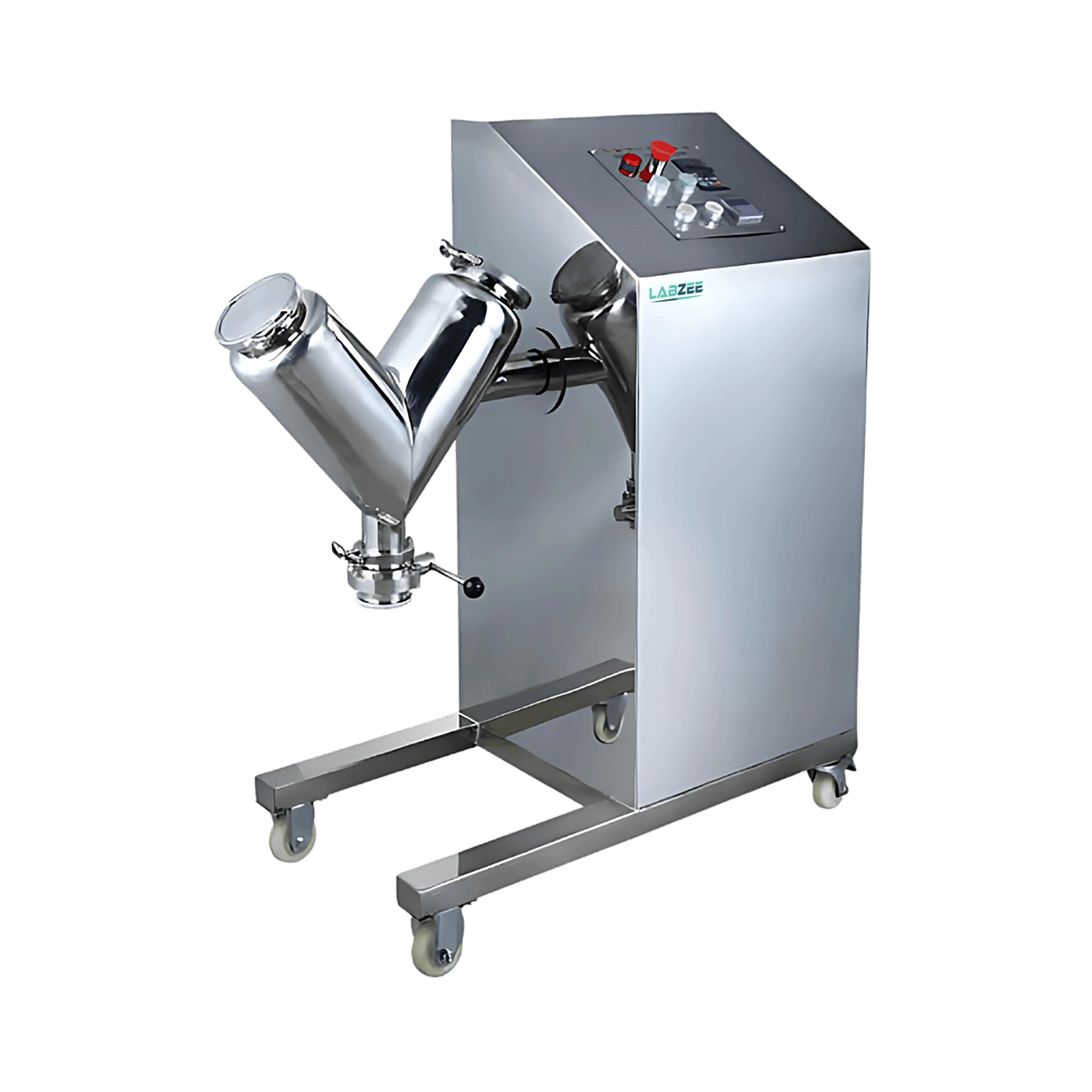
Mixing Capacity: 5 L
Useful Capacity: ≤ 50%
Load Weight Limit: Less than 20 Kg
Shaft Speed: 13 rpm
$ 4342
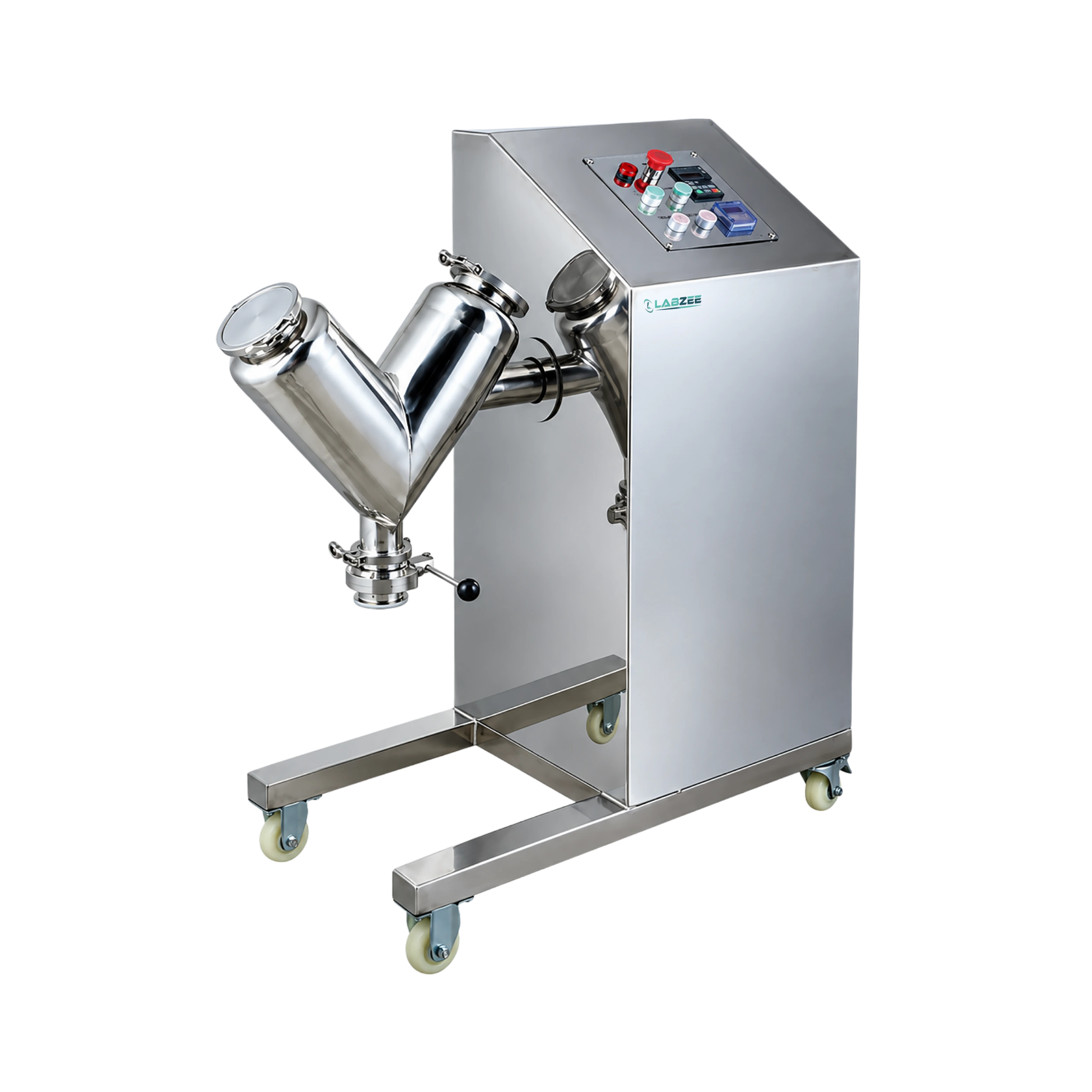
Mixing Capacity: 10 L
Useful Capacity: ≤ 50%
Load Weight Limit: Less than 20 Kg
Shaft Speed: 13 rpm
$ 4342

Mixing Capacity: 20 L
Useful Capacity: ≤ 50% (2 to 16 l)
Load Weight Limit: 8 to 10 kg
Shaft Speed: 13 rpm
$ 4538

Mixing Capacity: 50 L
Useful Capacity: ≤ 50%
Load Weight Limit: Less than 30 Kg
Shaft Speed: 13 r/min
$ 4733
Frequently Asked Questions
1: What is the main purpose of a V-shape mixer?
You use it to gently blend dry powders and granules. The V-shaped chamber allows materials to tumble evenly. It’s ideal for achieving uniform mixing without damaging particles.
2: Can you mix sticky or wet materials in a V-shape mixer?
No, V-shape mixers are best for free-flowing dry powders. Sticky or moist materials may clump and reduce mixing efficiency. Use a different type like a ribbon blender for those.
3: How do you load and unload materials in a V-shape mixer?
You can load materials manually or through a hopper. After mixing, the drum tilts to discharge the contents. It’s quick, safe, and minimizes material loss.
4: Is cleaning easy with a V-shape mixer?
Yes, the open design makes it easy to access and clean. You should wipe down the internal surfaces after each batch. Stainless steel construction helps maintain hygiene.
5: Does the mixing time vary with different materials?
Yes, mixing time depends on material type, particle size, and quantity. You usually get uniform mixing within 10 to 15 minutes. Always test small batches to find the best timing.
