Labzee Ultrapure Water Purification Systems are advanced laboratory units engineered to produce Type I ultrapure water, essential for highly sensitive analytical and molecular biology applications. Utilizing multi-stage purification-typically involving reverse osmosis, UV sterilization, ion exchange, and 0.22 µm final filtration-these systems ensure consistent water quality with ultra-low conductivity, TOC, and endotoxin levels. Designed for benchtop or wall-mounted use, they feature real-time monitoring, touchscreen controls, and customizable dispensing volumes. The modular design supports easy cartridge replacement and scalable water output. Our Ultrapure Water Purification Systems are widely used in genomics, proteomics, HPLC, cell culture, and pharmaceutical QC labs.
Type
Output
Pure Water Outlet
Ultrapure Water Resistivity
Ultrapure Water TOC
Top Products
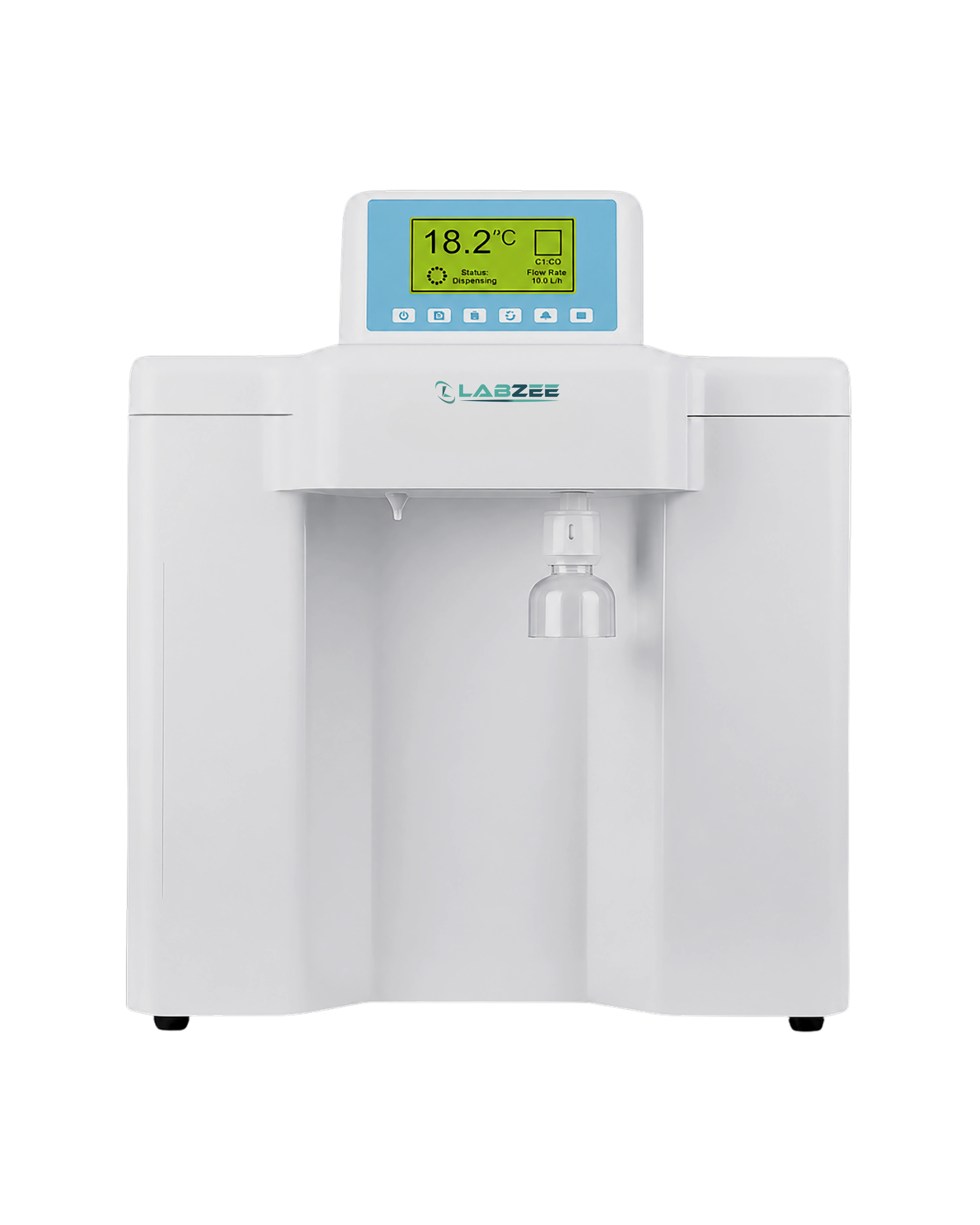
Type: Standard
Output: Up to 2 lit/min @ 25°C
Pure Water Outlet: Deionized water and Ultrapure water
Ultrapure Water Resistivity: 18.2 MΩ.cm @25°C
$ 7165
Frequently Asked Questions
1: What purity level does this system provide?
The system produces Type I ultrapure water with resistivity up to 18.2 M?·cm, low TOC (<5 ppb), and 0.22 µm filtration, suitable for critical molecular and analytical applications.
2: Which technologies are used in the purification process?
It combines reverse osmosis, activated carbon filtration, ion exchange, UV sterilization (185/254 nm), and final membrane filtration to ensure comprehensive contaminant removal.
3: Can it dispense water in fixed volumes?
Yes, many models support programmable dispensing for precise volumes, along with real-time quality monitoring to ensure water meets application-specific standards.
4: Is maintenance difficult or frequent?
Not at all. Cartridges and filters are user-replaceable, and the system alerts users when maintenance or replacement is needed, ensuring hassle-free operation.
5: What applications require ultrapure water from this system?
It is ideal for HPLC, LC-MS, PCR, qPCR, cell culture, electrophoresis, and any technique where contaminants in water could interfere with sensitive outcomes.
