$ 3227
| Material | 304 Stainless Steel |
| Thickness | 1.0mm |
| Temperature Range | 0-10 °C |
| Low Noise | <20 Db |
| Compressor | Imported Sanling, Direct Cooling, |
| Anti-Condensation | Electric Heating Film on Glass Door |
| Display | Digital Temperature Display |
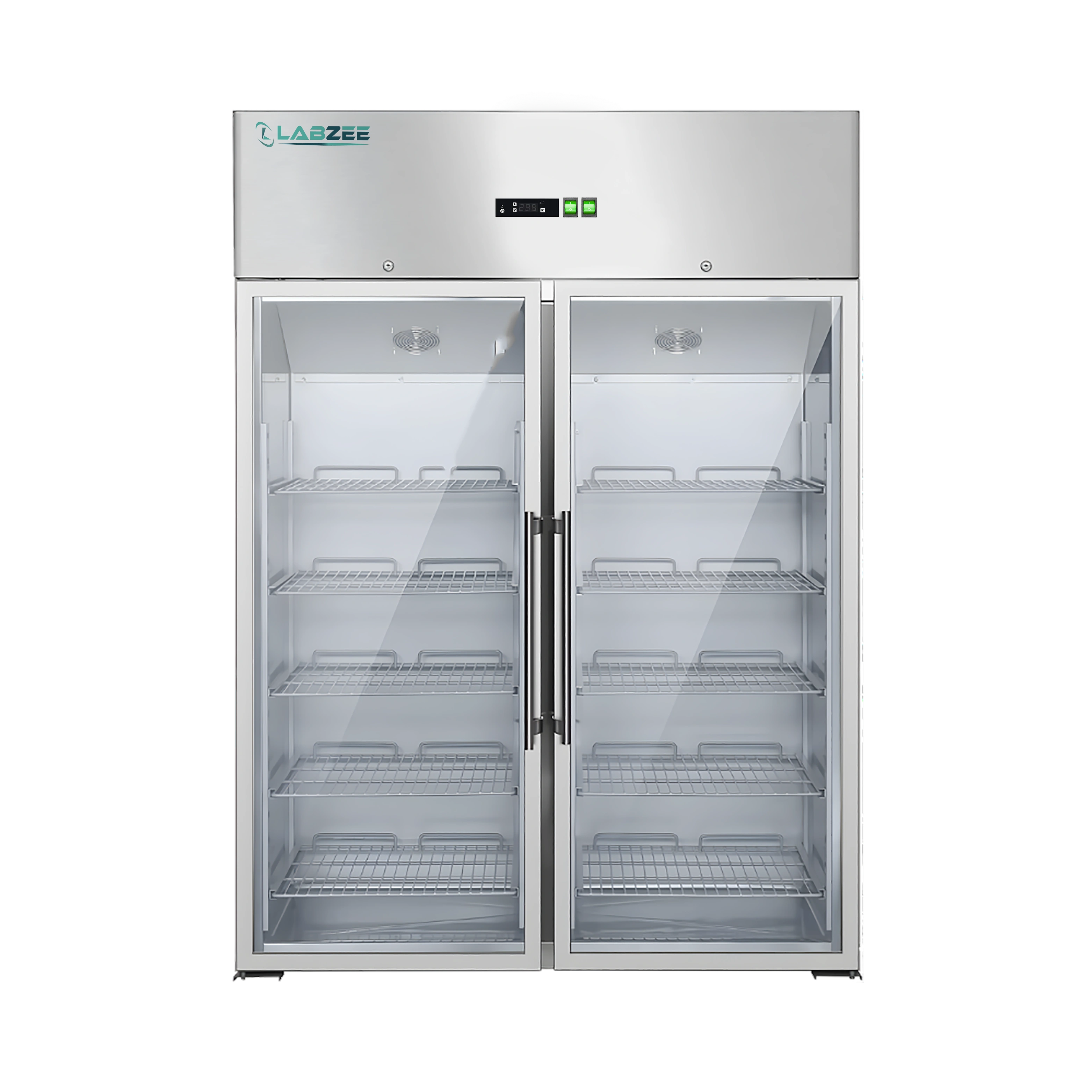
| Door | Anti-Corrosion Vacuum Glass, Explosion-Proof |
| Door Lock | Self-Priming Reset, Central Handle |
| Installation | 4 Universal Casters |
| Power Consumption | 300-1000 W |
| Product Dimension | 1200 × 700 × 1900 mm |
| Packing Dimension | 1270 × 760 × 2000 mm |
| Net Weight | 150 Kg |
| Gross Weight | 160 Kg |
Temperature Range: Provides stable and uniform cooling for sensitive biological samples.
Imported Direct-Cooling Compressor: Delivers consistent cooling efficiency and precise temperature control.
Digital Temperature Display: Enables real-time monitoring of internal chamber temperature with accurate readings.
Low-Noise Operation: Ensures quiet and stable performance during continuous use.
Anti-Corrosion Vacuum Explosion-Proof Glass Door: Provides safe, condensation-free visibility of stored samples.
• Healthcare & Clinical Pathology: Used for storing tissue blocks, biopsy samples, blood products, and reagents in hospitals and diagnostic labs.
• Pharmaceutical Industry: Applied for temperature‑controlled storage of drugs, vaccines, diagnostic kits, and temperature‑sensitive materials.
• Research & Academic Laboratories: Designed for preserving biological specimens, culture media, cell lines, and research samples.
• Histology & Pathology Labs: Suitable for secure cold storage of paraffin‑embedded tissue blocks and embedding compounds.
• Biobanking & Biorepositories: Intended for long‑term preservation of biological samples, DNA/RNA, and clinical specimens.
Frequently Asked Questions
1: What makes the BZASR-502 ideal for sensitive specimens?
BZASR-502 uses direct cooling technology to maintain temperatures in the optimal 0–10°C range, with stable performance to protect sensitive biological or chemical materials.
2: How does BZASR-502 prevent condensation on the glass door?
It uses electric heating film on the vacuum glass, ensuring the door remains fog-free even in high humidity environments, providing clear visibility and clean conditions.
3: Can you describe the noise level of the refrigerator?
The unit operates with noise levels under 20 dB, making it suitable for labs that require a quiet environment for both research and diagnostics.
4: What safety features are built into BZASR-502?
The refrigerator includes an explosion-proof vacuum glass door and a self-priming reset door lock, providing safe storage and easy access control for technicians.
5: Is the BZASR-502 easy to move around?
Yes, it comes with four universal casters, allowing smooth mobility and easy placement or repositioning within different lab layouts or cleanroom zones.
6: When is an Air-cooled Specimen Refrigerators preferred over static models?
It is preferred when maintaining uniform temperature and humidity across the chamber is critical. Air circulation prevents cold spots and reduces condensation. This improves storage safety for sensitive samples.
7: Can it store a wide range of biological specimens?
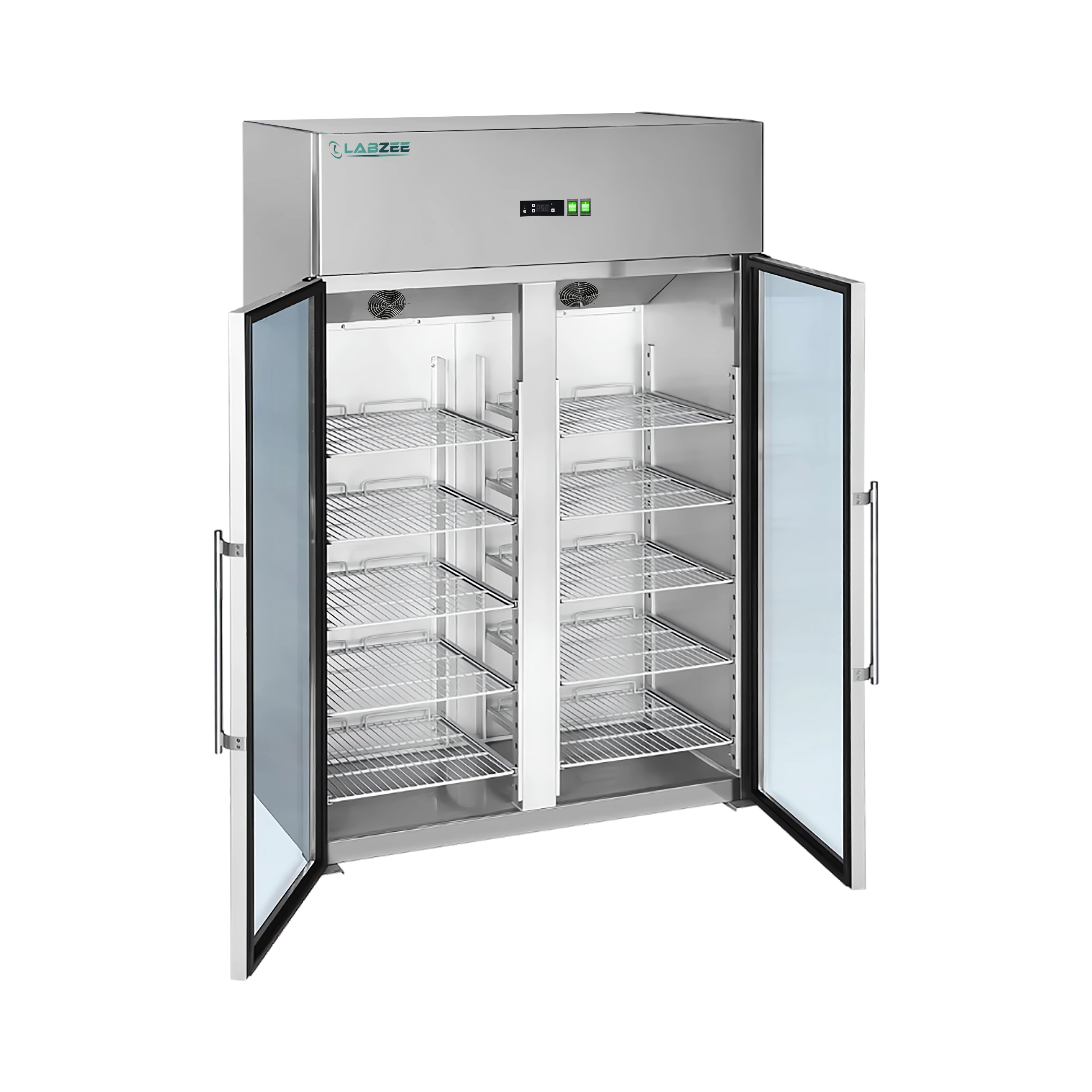
Yes, it can store tissue samples, reagents, culture media, blood products, and more. Temperature is typically maintained between 2°C and 10°C. Adjustable shelves accommodate different container sizes.
8: Can alarms be configured for temperature fluctuations?
Yes, most models include visual and audible alarms for high/low temperature, door ajar, or power failure. These alerts help protect valuable samples. Alarm thresholds are user programmable.
9: When should the refrigerator be defrosted or cleaned?
Cleaning should be done monthly or as needed; manual defrosting depends on the model. Use non-corrosive cleaners and avoid water entering electrical components. Regular maintenance ensures consistent operation.
10: Can the refrigerator be used in high-humidity environments?
Yes, air-cooled models are better at managing humidity compared to static units. They resist condensation build-up and maintain temperature stability. Ensure proper ventilation around the unit for best results.


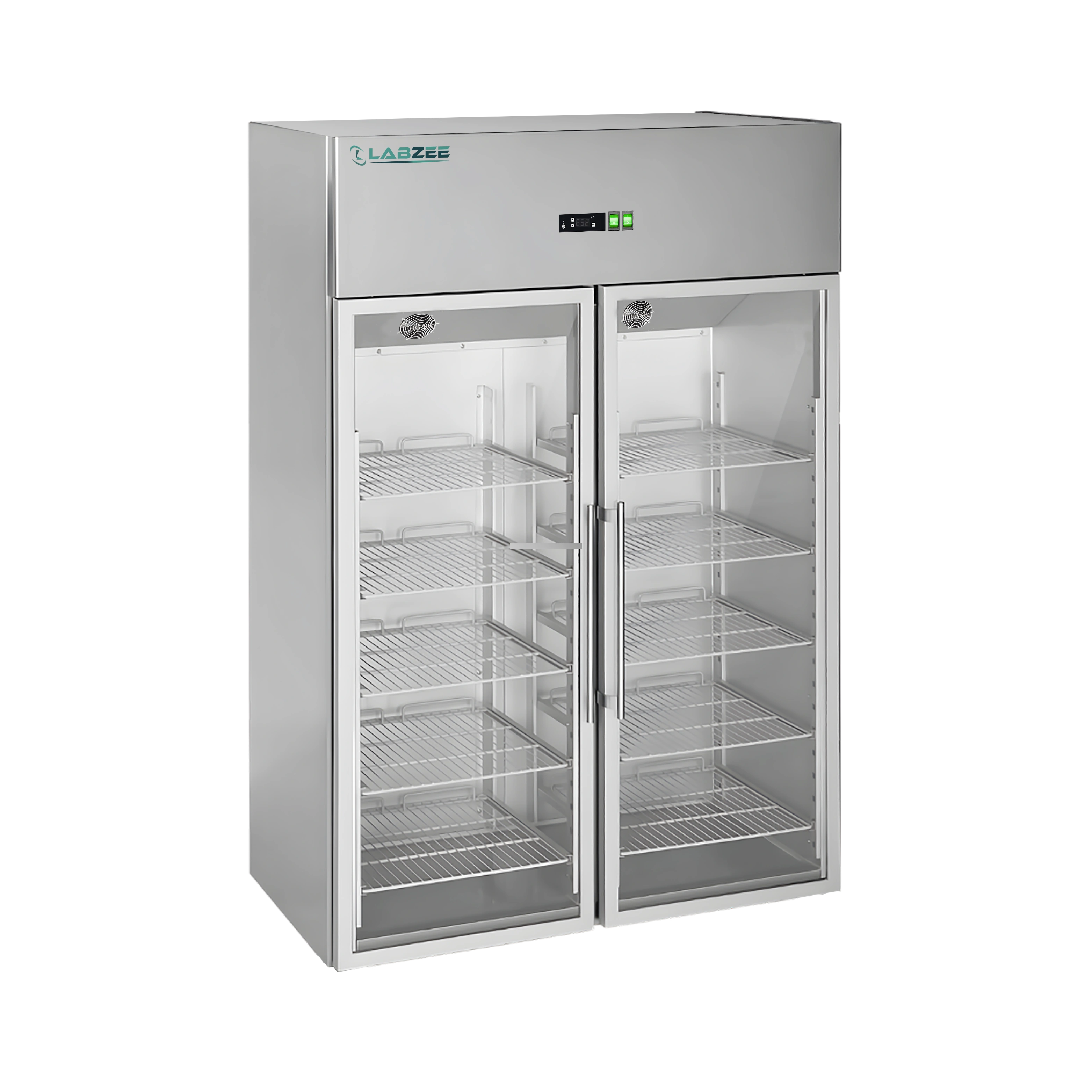
Labzee Air-cooled Specimen Refrigerators designed for temperature-controlled storage of sensitive biological samples under stable and uniform cooling conditions. Using forced-air circulation, they ensure even cooling throughout the chamber while reducing temperature fluctuations and condensation. Built with a 304 stainless steel interior and exterior, they offer durability, corrosion resistance, and simple cleaning. Each unit features a digital temperature display, adjustable shelving, and multiple safety mechanisms, including programmable visual and audible alarms for temperature deviation, door ajar, and power failure, along with secure locking doors to support continuous operation. ISO-CE-certified Labzee Air-cooled Specimen Refrigerators deliver consistent cooling performance, temperature uniformity, efficient air circulation, and large-capacity storage for routine laboratory use.

